



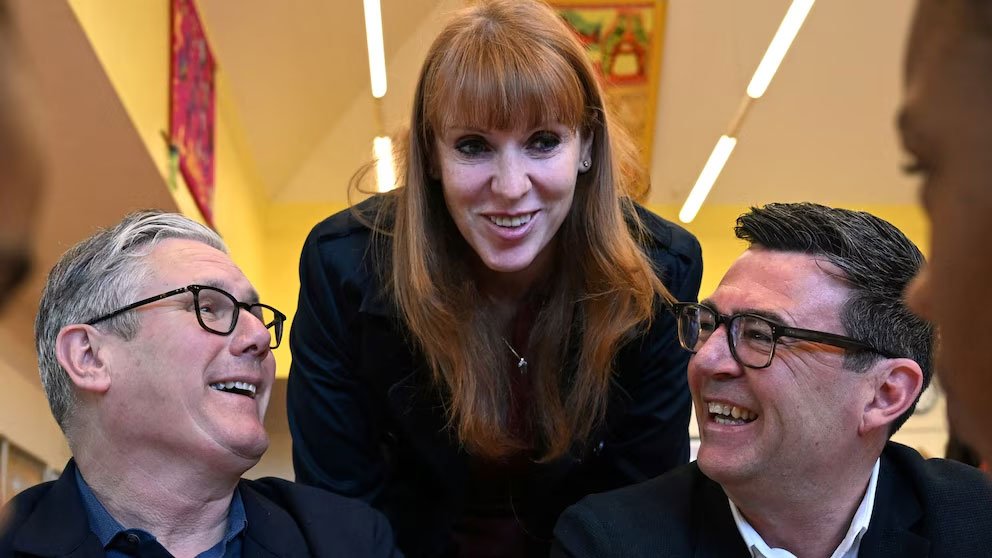

The British government faces a period of political uncertainty as Prime Minister Keir Starmer confronts a potential leadership challenge from Greater Manchester mayor Andy Burnham, who must first return to Parliament before formally launching a bid.
Get today's headlines by email 
Burnham’s route back to Westminster remains uncertain. The former cabinet minister will need to win a by-election for the parliamentary seat of Makerfield, which was vacated to allow him to stand. The contest is expected to be competitive, with the anti-immigration Reform UK party performing strongly in the area during last week’s local elections.
Financial markets showed signs of unease as the political turmoil deepened. Government borrowing costs rose on Friday, while the pound weakened amid investor concern about instability at the centre of government. The British currency has fallen about 1.4% against the U.S. dollar over the past week.
Leadership pressure intensifies
Speculation over Starmer’s leadership escalated on Thursday when Burnham publicly stated his intention to seek the top job, prompting open divisions within the ruling Labour Party.
Two other senior figures have also positioned themselves as potential contenders. The unrest follows heavy losses for Labour in last week’s local elections, where the party lost support both to Reform UK on the right and the Green Party on the left.
The results intensified pressure on Starmer, with a growing number of Labour lawmakers publicly urging him to step aside.
Housing Secretary Steve Reed appealed for restraint on Friday, warning that a bitter leadership battle could distract the government from addressing pressing national issues, including the cost of living.
“This weekend people just need to take a breath, look at what’s gone wrong this week, and come back next week ready to do what we said we’d do — country first, party second — and focus on delivering the change we were elected to deliver,” he told the BBC.
Cabinet resignation deepens crisis
Political manoeuvring in Westminster intensified after Health Secretary Wes Streeting became the first cabinet minister to resign over the crisis.
In his resignation letter, Streeting praised Starmer’s international leadership but said he no longer had confidence in the prime minister’s handling of domestic policy.
“Where we need vision, we have a vacuum. Where we need direction, we have drift,” Streeting wrote.
He also criticised the government’s handling of internal dissent, saying the approach had discouraged open debate within the party.
“Leaders take responsibility, but too often that has meant other people falling on their swords,” Streeting wrote. “You also need to listen to your colleagues, including backbenchers, and the heavy-handed approach to dissenting voices diminishes our politics.”
Streeting did not declare his own candidacy, but suggested Starmer should step aside to allow a wide range of candidates to set out their visions for the party’s future.
Burnham’s path back to Parliament
Burnham, who served as a cabinet minister before leaving Parliament in 2017 to become mayor of Greater Manchester, has been seeking a route back to Westminster to challenge Starmer.
That opportunity emerged when Labour lawmaker Josh Simons resigned his seat on Thursday specifically to create a vacancy for Burnham to contest.
However, Burnham must still win the Makerfield by-election before he can re-enter Parliament and mount a leadership challenge.
In announcing his candidacy, Burnham acknowledged the difficulty of the task ahead.
“I truly do not take a single vote for granted and will work hard to regain the trust of people in the Makerfield constituency, many of whom have long supported our party but lost faith in recent times,” he said in a statement.
Join the discussion? 
Already a member? 
 Adapted by ASEAN Now. Source 16 May 2026
Recommended Comments
Create an account or sign in to comment