



Skip to content
View in the app

A better way to browse. Learn more.

ASEAN NOW

A full-screen app on your home screen with push notifications, badges and more.

To install this app on iOS and iPadOS
  1. Tap the Share icon in Safari
  2. Scroll the menu and tap Add to Home Screen.
  3. Tap Add in the top-right corner.
To install this app on Android
  1. Tap the 3-dot menu (⋮) in the top-right corner of the browser.
  2. Tap Add to Home screen or Install app.
  3. Confirm by tapping Install.

Become a member

Become a member

UK-France Returns Cost £56,000 Per Person

The Home Secretary has told MPs that the Government’s “one in, one out” scheme has cost about £56,000 for every person sent from the UK to France since it began in August 2025.

Shabana Mahmood made the disclosure during a hearing of the House of Commons Home Affairs Select Committee, where she was asked whether the policy offers value for taxpayers.

Cost Per Return

Mahmood said she would update the committee once the latest figures were available, but that the cost figure quoted was based on returns made so far.

She said: “I’ll need to write to the committee on the most recent figures.” She added that for the number of people returned to date, the cost was “about £56,000”.

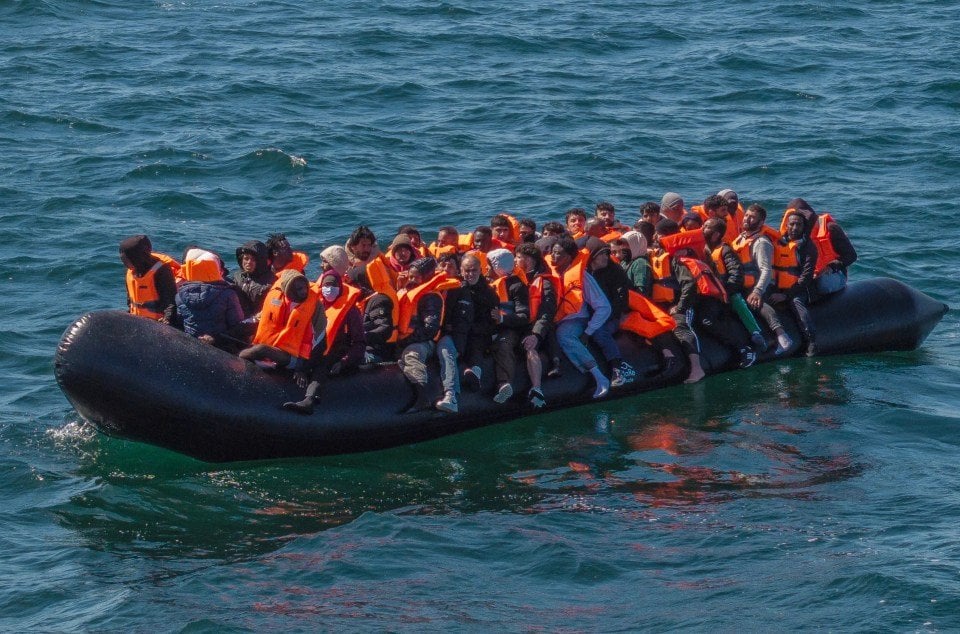
Since the scheme started, the Home Office has removed about 1,400 people to France. Mahmood also noted that some individuals have subsequently returned to the UK, including via lorries or small boats.

The Home Secretary later defended the spending by arguing that it was “still cheaper, or just about the same as supporting someone in a hotel for a year”, in the context of alternative accommodation costs.

How the “One In, One Out” Deal Works

Under the arrangement, the UK removes a person who arrived in the country via small boats and sends them back to France. In exchange, the UK grants entry to an asylum seeker who applies through legal routes.

The pilot was due to run for a limited period, but it has already been extended once and is now scheduled to end in October. Its longer-term future is still undecided.

The Home Secretary said the programme had struggled to scale up for higher removal numbers. She described it as “operationally difficult” to increase removals, pointing to constraints including detention capacity.

She told MPs that, while the pilot had produced results, “the numbers are still relatively small” and that the scheme had “challenges”.

EU Plans And Dublin Rejection

France has said it wants the bilateral model replaced over time by a broader EU-UK returns agreement.

Mahmood said the UK should not assume that an EU-wide mechanism would solve the Channel crisis. She rejected suggestions that an EU system would be a “silver bullet”, telling MPs it would not eliminate the problem.

She said that the scheme had already returned more people than Britain had achieved under the EU’s earlier Dublin arrangements, which existed before the UK left the bloc. She also said attempts to continue Dublin-style returns after Brexit had been rejected by EU leaders.

France Seeks To End The Pilot

Earlier in the week, it emerged that Laurent Nuñez, France’s interior minister, had told Mahmood that he wants to end the scheme.

Nuñez previously told a French parliamentary inquiry in June that France wanted to move away from what he described as a bilateral relationship with the UK. He said France did not want to “carry it alone” and argued that the programme should be integrated into an agreement between the EU and UK.

According to the position relayed to Mahmood, the pilot agreement signed in August 2025 was “not intended to be renewed beyond October 1, 2026”.

Separate Offer For Voluntary Departure

Mahmood also told MPs about a separate pilot under which some rejected asylum-seeking families could be offered up to £40,000 to leave the UK voluntarily.

She said only “relatively small numbers” had taken up that offer. She described the trade-off for families as the chance to receive £40,000 to support resettlement in their country of origin, in exchange for access they would otherwise have to services such as free healthcare and education for children.

Join the discussion? Create account. orange.png


image.png

16 September 2026

User Feedback

Recommended Comments

Smokey and the Bandit Gold Member

Smokey and the Bandit

Advanced Member

While the mathematical comparison holds up for a single year, the economic benefit of removal relies on two major operational assumptions.

If an asylum decision takes 2 to 3 years instead of a few months, hotel costs compound significantly, making early removal far more cost-effective over time.

As noted in the statement, if a removed individual successfully returns to the UK via illegal routes (such as small boats or lorries) and re-enters the asylum queue, the initial £56,000 removal cost is effectively sunk while the hotel accommodation clock starts over.

In reality, reaching a final decision—meaning the end of the line, including all court appeals—typically takes between 18 months and 3 years for a contested claim.

The Home Secretary's argument that removal is "cheaper, or just about the same" only holds true if the removal happens immediately upon arrival.

Total cost per contested removal, is between £150,000 and £190,000 per individual when combining multi-year hotel housing with the final deportation bill.

So, what It means Per taxpayer

At a cross-government total of roughly £8.0 billion per year, the asylum and irregular migration system costs the UK approximately £234 per income taxpayer, per year.

Thingamabob Diamond Member

Thingamabob

Restricted-N

The one for one system has so far resulted in 1,500 approx illegal arrivals being returned to France. Meantime, there are thousands, if not more, illegals on the loose in the UK.

JonnyF Star Member

JonnyF

Advanced Member

How much are they paying the uk for every illegal they escort onto the boats?

We've paid them billions to stop it and now we are paying again to return them.

This Mahmood is an enemy of the british state.

nauseus Star Member

nauseus

Advanced Member

Bits and pieces policies are bound to fall apart.

Jimbolkb Senior Member

Jimbolkb

Member

give 0 baht. 0 free anything at arrival

detention camps with a field hospital bed in a secured compound

military is doing nothing anyway

deportation by cargo by the hundreds to africa

VocalNeal Star Member

VocalNeal

Advanced Member

The Home Secretary has told MPs that the Government’s “one in, one out” scheme has cost about £56,000 for every person sent from the UK to France since it began in August 2025.

OK spot the scam. Who's trousering the money?

The Cyclist Platinum Member

The Cyclist

Advanced Member
3 hours ago, Thingamabob said:

The one for one system has so far resulted in 1,500 approx illegal arrivals being returned to France. Meantime, there are thousands, if not more, illegals on the loose in the UK.

At a cost of around £80 million.

Plus the cost of the ones France send us in return.

Who cares, it's only taxpayers money, after all.

Roadsternut Platinum Member

Roadsternut

Advanced Member

This is why overseas aid is fantastic value for money.

Eritreans make up the largest group of illegal immigrants/refugees entering the UK via small boats. 7900 entered in 2025. Most of you know <deleted> all about Eritrea; fascinating capital, with Art Deco architecture, and one of the coolest looking gas stations on the planet, and an entire district called Alfa Romeo (on account of Alfa Romeo used to make cars there).

So we spent of over £400 million trying to stop 7900 people fleeing a country labelled the North Korea of Africa. Currently about £277,000 of UK tax payer money gets over to the Eritrean government (less than the cost of an average semi-detached). I think the sacks-of-cash-to-dictators approach might be worth a go. You pay them off to do something they probably already enjoy; be more oppressive, close your borders to exits. Its partly how pax Romana was established.

Rome did not always need to transform a neighbouring society into a Roman one; often it was cheaper to make the existing rulers useful to Rome. Client rulers received wealth, status and protection, while Rome received loyalty, troops and control of its strategic interests.

Britain could apply the same principle, in a much narrower and less imperial form, to migration. If Britain's principal objective is to reduce the number of Eritreans reaching Britain, it does not necessarily follow that Britain should attempt the vastly more ambitious project of transforming Eritrea's political system so that its citizens no longer want to leave. That could mean decades of development expenditure, diplomatic pressure and potentially enormous political and financial costs, with no guarantee of success. A much cheaper proposition might be to make Eritrea's existing government materially better off for preventing its citizens from leaving in the first place. In crude economic terms, Britain would be buying cooperation rather than attempting to buy regime change.

The analogy with Rome is therefore not “pay Eritrea to become nicer.” It is “pay the government that actually controls the territory to perform the function Britain wants performed.” If preventing one person from ultimately being removed costs tens of thousands of pounds, there is potentially considerable scope for an upstream payment to be economically rational even if the recipient government remains deeply objectionable. The relevant question would not be whether Britain approves of Eritrea's regime, but whether a negotiated payment or incentive produced a measurable reduction in departures at a cost substantially below Britain's downstream cost of dealing with those arrivals.

In that sense, Britain would not necessarily be purchasing Eritrean reform; it would be purchasing Eritrean cooperation. That is a much more modest objective—and potentially a much cheaper one. The uncomfortable historical parallel is that great powers have frequently maintained order not by remaking every society around them, but by making existing authorities sufficiently dependent upon them that those authorities enforce the interests of the power paying them. Rome called it imperial diplomacy; a modern government would call it migration management.

Create an account or sign in to comment

Account

Navigation

Search

Search

Configure browser push notifications

Chrome (Android)
  1. Tap the lock icon next to the address bar.
  2. Tap Permissions → Notifications.
  3. Adjust your preference.
Chrome (Desktop)
  1. Click the padlock icon in the address bar.
  2. Select Site settings.
  3. Find Notifications and adjust your preference.
