



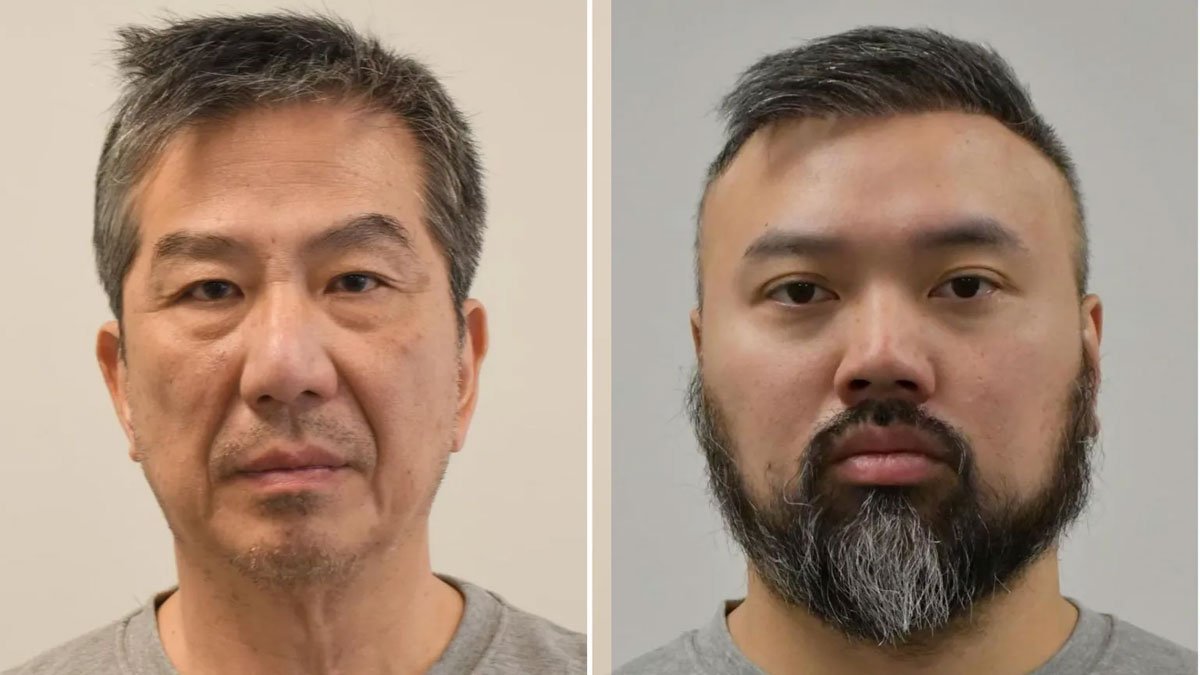

A UK Border Force officer has been convicted of spying for Chinese intelligence after using government databases to track Hong Kong dissidents living in Britain.
Get today's headlines by email 
Chi Leung “Peter” Wai, 40, was found guilty under the UK’s National Security Act of assisting a foreign intelligence service. He was convicted alongside Chung Biu “Bill” Yuen, 65, who prosecutors said acted as his contact with Hong Kong authorities. Wai was also found guilty of misconduct in public office.
Following the verdict, the UK government said China’s ambassador to Britain would be summoned by the Foreign Office. Security Minister Dan Jarvis described the activities as a breach of British sovereignty that would not be tolerated.
The two men were remanded in custody and will be sentenced at a later date, to be set on 15 May.
Use of immigration database
Wai began working as a Border Force officer at Heathrow Airport in December 2020, giving him access to the Home Office’s main immigration database containing information on foreign nationals in the UK.
Prosecutors said he accessed the system outside working hours, including on days off and while on sick leave, to search for Hong Kong activists who had fled political crackdowns. The information was then passed to Chinese contacts.
Investigators said Wai had already been gathering information on dissidents before joining Border Force. In messages presented in court, he referred to activists as “cockroaches”.
Yuen, a former Hong Kong police officer, became Wai’s intermediary with Chinese authorities. The two men first met in London in 2017 and, by mid-2021, Yuen had become Wai’s handler, receiving reports about Hong Kong pro-democracy activists and protests in Britain.
Yuen had moved to London shortly after retiring from the Hong Kong Police Force in 2015. He later took a role as office manager at the Hong Kong Economic and Trade Office in London, which promotes business ties between Hong Kong and the UK.
The court heard the surveillance operation also paid “special attention” to certain British politicians, including Conservative MP Sir Iain Duncan Smith.
Surveillance of activists
Evidence showed Wai recruited a fellow Border Force officer, former Royal Marine Matthew Trickett, to assist in monitoring dissidents.
Among those targeted were prominent activists Nathan Law and Finn Lau. Both men had been involved in Hong Kong’s pro-democracy movement and were later subject to HK$1 million bounties issued by Hong Kong authorities in 2023.
Law was followed during a visit to the Oxford Union, while Lau told the BBC he had become increasingly cautious about personal safety due to fears of surveillance.
“To be frank, I don’t feel safe in the UK regarding the spying risk,” Lau said, adding that he had taken measures to avoid being followed.
Operation uncovered
The investigation widened after the group attempted to locate a Hong Kong woman living in West Yorkshire who was accused of financial wrongdoing in Hong Kong, which she denies.
Using his access to the immigration database, Wai identified her address in Pontefract and confirmed her presence by arranging the delivery of a parcel. Surveillance of the property followed.
In April 2024, a group linked to the case travelled to the address, attempting to make contact with the woman. When she did not answer the door, they used a small camera under the door and tried to lure her out by leaving a note and pouring water through the letterbox.
The operation was secretly recorded by a device placed by the security service MI5.
When police intervened, Wai threw a fake warrant card suggesting he was a superintendent with the City of London Police out of a window, the court heard.
Death of co-defendant
Trickett was later charged alongside Wai and Yuen but was found dead in Grenfell Park in Maidenhead shortly after appearing in court. His death is being treated as a suspected suicide, with an inquest scheduled for November.
Jurors were unable to reach a verdict on a separate charge alleging the men had committed foreign interference during the Pontefract incident. Prosecutors said they would not pursue a retrial.
Counter-terrorism police described the case as a serious example of overseas intelligence activity targeting people in Britain.
Join the discussion? 
Already a member? 
 Adapted by ASEAN Now. Source 8 May 2026
Recommended Comments
Create an account or sign in to comment