



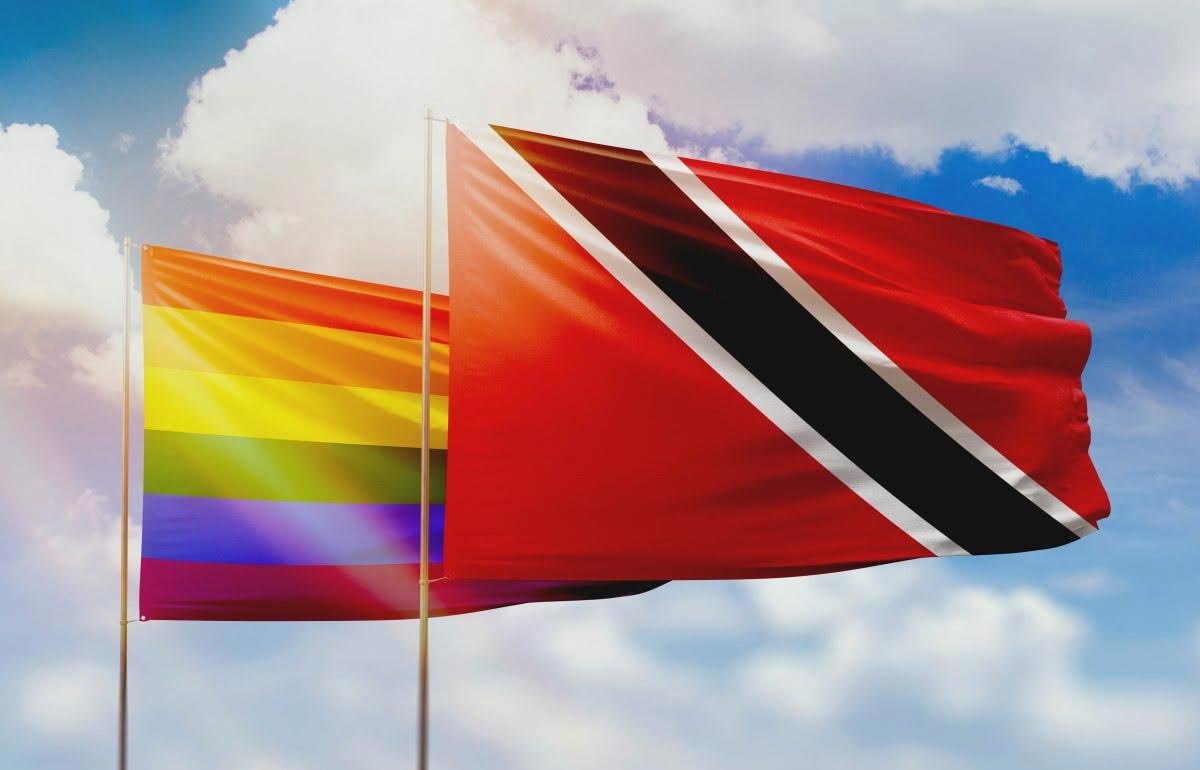

The UK's highest appeal judges have begun hearing a case that could determine whether Trinidad and Tobago's colonial-era law criminalising consensual same-sex intimacy should remain in force.
Get today's headlines by email 
The appeal centres on whether Trinidad and Tobago's Court of Appeal had the legal authority to overturn a 2018 High Court ruling that declared the country's anti-gay law unconstitutional.
The so-called "buggery law", first introduced in 1925 and incorporated into Trinidad and Tobago's 1986 Sexual Offences Act, criminalises anal sex between consenting men and carries a prison sentence of up to five years.
Challenge to Colonial-Era Law
In 2017, LGBTQ+ rights activist Jason Jones challenged the legislation, arguing that it violated his constitutional rights to privacy and equality. A High Court agreed in 2018, striking down the law as unconstitutional.
However, the country's Court of Appeal reversed that decision in 2025 after intervention by the attorney general, restoring the legislation. Jones has now appealed to the London-based Judicial Committee of the Privy Council (JCPC), which serves as the final court of appeal for several Commonwealth countries, British Overseas Territories and Crown Dependencies.
A ruling is expected within three to six months.
Wider Constitutional Questions
The case is being closely monitored across the Caribbean because its outcome could extend beyond LGBTQ+ rights.
Trinidad and Tobago's government is contesting Jones's appeal, arguing that the case could affect the interpretation of constitutional "savings clauses". These provisions preserved many laws inherited from British colonial rule after countries gained independence.
Prime Minister Kamla Persad-Bissessar said the Privy Council's decision could provide guidance on whether other colonial-era laws protected by savings clauses should remain in force.
Darrell Allahar, a minister in the Office of the Prime Minister and one of the government's lawyers, said the proceedings were important because they concerned the broader constitutional role of savings clauses, which were designed to preserve existing laws following independence rather than allow widespread legal changes based on new constitutional rights.
Activist Criticises Government
Jones, 61, said the matter should never have reached the Privy Council, arguing that the government or parliament could have repealed the legislation years ago.
He accused the state of spending millions of dollars in public funds defending laws that, he said, criminalise and stigmatise LGBTQ+ people. Jones expressed confidence that the Privy Council would rule in his favour, arguing that the legislation is incompatible with modern human rights protections.
Regional Significance
Several Caribbean countries have recently repealed or struck down similar colonial-era laws. The Bahamas decriminalised homosexuality in 1991, while courts have more recently invalidated comparable legislation in Barbados, Dominica, St Lucia, and Antigua and Barbuda. The UK also repealed such laws in several British Overseas Territories in 2001.
However, consensual same-sex intimacy remains criminalised in Guyana, Grenada, Jamaica, Trinidad and Tobago, and St Vincent and the Grenadines.
Former Irish prime minister Leo Varadkar said the remaining countries in the Americas that still criminalise homosexuality all share a history as former British colonies. Writing in a recent paper for Harvard University, he argued that this reflected the continued existence of colonial-era laws that have already been repealed in the United Kingdom, where rights including privacy and personal autonomy are protected under domestic law.
Join the discussion? 

9 July 2026
-
 2
2
Recommended Comments
Create an account or sign in to comment