



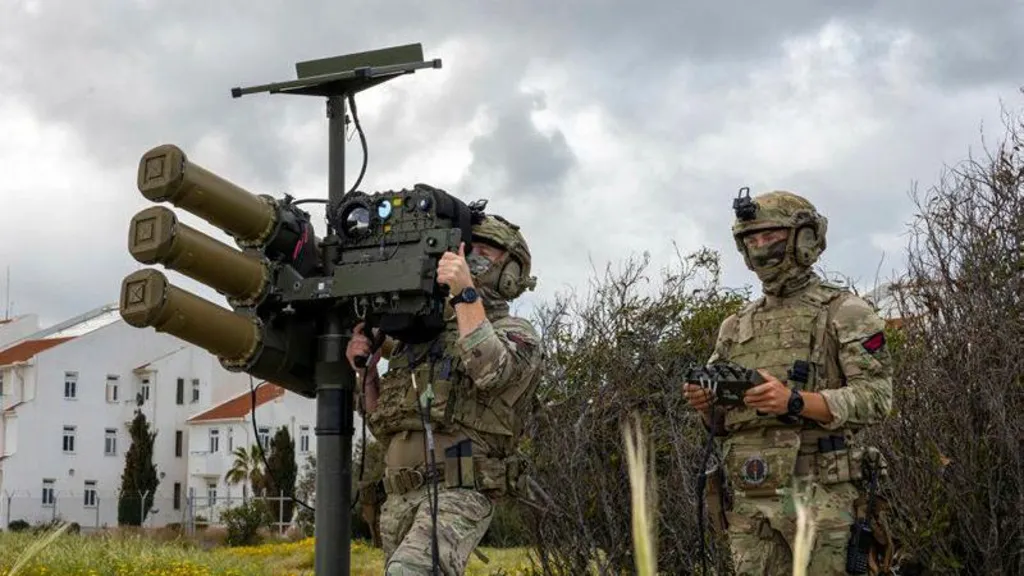

The UK will send additional troops and air defence systems to the Middle East, raising the number of British personnel involved in protecting Gulf states and Cyprus to roughly 1,000.
Get today's headlines by email 
Defence Secretary John Healey announced the move during visits to Saudi Arabia, Qatar and Bahrain. The deployments will include extra air defence teams and equipment in Saudi Arabia, Bahrain and Kuwait, while British Typhoon fighter jets stationed in Qatar will remain there longer than planned.
UK boosts regional military presence
Healey told regional partners that Britain would help safeguard their airspace, describing UK military support as a key element of Gulf defence.
The decision comes as tensions in the region escalate during a conflict involving Iran, which British officials say has expanded its attacks.
Focus on defensive operations
Prime Minister Keir Starmer has stressed that the UK will not take part in offensive operations in the war.
Speaking earlier in the week, Starmer said Britain would defend its interests and allies but would not be drawn directly into the conflict. He also ruled out deploying UK ground forces inside Iran.
The government describes its role as strictly defensive, aimed at protecting regional partners and maintaining stability.
Among the new measures is the deployment of the Sky Sabre air defence missile system to Saudi Arabia. The system combines radar, command units and missile launchers capable of intercepting aircraft and incoming munitions.
Britain has already sent a Lightweight Multirole Missile launcher to Bahrain, along with specialists to integrate the equipment into the country’s defence network. In Kuwait, the Rapid Sentry ground-based missile system has also been installed.
Aircraft deployment extended
During a visit to the UK military’s Dukhan air base in Qatar, Healey confirmed that the deployment of Typhoon fighter jets would continue.
At the start of the month, the government announced four additional Typhoon aircraft would be sent to Qatar to reinforce the joint UK-Qatari squadron established earlier this year.
Officials say Gulf governments have welcomed the contribution of British forces, describing them as central to their defensive capabilities.
Regional concerns intensified after infrastructure in Kuwait, including a power and desalination facility, was damaged in an attack earlier in the week.
Tensions with Washington
The UK’s limited role has drawn criticism from US President Donald Trump.
Trump has repeatedly urged allies to take stronger action against Iran and criticised countries that declined to participate in earlier strikes.
In a post on his Truth Social platform, the president suggested nations struggling to access fuel through the Strait of Hormuz should secure supplies themselves or buy from the United States.
Despite the criticism, Healey emphasised the strength of the military relationship between London and Washington. He said British and US forces remain closely integrated and continue to share intelligence on global threats.
British officials are also examining options with allies to protect shipping routes through the Strait of Hormuz, a key global oil corridor.
Military planners have been sent to US command headquarters, and a Royal Navy vessel could be used to launch autonomous drones designed to clear naval mines if required.
Political criticism at home
The deployment has prompted debate in Britain.
Opposition figures from the Conservative Party accused the government of sending mixed signals by refusing direct involvement in the war while expanding military activity in the region.
The Liberal Democrats have called on the government to publish legal advice supporting the move.
Meanwhile, Zack Polanski said Britain should prevent the United States from using UK bases to launch bombing missions against Iran, arguing that doing so risks making the country complicit in the conflict.
Join the discussion? 
Already a member? 
 Adapted by ASEAN Now. Source 1 April 2026
Recommended Comments
Create an account or sign in to comment