



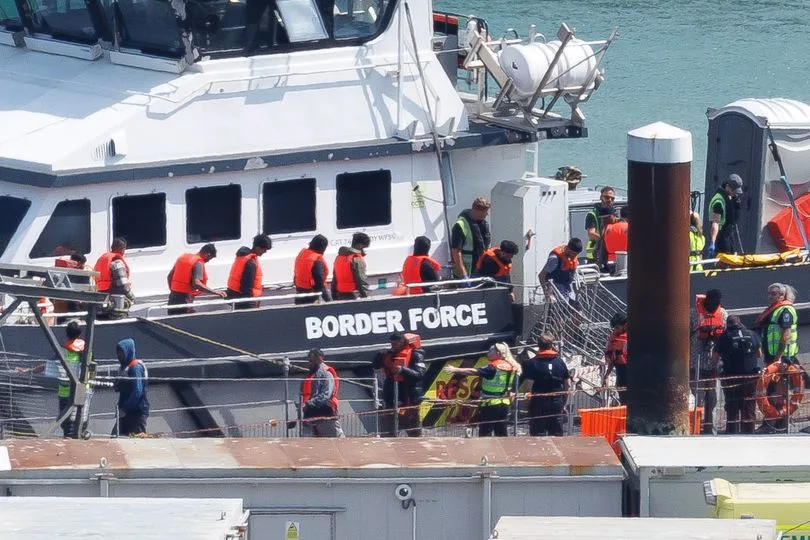

The UK government will begin using artificial intelligence to help estimate the age of asylum seekers from next year, as part of efforts to identify adults who falsely claim to be children when arriving in the country.
Get today's headlines by email 
The Home Office has awarded a contract to develop and test facial age-estimation software that analyses photographs taken at the border. Officials say the technology could help detect adults attempting to access support and legal protections reserved for children.
However, human rights groups and social work professionals have raised concerns about the reliability of the technology, warning that mistakes could leave vulnerable young people without the protections they are entitled to receive.
New tool aimed at disputed age claims
Unaccompanied children seeking asylum in the UK are placed in local authority care rather than standard asylum accommodation and receive additional legal safeguards.
The government argues that some adults have sought to exploit these arrangements by claiming to be minors. According to Home Office figures, more than 6,400 people who said they were children underwent age assessments in the year ending March 2026. Of those cases, 43% were ultimately assessed as adults.
Minister for Border Security and Asylum, Alex Norris, said false age claims had diverted resources away from children who genuinely needed support.
He said the new technology would help authorities identify people attempting to misuse the system while ensuring those entitled to protection received it.
Testing and rollout plans
The Home Office first announced plans to explore AI-based facial age estimation last year. Since then, officials have conducted testing using images from people of different ethnicities and genders, including groups represented within the asylum-seeking population.
Although the technology has been tested, the results have not yet been used to make operational decisions.
Under the newly awarded contract, Harlow-based IT supplier Akhter Computers Ltd will continue development and testing of the system before a wider rollout planned for mid-2027. The contract is valued at £322,000 over three years.
The first live trial is expected to take place next year at the Western Jet Foil processing centre in Dover.
Officials say the software will not replace existing procedures. Border Force officers currently assess age by reviewing documents and considering an individual's appearance and behaviour. The AI system will be used only as an additional tool when doubts remain about a person's age.
Concerns over accuracy
Questions about age assessment have persisted for years. A report by the government's independent immigration inspector found examples of adults being treated as children as well as children being wrongly classified as adults.
The report concluded that, without a completely reliable method of determining age, errors were unavoidable and could have serious consequences, particularly when children are denied rights and protections.
Social workers continue to carry out detailed assessments when an asylum seeker's age is challenged. The British Association of Social Workers warned that introducing AI into the process could increase safeguarding risks.
Professor Sam Baron, the organisation's interim chief executive, said age assessment was a complex task best handled by trained professionals rather than through technological shortcuts.
Human rights groups oppose scheme
Human Rights Watch has called on the government to abandon the project altogether.
Anna Bacciarelli, a senior AI researcher at the organisation, described the technology as unproven and questioned whether facial age estimation can accurately determine a person's age in asylum cases.
She argued that using the technology on vulnerable refugee children could undermine their rights and expose them to a process that lacks sufficient evidence of effectiveness.
The government has previously said facial age estimation represented the most cost-effective option available for supporting age assessments. Critics, however, maintain that significant concerns remain over both its accuracy and its ethical implications.
Join the discussion? 
Already a member? 
 Adapted by ASEAN Now. Source 30 May 2026
Recommended Comments
Create an account or sign in to comment