



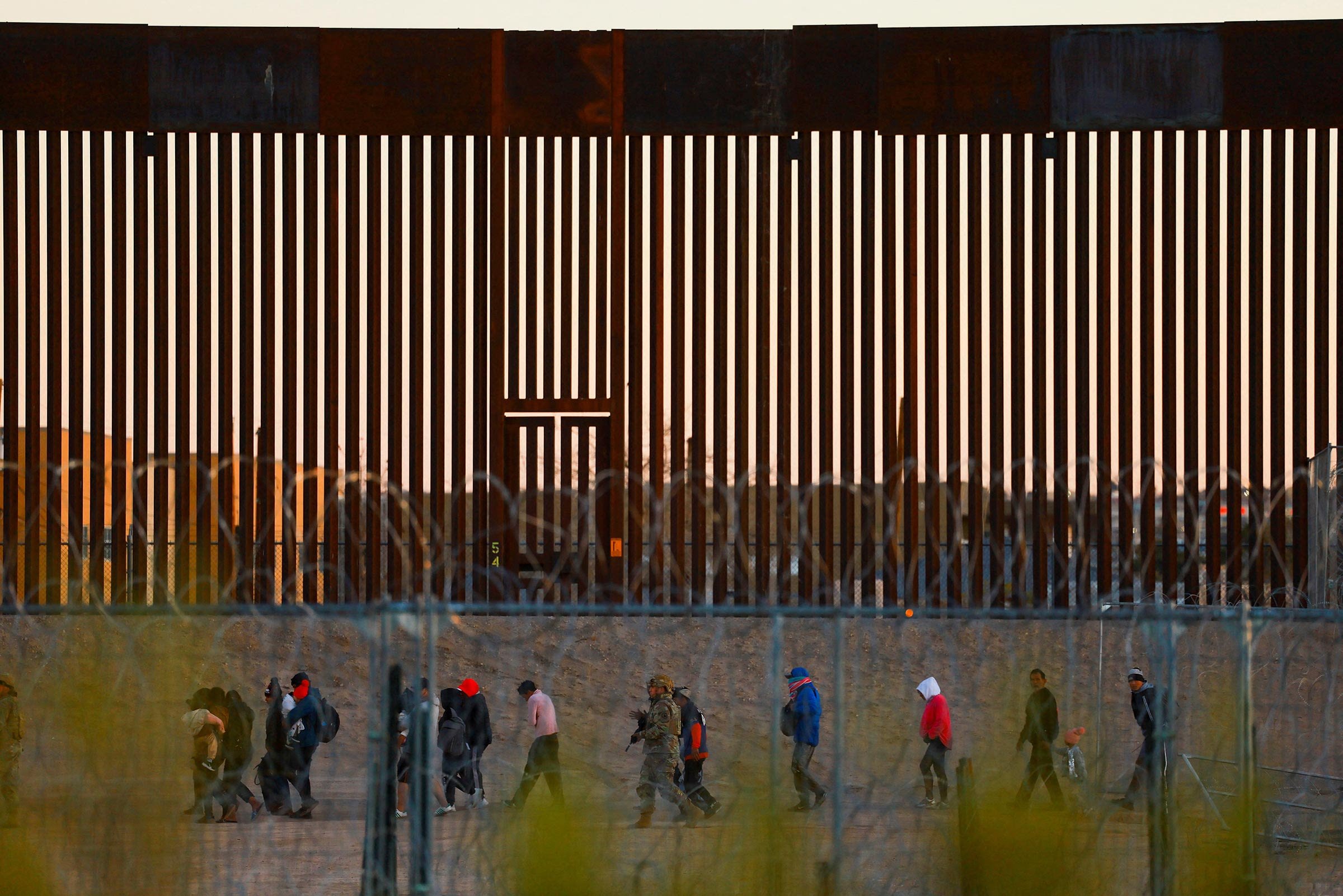

A U.S. federal appeals court has blocked a directive by Donald Trump that sought to suspend access to asylum for migrants crossing the U.S.–Mexico border unlawfully, ruling that the policy conflicts with federal immigration law.
Get today's headlines by email 
The decision, issued Friday by a divided three-judge panel of the United States Court of Appeals for the District of Columbia Circuit, found that the administration cannot bypass legal procedures governing deportation or prevent migrants already in the United States from applying for asylum.
Two judges supported the ruling, while a third agreed only in part.
Court finds policy conflicts with immigration law
Writing for the majority, Judge J. Michelle Childs said the administration’s proclamation and related guidance unlawfully attempted to sidestep the procedures laid out in the Immigration and Nationality Act.
She wrote that the law’s “text, structure, and history” show that Congress did not grant the executive branch the broad authority claimed by the administration to carry out summary removals or deny migrants the right to seek asylum.
Childs concluded that the policy improperly replaced existing removal procedures and disregarded statutory protections that allow individuals to apply for asylum or other forms of protection from deportation.
Judge Cornelia Pillard joined the majority opinion.
Partial dissent on asylum authority
Judge Justin Walker, who was appointed during Trump’s first presidency, agreed with the panel that migrants cannot be stripped of legal protections preventing them from being sent to countries where they could face persecution or torture.
However, he disagreed with the majority’s conclusion regarding the president’s ability to deny asylum applications entirely, arguing that the executive branch has broader discretion in that area.
Legal challenge from rights groups
The lawsuit challenging the policy was filed in February 2025 by immigrant advocacy groups, including the American Civil Liberties Union.
Lee Gelernt, an attorney with the organization, said the ruling could save the lives of people fleeing danger who had been denied the chance to present their cases.
The administration can request a review by the full appeals court or ask the Supreme Court of the United States to consider the case.
Policy introduced after Trump returned to office
The dispute stems from actions taken when Trump returned to the presidency in 2025.
On his first day back in office, he ordered officials to suspend the asylum process for migrants seeking protection in the United States, citing what he described as an “invasion” at the southern border.
Following the directive, the U.S. Department of Homeland Security instructed immigration authorities that migrants crossing between official entry points were not permitted to apply for asylum. The guidance also introduced new procedures allowing migrants to be removed quickly through “direct repatriation” or “expedited removal.”
Under those instructions, asylum officers were told not to ask migrants questions about whether they had a credible fear of persecution or torture.
Earlier ruling upheld
In July, U.S. District Judge Randolph Moss ruled against the administration, concluding that neither the Immigration and Nationality Act nor the Constitution granted the president the sweeping authority claimed in the directive. He also certified a class action covering migrants affected by the policy.
The Justice Department appealed, but the appellate panel largely upheld the lower court’s decision.
Childs wrote that the law does not permit the president to create new summary removal procedures or suspend migrants’ statutory right to apply for asylum and related protections.
She added that if the government wishes to change the existing asylum system, it must seek action from Congress rather than act unilaterally.
Join the discussion? 
Already a member? 
 Adapted by ASEAN Now. Source 26 April 2026
Recommended Comments
Create an account or sign in to comment