



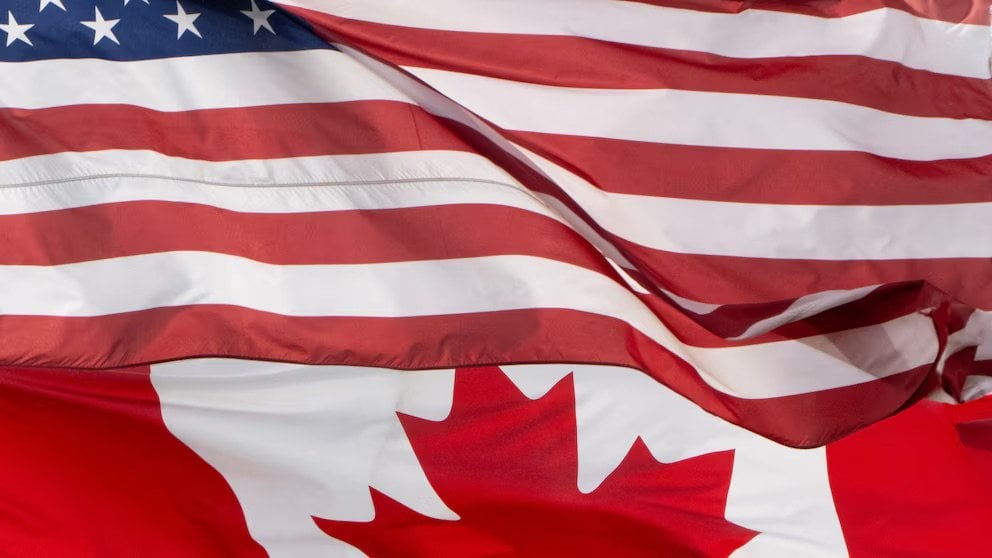

The United States has moved ahead with a ban on almost $1 billion worth of Canadian imports, adding to mounting trade tensions between the two countries already strained by President Donald Trump’s expanding tariff programme.
The measures, announced for implementation shortly after midnight on Tuesday (12:01 a.m. Eastern time), target a defined list of Canadian goods. The ban covers items including alcoholic beverages, dairy products and motorcycles, further tightening access to the US market for sectors in several Canadian provinces.
Scope Of The Import Ban
Trade analysts said the economic impact is likely to be limited relative to the scale of cross-border commerce between the US and Canada, which totals about $880 billion in two-way annual trade.
However, the action marks another step in what critics describe as a widening trade conflict between the United States and its long-standing ally. Trade attorney Patrick Childress said the restrictions were unlikely to ease tensions.
“There is a real chance it will not help the trade relationship,” said Childress, a partner at Holland & Knight and a former US trade official. He argued that many of the affected products were already caught by the earlier tariff measures.
Tariffs And Retaliation
The latest dispute follows a broader escalation that began over the summer. Trump used a Depression-era law to impose 50% tariffs on about $20 billion of Canadian imports, alleging that Canada discriminates against US producers of dairy, automobiles and alcohol.
Canada responded quickly with counter-tariffs ranging from 15% to 50%, matching US products dollar for dollar.
Trump later selected additional Canadian goods for a ban, explicitly linking the step to Canada’s retaliation. Childress said that for many items on the prohibited list, the 50% tariff had already made importing from Canada uneconomical, effectively acting as a de facto barrier.
Jacob Jensen of the American Action Forum said the ban would cover about $967 million in Canadian imports, based on 2025 figures. He estimated that 87% of the total related to alcoholic beverages, reflecting US targeting of products after some Canadian provinces responded to Trump’s moves by restricting US alcohol on store shelves.
Dairy And Motorcycles Also Included
The banned dairy categories include whey, a milk byproduct. The two countries have previously clashed over Canada’s efforts to shield its dairy sector from foreign competition through high tariffs when imports exceed quota levels.
Motorcycles are also covered. Bombardier Recreational Products (BRP) of Quebec said its Can-Am Spyder and Canyon three-wheel motorcycles “will be excluded from importation into the U.S.” BRP said the effect would be felt mainly next year, noting it had already completed most production and shipments for the current season.
Wider Trade Stakes For North America
Jensen said the import ban is likely to trigger further retaliation from Canada and could lead exporters and US importers to press trade officials on both sides for a resolution.
The dispute also threatens efforts to renew the US-Mexico-Canada Agreement, a North American trade framework Trump pressured the three countries to accept during his first term. That deal allows most goods to cross borders duty free, but Trump’s return to the White House has brought a wave of tariff announcements that have clouded the future of regional trade.
Prime Minister Mark Carney, who took office last year on a pledge to resist Trump, has sought to reduce Canada’s dependence on the US. Last year, the US accounted for more than 70% of Canadian exports. Carney has said there is a “price to be paid” for access to the US market and wants to double Canada’s non-US trade over the next decade.
Canada has also moved to diversify further, embracing the prospect of becoming the EU’s first associate member. Carney said last week that talks with India were progressing and that both sides aimed to conclude negotiations by the G20 summit in mid-December. Earlier this year, Canada agreed a deal with China allowing a limited number of Chinese electric vehicles into Canada at a sharply reduced tariff, in return for China lowering tariffs on Canadian canola.
Canada’s Trade Minister Dominic LeBlanc said in a statement that Canada noted the measures and would prioritise protecting Canadian workers, farmers, families and businesses. Trump said he expected Canada to come to terms, telling reporters Monday that “a deal will be made but it’s gonna be fair.”
Childress said the standoff could last for months rather than weeks, arguing the measures so far are unlikely to cause enough economic disruption to force either side back to the negotiating table.
Join the discussion? 

29 September 2026
Recommended Comments
Create an account or sign in to comment