



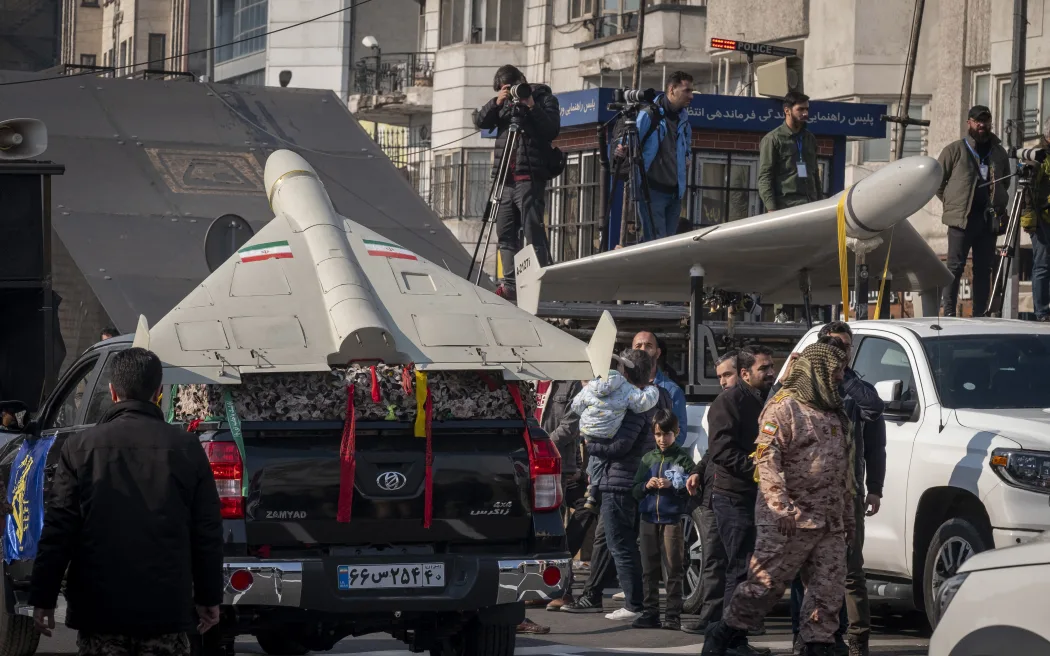

Iran has restarted parts of its drone production network during the six-week ceasefire that began in April, according to US intelligence assessments cited by multiple sources familiar with the findings. The assessments suggest Tehran is rebuilding sections of its military-industrial base more quickly than US officials had initially expected after sustained US and Israeli strikes.
Get today's headlines by email 
Several sources told CNN that Iran is already restoring damaged weapons production capabilities, including missile launchers, launch sites and manufacturing systems tied to drones and ballistic missiles. US intelligence estimates reportedly indicate Iran could fully restore its drone attack capability within six months.
One US official said Iranian efforts had surpassed previous expectations for how quickly the country could recover from the damage caused during the conflict.
Drone production resumes
US intelligence believes Iran resumed some drone manufacturing activity during the ceasefire period that followed weeks of fighting earlier this year. Drones are viewed as a continuing threat to both Israel and Gulf states because they can supplement Iran’s weakened missile arsenal if hostilities resume.
President Donald Trump has repeatedly warned that the US could restart military operations if negotiations with Tehran fail. He said earlier this week that he had come close to authorising renewed strikes.
According to sources familiar with the intelligence, Iran’s rapid recovery has been helped by several factors, including external support and the limited effectiveness of some strikes against critical infrastructure. One source said Russia and China had contributed to Iran’s ability to rebuild.
Two sources said China had continued supplying components that could be used in missile production during the conflict, although those deliveries may have slowed because of a US blockade.
Israeli Prime Minister Benjamin Netanyahu recently alleged that China was providing Iran with missile-manufacturing components. China rejected the accusation, with foreign ministry spokesman Guo Jiakun saying the claims were unfounded.
Missile and drone capabilities remain
Recent intelligence assessments indicate Iran still retains significant ballistic missile, drone and air defence capabilities despite the damage caused by US-Israeli operations.
CNN previously reported that roughly half of Iran’s missile launchers were believed to have survived the strikes. More recent assessments reportedly place that figure closer to two-thirds, partly because the ceasefire allowed Iran time to recover launchers buried beneath rubble.
The intelligence also suggests around half of Iran’s drone capability remains intact, with thousands of drones still available.
Sources said a large proportion of Iran’s coastal defence cruise missiles also survived because US air operations largely avoided coastal military infrastructure. Those systems are considered central to Iran’s ability to threaten shipping through the Strait of Hormuz.
Pentagon claims questioned
US Central Command commander Adm. Brad Cooper told lawmakers this week that “Operation Epic Fury” had destroyed 90% of Iran’s defence industrial base and severely weakened its missile and drone forces.
Cooper said the operation had damaged Iran’s military capacity to such an extent that it would take years to recover.
However, intelligence assessments reviewed by CNN appear to contradict that timeline. Two sources familiar with the findings said the damage was more likely to delay Iran’s recovery by months rather than years.
Some parts of Iran’s military-industrial infrastructure remain operational, according to the intelligence, potentially accelerating reconstruction efforts for key weapons systems.
A spokesperson for US Central Command declined to comment on intelligence matters. Pentagon spokesman Sean Parnell said the US military retained the capability to carry out further operations whenever ordered by the president.
The intelligence assessments overall suggest the conflict significantly weakened Iran’s military capabilities but did not eliminate them. Officials believe Tehran is now attempting to limit the long-term impact of the strikes through a rapid rebuilding campaign.
Join the discussion? 
Already a member? 
 Adapted by ASEAN Now. Source 22 May 2026
Recommended Comments
Create an account or sign in to comment