




The United States Navy has carried out a passage through the Strait of Hormuz as tensions with Iran remain high despite the start of ceasefire talks between the two countries.
Get today's headlines by email 
Two U.S. destroyers transited the narrow waterway on Saturday in a maneuver that was not coordinated with Tehran, according to reports. The ships crossed from the Arabian Sea into the Persian Gulf before returning, marking the first such movement by U.S. naval vessels since fighting began six weeks ago.
U.S. Central Command confirmed the operation, saying the destroyers were beginning preparations for efforts aimed at clearing mines from the strait. The command said underwater drones would soon be deployed as part of the effort.
“Today, we began the process of establishing a new passage and we will share this safe pathway with the maritime industry soon to encourage the free flow of commerce,” said Admiral Brad Cooper, the commander of U.S. Central Command.
Iran disputes naval transit
Iran described the transit as a violation of the ceasefire. A source cited by Bloomberg said Iran’s Islamic Revolutionary Guard Corps launched a drone toward the U.S. vessels, prompting them to turn back.
The incident came as diplomatic discussions between Washington and Tehran opened in Pakistan in an attempt to stabilise the conflict.
The Strait of Hormuz remains a crucial global shipping route, previously carrying about one-fifth of the world’s oil exports before the current hostilities began. Iran moved to close the waterway during the conflict, sharply disrupting energy shipments.
Despite the restrictions, three oil supertankers passed through the strait on Saturday, representing the largest single day of oil departures since the closure.
Military build-up continues
Although President Donald Trump has paused military operations against Iran for two weeks to allow negotiations to proceed, hostilities have not fully subsided and Iran continues to exert tight control over shipping through the passage.
Meanwhile, the United States is reinforcing its military presence in the region. A third aircraft carrier group, along with thousands of Marines and paratroopers, is expected to arrive later this month. Additional long-range cruise missiles are also being deployed.
Energy analyst Bob McNally, founder of Rapidan Energy and a former White House energy adviser to President George W. Bush, said the U.S. military appears to be preparing for further confrontation if talks fail.
“I think we’re kind of getting ready for round two,” McNally told CNBC.
Efforts to weaken Iran’s leverage
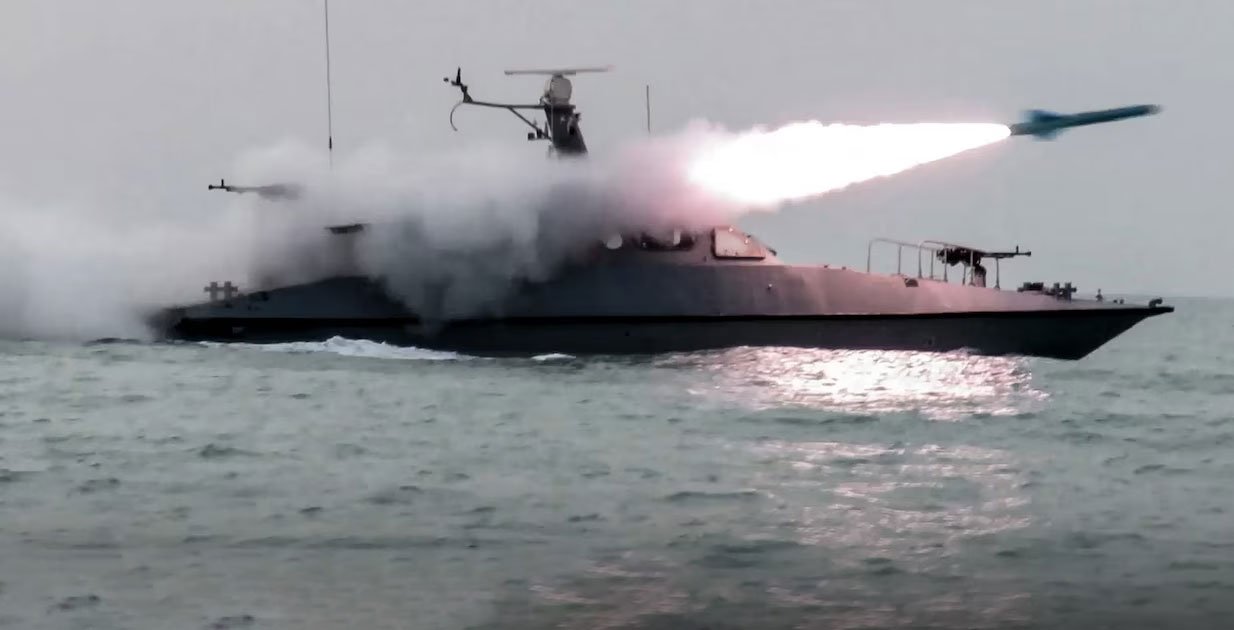
McNally said the U.S. military has been working to reduce Iran’s ability to disrupt shipping in the strait. He described the process as similar to a “whack-a-mole” effort against multiple threats including anti-ship missile launchers, fast-attack boats, drones, submarines and long-range artillery.
He also said the United States has targeted Iran’s stockpile of underwater mines, which could be used to block the channel.
According to McNally, these operations are aimed at lowering Iran’s ability to interfere with shipping to what he called a “manageable level,” allowing insurance companies and naval escorts to help restore traffic through the route.
Dispute over shipping tolls
For now, however, the presence of Iranian missiles and drones has discouraged many ships from entering the strait. Only a limited number of vessels have been allowed through, and a transit fee of roughly $2 million has reportedly been required.
Iran is seeking to formalise this arrangement in ceasefire negotiations. Trump has suggested the possibility of a joint arrangement with Iran to collect transit fees, though details remain unclear.
Oil-exporting Gulf states that rely on the route have signalled they would oppose any attempt by Iran to control the strait.
Analysts warn that such a scenario could have wider implications for global trade and financial stability.
“It would be a breakdown in global order and trade and stability,” McNally said in an interview with India’s Times Now. “It’s hard to imagine the United States ending this conflict in a way that leaves Iran strengthened and able to impose tolls or extract concessions.”
Join the discussion? 
Already a member? 
 Adapted by ASEAN Now. Source 12 April 2026
Recommended Comments
Create an account or sign in to comment