



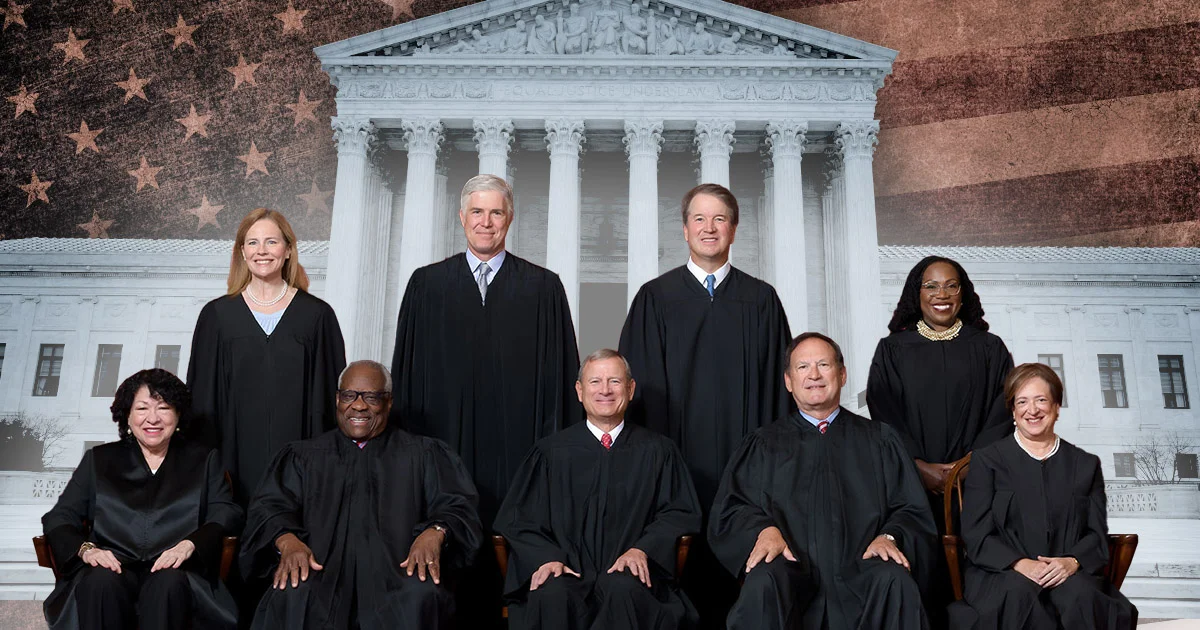

The Supreme Court of the United States appeared doubtful about President Donald Trump’s attempt to restrict birthright citizenship during oral arguments over a key immigration policy.
Get today's headlines by email 
A majority of the justices signalled concern about the administration’s claim that children born in the United States to undocumented migrants or some temporary visitors should no longer receive automatic citizenship.
The case centres on an executive order issued by Trump that aims to narrow the interpretation of the Constitution’s citizenship clause. The administration says the change would help curb illegal immigration.
Opponents argue the order conflicts with more than a century of legal precedent and threatens a central principle of US immigration law.
Trump attended the hearing in Washington, an unusual move by a sitting president that highlighted the political stakes surrounding the case.
Debate over the 14th Amendment
The arguments focused on the wording of the Fourteenth Amendment to the United States Constitution, which grants citizenship to anyone born or naturalised in the country and “subject to the jurisdiction” of US law.
US Solicitor General John Sauer argued the clause had been interpreted too broadly in the past. He said the provision should apply only to limited categories such as the children of foreign diplomats.
Sauer told the court that parents living in the country illegally retain allegiance to their home nations and therefore fall outside full US jurisdiction.
Chief Justice John Roberts questioned whether the president had the authority to deny citizenship to such a large group of people.
He said he struggled to see how the administration could justify excluding so many children from automatic citizenship under the current legal framework.
Several justices suggested the government’s interpretation could fundamentally alter long-standing views of citizenship in the United States.
Precedent and historical practice
Justice Elena Kagan said the amendment reflected a tradition rooted in English common law that broadly recognised citizenship based on birthplace.
She argued the constitutional provision adopted that approach without imposing the restrictions now proposed by the administration.
During the hearing, lawyers and justices repeatedly referred to United States v. Wong Kim Ark, an 1898 Supreme Court ruling that upheld birthright citizenship for a child born in the US to Chinese immigrant parents.
Civil liberties lawyer Cecillia Wang, representing the challengers, cited the decision as decisive precedent. Justice Brett Kavanaugh suggested that if the court accepted that interpretation of the case, the ruling could be relatively brief.
Legal analysts say the justices may avoid a sweeping constitutional ruling. Instead, they could focus on a federal law passed in 1952 that codified birthright citizenship in statute.
Immigration law specialist Stephen Yale-Loehr said courts generally prefer narrower decisions that sidestep constitutional questions when possible.
Decision expected later this year
The court is expected to issue a decision in June.
The case represents the first major immigration dispute decided fully on its merits since Trump began his second term in office.
A ruling against the administration would mark another setback following a recent decision by the court that struck down Trump’s global tariff policy.
If the president prevails, the outcome would support a long-standing conservative effort to reinterpret birthright citizenship and could reshape US immigration policy.
Trump defended his stance after the hearing, repeating criticism of birthright citizenship on social media and arguing the policy was originally intended to grant citizenship to the children of formerly enslaved people following the Civil War.
Critics have accused the president of attempting to pressure the court by attending the proceedings in person.
Join the discussion? 
Already a member? 
 Adapted by ASEAN Now. Source 2 April 2026
Recommended Comments
Create an account or sign in to comment