



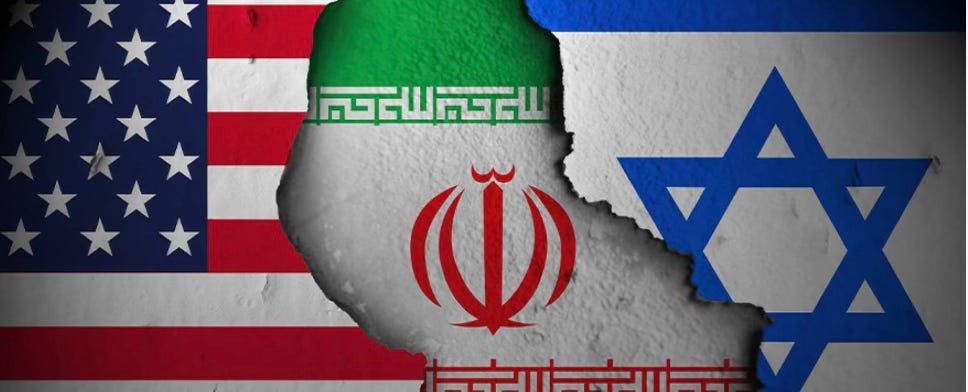

Millions of people in Iran have lost their jobs following the country’s conflict with the United States and Israel, according to government officials, as the war’s economic impact spreads across multiple sectors.
Get today's headlines by email 
Deputy Minister for Work and Social Security Gholamhossein Mohammadi said about two million workers had been made redundant since hostilities began. The layoffs have become a widely discussed issue among Iranians online, where officials and employers often describe the cuts as efforts to “balance the workforce”.
Job losses have not been limited to facilities directly damaged by air strikes. Businesses across manufacturing, retail, trade and the digital economy have also been affected as supply chains break down and consumer spending falls.
Economic ripple effects
Air strikes on key industrial facilities have contributed to the disruption. In late March and early April, US and Israeli attacks targeted major petrochemical plants in Asaluyeh and Mahshahr, along with the country’s largest steel producers, Mobarakeh Steel and Khuzestan Steel.
Tens of thousands of workers lost jobs directly at those sites, but the impact has spread far wider. Many companies supplying raw materials or services to those industries have also cut staff.
Iran’s car manufacturing sector, which is estimated to directly or indirectly employ about one million people, has reported layoffs across its supply chain.
Businesses are also struggling with disrupted imports. A manufacturing executive in the central province of Qom said production had halted due to shortages of raw materials.
“We hoped that when the war stopped, things would return to normal,” the executive said. “But foreign suppliers are worried their ships may not be allowed to enter Iranian waters.”
Some factories have been forced to suspend operations as disruptions in the Strait of Hormuz complicate shipping and logistics.
Falling demand and social media accounts
Reduced consumer spending has added further pressure on businesses. Many households have cut back on non-essential purchases, weakening demand in sectors such as tourism, restaurants and retail outside basic groceries.
Iranians have pointed to visible signs of the slowdown in social media posts. Some users have described unusually quiet roads and faster commutes in Tehran, suggesting fewer people are travelling to work.
Reports have also emerged of companies making large-scale layoffs. One social media user said a textile firm employing their relative had dismissed 600 of its 650 staff after losing access to imported raw materials.
Some employers have said they may rehire workers once conditions improve, while others have placed staff on unpaid leave.
Internet blackout and digital sector hit
The government’s decision to impose a nationwide internet blackout during the conflict has further damaged economic activity, particularly in the technology sector.
Officials say the shutdown was introduced for security reasons to prevent surveillance, espionage and cyberattacks. Iran previously imposed a similar blackout during a crackdown on protests earlier in the year.
Before the conflict, Information and Communication Technology Minister Sattar Hashemi estimated that each day without internet access cost the economy at least 50 trillion rials, roughly $35 million.
With the shutdown lasting 52 days so far, the total economic impact from the disruption alone is estimated to exceed $1.8bn.
Women have been particularly affected. Official data shows only one in nine working-age women in Iran were employed before the war, and many relied on platforms such as Instagram to sell goods and communicate with customers.
Even news organisations have cut staff. The Iran Labour News Agency recently dismissed its journalists and asked them to continue working as freelancers.
Inflation pressures rising
The government has announced a loan programme intended to support small businesses, offering about 440 million rials per employee. The loans must be repaid within six months and carry interest rates ranging from 18% to 35%, depending on the number of redundancies made.
The surge in unemployment comes as inflation in Iran has already surpassed 50% as of March 2026.
Economists warn that if fighting resumes or sanctions remain in place, economic conditions could deteriorate further, with rising prices and job losses placing increasing strain on households across the country.
Join the discussion? 
Already a member? 
 Adapted by ASEAN Now. Source 22 April 2026
Recommended Comments
Create an account or sign in to comment