



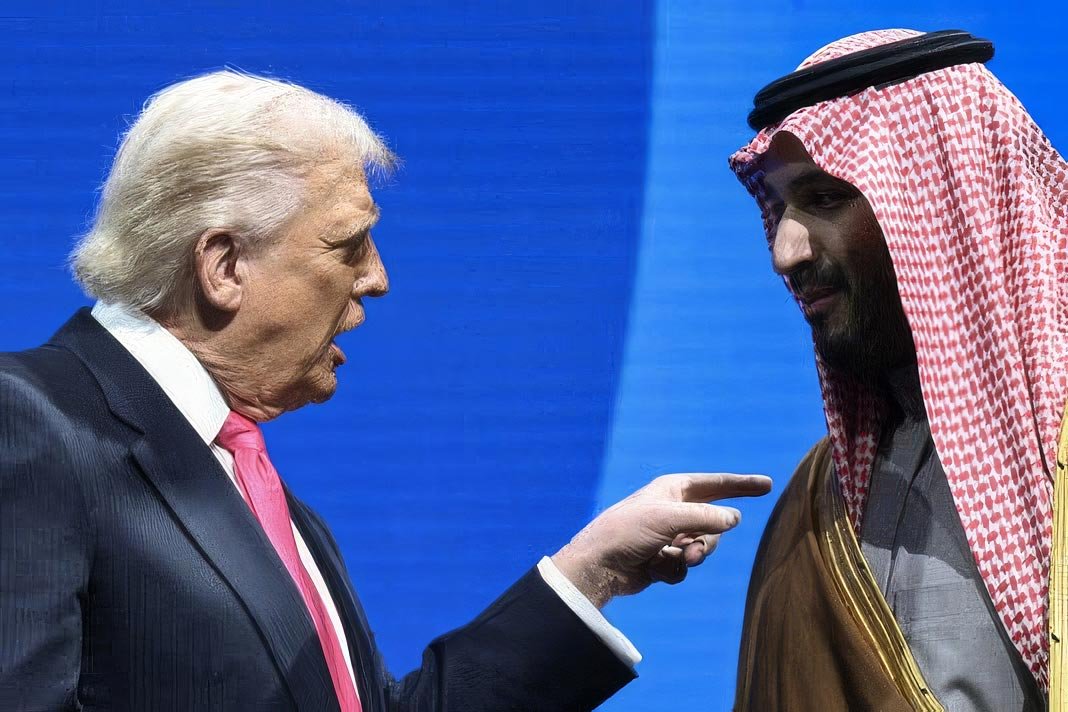

President Donald Trump’s attempt to link a potential agreement with Iran to a major expansion of the Abraham Accords has been met with a muted response across the Middle East, with diplomats and analysts questioning whether the proposal is politically realistic.
Get today's headlines by email 
Trump suggested this week that several Arab and Muslim-majority countries should establish diplomatic relations with Israel as part of a broader arrangement tied to ending tensions with Iran. Yet none of the countries he named have publicly endorsed the idea, and Israel itself has responded cautiously.
Analysts said the proposal appeared to come unexpectedly and lacks the diplomatic groundwork usually required for such a significant regional initiative.
Mediators See Themselves as Contributors
Several of the countries Trump mentioned, including Saudi Arabia, Qatar, Egypt and Turkey, have played key roles in diplomatic efforts involving Washington and Tehran.
Regional officials argue that these states have already contributed to stability efforts and may not view normalization with Israel as an appropriate condition for supporting a wider agreement with Iran.
A senior Pakistani diplomat said Gulf countries have already absorbed substantial economic and security costs from regional escalation. Requiring them to take on additional political risks by normalizing ties with Israel while the Gaza conflict continues could deepen existing divisions.
Countries including Saudi Arabia, Qatar, Jordan, Bahrain and the United Arab Emirates have also faced Iranian threats or retaliation despite not directly participating in military action against Iran.
Gaza War Complicates Diplomatic Ambitions
The ongoing war in Gaza remains one of the biggest obstacles to expanding the Abraham Accords.
While several Arab governments have strengthened unofficial ties with Israel in recent years and increasingly regard Iran as a strategic threat, public sentiment throughout much of the Arab and Muslim world remains strongly critical of Israel.
Trump first floated the proposal in a Truth Social post, arguing that countries benefiting from U.S. diplomatic efforts should join the Abraham Accords. He specifically called on Saudi Arabia and Qatar to participate and even suggested that Iran could eventually become part of the framework.
The Abraham Accords, launched during Trump's first term, led several Arab states, beginning with the United Arab Emirates and Bahrain in 2020, to establish formal relations with Israel, reshaping regional alliances.
Limited Enthusiasm From Israel
The White House defended Trump's position, saying that expanding the Abraham Accords has long been a priority and could complement a broader peace arrangement involving Iran.
However, diplomats involved in regional discussions said they had not experienced significant pressure from Washington to join the accords. Two Middle Eastern diplomats told NBC News they did not feel substantial pressure from the administration.
The reaction from Israel was similarly restrained. Although Israeli Prime Minister Benjamin Netanyahu has long championed expanding the accords, neither he nor senior government allies publicly embraced Trump's latest proposal.
An Israeli government official reiterated support for widening the circle of peace but stopped short of endorsing any direct linkage between an Iran agreement and normalization efforts.
Analysts Question Practicality
Experts say the subdued response reflects a broader tendency among regional governments to treat some of Trump's statements cautiously.
According to analysts, Israel would welcome expanded ties with countries such as Saudi Arabia, but linking that objective to negotiations with Iran may complicate both issues rather than advance them.
As a result, many of the governments whose cooperation Trump seeks appear reluctant to view the proposal as a serious or workable diplomatic framework.
Join the discussion? 
Already a member? 
 Adapted by ASEAN Now. Source 31 May 2026
Recommended Comments
Create an account or sign in to comment