



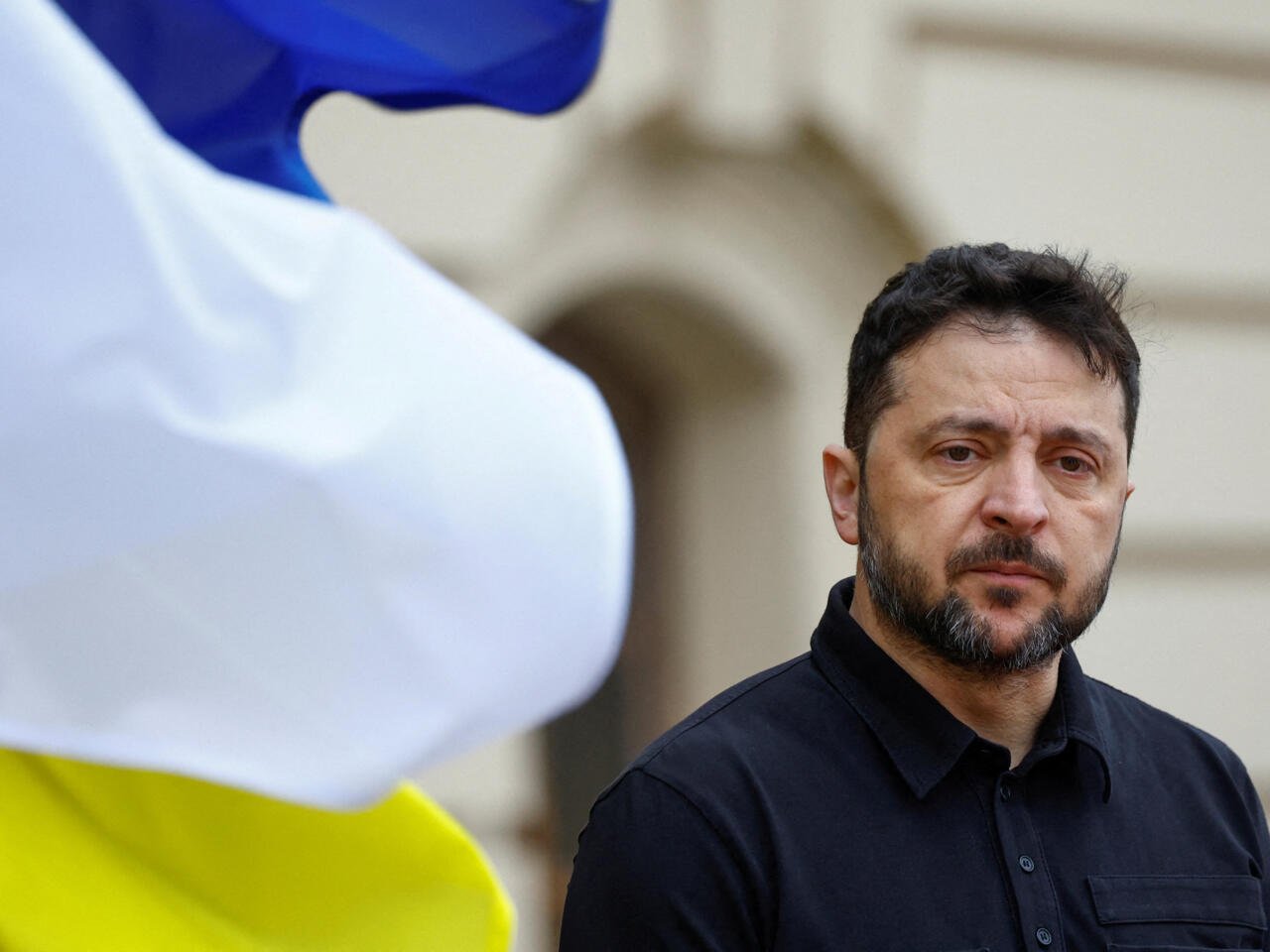

Ukrainian President Volodymyr Zelensky has criticised senior US envoys for travelling repeatedly to Moscow while failing to visit Kyiv, describing the imbalance as “disrespectful”.
Get today's headlines by email 
Speaking in an interview with a Ukrainian media outlet, Zelensky said it was inappropriate that US officials had met Russian leaders several times without making a comparable visit to Ukraine.
“It’s disrespectful to come to Moscow and not Kyiv,” Zelensky said. “It’s just disrespectful.”
US envoys’ meetings in Moscow
The criticism was directed at Steve Witkoff, a special envoy for Donald Trump, and Jared Kushner.
The two travelled to the Russian capital late last year during negotiations aimed at reaching a ceasefire in the war between Russia and Ukraine, and returned again in January.
Witkoff, a former real estate executive, has visited Moscow eight times and has held multiple meetings with Russian President Vladimir Putin.
However, neither Witkoff nor Kushner has visited Kyiv in an official capacity.
Zelensky said he understood there could be logistical challenges but suggested alternative arrangements could have been made if necessary.
“I understand we have complex logistics,” he said. “If they don’t want to, we can meet in other countries.”
Focus shifts to Middle East conflict
Earlier in April, Zelensky had said the two US envoys were planning a trip to Ukraine, but the visit never took place as the conflict involving the United States, Israel and Iran escalated.
Witkoff and Kushner are now part of a US negotiating delegation travelling to Pakistan for talks related to a ceasefire with Iran.
Zelensky acknowledged that Washington’s diplomatic focus had shifted towards the Middle East, but stressed the importance of maintaining cooperation with the United States.
“For us it is important to continue cooperating with the Americans,” he said.
Stalled peace negotiations
Efforts to end the war in Ukraine gathered momentum in autumn 2025 when reports emerged that US and Russian officials had been developing a framework for a possible settlement.
Ukraine later pushed to participate in the talks, leading to several meetings between Kyiv, Moscow and Washington.
By mid-February, both sides said they had reached tentative understandings on some military issues, including the position of the front line and arrangements for monitoring a ceasefire.
Major political questions remain unresolved.
Kyiv has demanded that Russia return Ukrainian children it says were forcibly deported after the invasion began. Moscow has also insisted on political changes in Ukraine’s leadership as part of any agreement.
The status of eastern Ukraine’s Donbas region remains the central sticking point. Russia has demanded sovereignty over territory it occupies, a condition Kyiv has rejected.
War continues along long front line
The conflict began when Russia launched a full-scale invasion of Ukraine in 2022 and has now lasted more than four years.
Russian forces control large parts of eastern Ukraine, and fighting continues along a long front line stretching from Luhansk in the northeast to Kherson in the south.
Cities across Ukraine remain frequent targets of drone and missile strikes. Ukrainian officials say Russia launched more than 700 drones and missiles in a series of attacks one night last week, killing at least 18 people.
Ukraine has meanwhile expanded long-range drone attacks on Russian infrastructure, targeting ports, energy depots and industrial sites deep inside Russian territory.
According to Reuters calculations, these strikes temporarily disabled around 20% of Russia’s oil export capacity earlier in April.
At the same time, the global energy disruptions linked to the conflict with Iran have boosted Russian oil revenues, even as the country’s broader economy faces continuing strain.
EU loan decision linked to pipeline repairs
The war has also complicated European energy supply.
Although many European Union countries have reduced reliance on Russian oil, Viktor Orbán’s government in Hungary and neighbouring Slovakia have continued imports through the Soviet-era Druzhba pipeline, which runs through Ukrainian territory.
The pipeline was shut earlier this year after Ukraine said a Russian strike had damaged the infrastructure in January.
Orbán subsequently blocked approval of a €90bn EU loan package intended to support Ukraine.
Zelensky said on Tuesday that the pipeline had now been repaired, raising the possibility that Hungary could lift its veto and allow EU member states to approve the financial assistance.
Join the discussion? 
Already a member? 
 Adapted by ASEAN Now. Source 22 April 2026
Recommended Comments
Create an account or sign in to comment