.jpg.b4d1f4e752094bc641c0c2b82d77fe65.jpg)
bannork
Advanced Member
-
Joined
-
Last visited
-
Currently
Viewing Topic: IRGC Executions Expose Cracks Inside Iran’s Theocracy
Everything posted by bannork
-
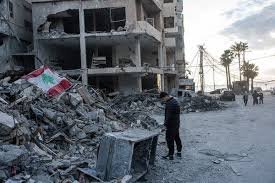
Nearly 700,000 people have been driven from their homes across Lebanon as fighting between Hezbollah and Israel Defense Forces surges into a second week, triggering one of the country’s largest mass displacements in years. The United Nations says entire communities are emptying as airstrikes intensify and rocket fire spreads across the border. Lebanese authorities report nearly 500 people killed so far, with the toll climbing by roughly 100 each day as bombardment continues. Smoke over Beirut as financial network targeted Fresh Israeli strikes on Monday sent thick columns of smoke over the southern suburbs of Beirut, a long-time Hezbollah stronghold. Security sources said the air raids hit five branches of Al‑Qard Al‑Hassan, a financial institution linked to Hezbollah. Israel had earlier signalled it would act against the network, accusing it of helping fund the group’s operations. The strikes came as Israel broadened its campaign after Hezbollah launched cross-border attacks following the killing of Iran’s supreme leader. Missiles over Tel Aviv as conflict spreads Hezbollah responded with missile fire deep into Israel, triggering air-raid sirens in Tel Aviv and as far as Jerusalem. Interception blasts echoed across central Israel as air defences engaged incoming rockets. At least four people were injured in central Israel after a strike near a military base south of Tel Aviv. Israel confirmed two soldiers had been killed in southern Lebanon — the first Israeli fatalities of the current campaign. Children among the displaced Aid agencies warn the humanitarian fallout is accelerating fast. UNICEF says around 200,000 children are among those displaced, many now sleeping in overcrowded shelters. Lebanon’s health ministry says at least 83 children and 42 women are among the dead. “Children are being killed and injured at a horrifying rate,” said regional director Edouard Beigbeder. A country scrambling for shelter In Beirut, the vast Camille Chamoun Sports City Stadium has been transformed into a makeshift refuge. Families sift through donated clothing while tents spread across the grounds as winter weather sets in. For a nation of six million already battered by economic collapse and previous conflict, the sudden exodus is a severe shock. And with Israeli forces pushing more troops into southern Lebanon and Hezbollah continuing its rocket attacks, few believe the crisis will ease soon. Almost 700,000 displaced in Lebanon as war enters second week
-
Indeed, I recommend he straps himself to the front of the next ballistic missile they launch at Iran. Apparently Trump mentioned the idea of seizing the island way back in 1988 in an interview. Could it be he doesn't want to upset China?
-
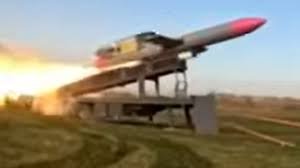
The unusual name and the missile's original color — a bright pink tip where the warhead is housed — were an internal company joke on the unheralded role of women in the male-dominated world of weapons and war. Ukraine could soon field a new generation of domestically developed missiles, as a defence manufacturer claims two high-speed weapons are nearing operational readiness — potentially giving Kyiv fresh reach deep behind Russian lines. The missiles, developed by Ukrainian firm Fire Point, are part of a weapons programme designed to break through increasingly dense Russian air defences. If deployed as planned, analysts say the systems could strengthen Ukraine’s long-range strike capability at a critical moment in the war. A race for speed in the missile war According to Fire Point executive Denis Shtilerman, the company’s new FP-9 missile has been designed to outrun many existing interception systems. Speaking to Army TV, he said the weapon could exceed speeds of 1,000 metres per second — significantly faster than many missiles currently used in the conflict. For comparison, Russia’s Iskander missile system travels at roughly 800 metres per second. That speed advantage, developers argue, could make the FP-9 far harder for air defence systems around heavily protected targets such as Moscow to intercept. Pressure grows as Patriot stocks tighten The timing is critical. Ukrainian leaders have repeatedly warned that supplies of US-made Patriot missile system interceptors — vital for protecting cities from ballistic attacks — are running dangerously low. President Volodymyr Zelensky has cautioned that shortages could soon weaken the country’s ability to defend key infrastructure. New domestic weapons, officials say, may help offset those vulnerabilities by shifting pressure back onto Russian targets. Shtilerman also claimed the FP-9 could carry a larger warhead than the US-supplied ATACMS missile while costing roughly two and a half times less to produce. A second missile waits in the wings Alongside the FP-9, Fire Point is developing the FP-7 — a missile expected to reach targets up to 300 kilometres away. The company hopes it could enter service later this summer if final testing proceeds as planned. If successful, the system would give Ukrainian forces another option for striking logistics hubs, command posts and ammunition depots beyond the immediate front line. Drones roll off the line as production surges Missiles are only part of the strategy. Fire Point says it is already producing around 200 long-range drones every day — and could quickly double or even triple that output if required. One model, the FP-1, can fly up to 1,000 kilometres carrying a 105-kilogram warhead. Another, the FP-2, is designed for strikes up to 200 kilometres from the front — and will soon carry a heavier payload. In a war increasingly defined by range, speed and production capacity, Kyiv is racing to ensure it can still hit back. Ukraine may soon field new missiles from fire point
-
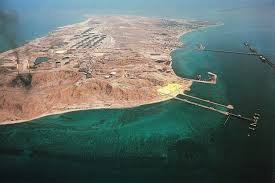
How Trump could cripple Iran’s economy by attacking one small islandKharg Island, a small but strategically vital location, handles 94 per cent of Iran's crude oil exports, primarily destined for China. US administration officials have reportedly discussed the possibility of seizing Kharg Island, which houses Iran's main oil export terminal. Such a move could severely cripple Iran's economy by cutting off its primary source of revenue, potentially for years, and provide significant leverage in future negotiations. The discussions come as shipping through the Strait of Hormuz has largely ceased, with the Islamic Revolutionary Guard Corps asserting control, leading to global supply chain disruptions and surging oil prices. How Trump could cripple Iran’s economy by attacking one small island
-
How to guarantee the safety of the oil tankers when the Iranians could drop a drone or missile on them ? Bring in a few destroyers, put a few tankers in between, and off goes the convoy, all the time their eyes peeled along the long coastline waiting to shoot down incoming. Would it work? Sounds cumbersome in that narrow strait. Cost a lot of US money to do that continuously, and who's going to cough up the insurance?
-
Cemetery footage highlights war lossesSeparate footage shared online also highlighted the scale of Russia’s losses during the conflict. Images showed a large military cemetery in Ussuriysk, a city located thousands of miles east of the front line. Rows of graves belonging to Russian soldiers appeared to stretch across the site, illustrating the human cost of the war. One observer reacting to the footage wrote: “The graves seem to go on forever. What is the point of this war?” Local resident Natalya Bogatyr said the scale of the cemetery shocked many people in the region. “Girls, I’ve only seen this on TikTok. And this is right here in Ussuriysk,” she wrote. Ukraine unleashes record drone swarm on Russia as $94M radar destroyed
-
Ukraine unleashes record drone swarm on Russia as $94M radar destroyed Footage appeared to show major damage to Russian military infrastructure in occupied Crimea. Moscow claimed its air defenses intercepted hundreds of Ukrainian drones overnight in what it described as a record assault. The strikes reportedly eliminated Oborona-14 and Nebo-U radar systems, along with two additional radar units located inside a radio transparent dome near the city of Yevpatoria. Military analysts estimate the destroyed systems were worth around $94 million. Radar installations play a key role in Russia’s air defense network by detecting incoming aircraft, drones and missiles. Ukraine unleashes record drone swarm on Russia as $94M radar destroyed
-
As explosions shake Iran’s major cities, tens of thousands of residents are abandoning their homes and fleeing into the countryside, seeking safety far from the expanding bombardment. Families from Tehran and other urban centres have packed cars and headed toward remote villages, mountain towns and farmland. For many, the move is a desperate attempt to escape airstrikes by the United States and Israel that have rattled neighbourhoods and shattered any sense of normal life. Capital empties as bombardment intensifies According to the UNHCR, roughly 100,000 people fled Tehran within the first two days of the war alone. The real figure is believed to be far higher as residents continue leaving the capital and other cities under attack. Twenty-two-year-old Pouya Akhgari is now sheltering with relatives in a village in Zanjan Province, about 200 kilometres from Tehran. While the village remains untouched by strikes, friends back in the capital describe explosions echoing across the city. “It just feels chaotic,” he said through a messaging app. “If this goes on, we’ll run out of money.” Strawberry fields offer fragile refuge Elsewhere, a lawyer who fled Ahvaz is hiding with relatives on a strawberry farm in a small rural town. The farm appears safe for now, far from military bases. But nearby areas have still seen strikes — including one that hit a Revolutionary Guard ammunition site in a neighbouring settlement. Days are spent walking dogs, picking strawberries and playing board games to distract children kept away from school. Yet conversations inevitably return to rising prices and fears about how long savings will last. Between airstrikes and security forces Even far from the front lines, the war’s political shadow remains. The lawyer said members of the paramilitary Basij — closely linked to the powerful Islamic Revolutionary Guard Corps — are increasingly visible and heavily armed in nearby towns. “They are waiting for the slightest movement,” she said, describing how dissent could be swiftly crushed. A country suspended between fear and kindness For some families, the journey out of Tehran was terrifying. One father described driving west with his young son as blasts shook the highway and columns of smoke rose behind them near the Alborz Mountains. Now sheltering near the Caspian Sea, he says village life offers a fragile calm. Strangers have shown unexpected kindness, even refusing payment for bread. But not everyone can escape. Some remain trapped in the capital, waiting out the war in underground garages and parking lots — praying for the bombs to stop. Iranians fleeing cities under attack seek refuge in the countryside

-
Across the Gulf, desalination plants convert seawater into drinking water for entire cities. In Kuwait and the United Arab Emirates, roughly 90% of drinking water comes from these facilities. Oman and Saudi Arabia depend heavily on them as well. Experts say the infrastructure is vital but dangerously exposed. Large open-air plants sit near the coast, often tied directly to power stations — meaning a single strike on electricity supply can halt water production entirely. The vulnerability of Gulf water systems has long been known. A leaked 2008 US State Department cable warned that Riyadh could face evacuation within a week if its main desalination facility were knocked out. The critical infrastructure that’s most vulnerable to Iranian attack
-
It's not only Trump who's repulsive, there's the rest of his admin too. For example: President Donald Trump’s nominee to lead the Department of Homeland Security is facing heavy scrutiny after a report revealed he made thousands of dollars trading stocks tied to military action overseas. According to an exclusive report from the Daily Beast, Sen. Markwayne Mullin (R-OK) purchased “substantial positions” in defense contractor RTX Corp. and oil giants Chevron and ConocoPhillips shortly before U.S. military operations in Venezuela and Iran. Financial disclosures show that on Dec. 29, 2025, Mullin bought between $15,000 and $50,000 worth of shares in each of the three companies. Five days later, U.S. forces launched Operation Absolute Resolve against Venezuela. By Jan 20, Chevron had climbed by roughly 9.5%, while RTX rose about 6%, the report noted. Trump’s DHS pick caught cashing in on war-linked stocks before military strike The Oklahoma Republican also serves on the Senate Armed Services Committee, which receives classified briefings on U.S. military operations, the outlet added Monday.

-
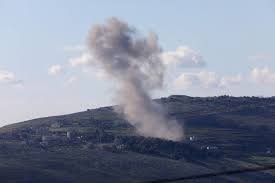
Human Rights Watch has accused Israel of using white phosphorus munitions over a residential area in southern Lebanon, raising fresh concerns over civilian safety as the regional conflict widens. The New York-based rights group says artillery-fired rounds exploded over homes in the town of Yohmor on March 3, igniting fires and placing residents at serious risk. The Israeli military says it is not aware of such use and cannot confirm the allegation. Evidence gathered over burning neighbourhoods According to Human Rights Watch, investigators verified and geolocated seven images showing airburst white phosphorus munitions deployed above a residential district. Footage also shows civil defence teams rushing to extinguish fires in at least two houses and a vehicle. Analysts say the imagery places the explosions directly above populated streets. HRW researchers warned that using such munitions in civilian areas could breach international humanitarian law. A weapon feared for its brutal effects White phosphorus ignites instantly when exposed to oxygen, producing intense heat and thick smoke. Militaries sometimes use it to create smokescreens or illuminate battlefields. But the substance is also a powerful incendiary weapon. It can cause severe burns, respiratory injuries and organ failure, and may continue burning until deprived of oxygen. Rights groups say its use over residential areas can ignite buildings and expose civilians to catastrophic injuries. Israel denies knowledge of the strike The Israel Defense Forces said it was “currently unaware” of the alleged incident and could not confirm that shells containing white phosphorus were fired. The military added that its policy is not to use such munitions in densely populated areas, except in limited circumstances. Israel has continued launching strikes against the Iran-backed militant group Hezbollah despite a fragile ceasefire reached in 2024. War spreading across southern Lebanon Israeli forces have intensified operations across southern Lebanon after cross-border attacks by Hezbollah fighters. Troops have also entered several border zones. Authorities in Lebanon say at least 394 people have been killed in recent strikes, with more than half a million displaced. HRW researcher Ramzi Kaiss warned the alleged strike in Yohmor could have “dire consequences for civilians,” urging Israel to halt the use of white phosphorus and calling on arms suppliers to reconsider military assistance. HRW accuses Israel of using white phosphorus over Lebanese town
-
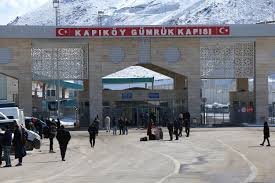
At a snowbound mountain crossing between Iran and Turkey, the human cost of the expanding war is written in tired faces and small suitcases. Hundreds of travellers have begun streaming through the remote frontier at Kapıköy Border Gate in eastern Turkey, fleeing airstrikes, cancelled flights and communications blackouts across Iran. Some arrive after days on the road. Others cross with nothing but a phone and the hope of reconnecting with family. For many, the journey marks the end of a week of chaos — and the start of an uncertain future. A mountain crossing becomes a lifeline The border post in Van Province now sees a steady flow of people moving in both directions as the war intensifies. Families step through the gates asking the same urgent questions: how to reach Van, two hours away, and how to contact relatives after losing signal inside Iran. Many carry minimal belongings. Some rely on borrowed phones from journalists or volunteers just to send a message home: “We’re safe.” Fear of bombs — and fear of the state Among those crossing was 61-year-old Ebrahim Eidi, who recently travelled through Tehran before leaving the country again. He says many Iranians believe change could come if protests erupt, with exiled opposition figure Reza Pahlavi seen by some as a possible rallying symbol. Yet fear still dominates daily life. “People are not afraid of America,” he said. “Unfortunately, they are afraid of their own government.” Running from war, running out of options Others fled the moment the fighting reached their cities. Hamid Shirmohammadzadeh escaped Tehran with his wife and children after airstrikes began, abandoning the life he had tried to rebuild abroad. He had worked in Tokyo before returning to Iran when his visa expired. Now he is stranded again, appealing for help to secure documents for his family. “In times like this we should help each other,” he said. “My country is at war.” Choosing family over safety Not everyone is leaving. Some are heading back into Iran despite the danger. Leila, 45, travelled from Istanbul toward her hometown of Shiraz after losing contact with relatives — including a brother in a coma. “How can I be safe when my family might be in danger?” she asked quietly. Then came the stark calculation facing many Iranians in wartime: “Maybe we die together — or maybe I can help them while we are alive.” 'Maybe we die together': Voices at the Iran-Turkey mountain crossing
-
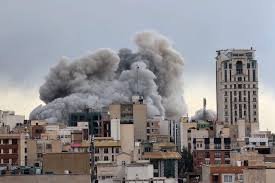
As airstrikes pound Iran and the war escalates, some Iranians say the country’s civilians are being crushed between an authoritarian regime and a foreign assault claiming to bring liberation. One Iranian dissident — previously imprisoned and tortured by the state — says watching the conflict unfold from inside the country has been devastating. While international attention focuses on geopolitics, they warn that ordinary Iranians are again paying the price. Liberation claims collide with civilian deaths The war launched by US President Donald Trump and Israeli Prime Minister Benjamin Netanyahu has been framed by supporters as a blow against Iran’s ruling clerics. Critics say the reality on the ground looks very different. Airstrikes have reportedly killed hundreds of civilians, including schoolchildren, fuelling anger among those who fear the war is being fought over Iran rather than for its people. Netanyahu described the military campaign — dubbed “Lion’s Roar” — as a long-awaited strategic move. Opponents argue that rhetoric about liberation rings hollow while bombs fall on densely populated areas. Exiled monarchists seize their moment The conflict has also revived long-simmering political ambitions in exile. Reza Pahlavi, son of the deposed shah, has positioned himself as a potential future leader of Iran. Supporters in the diaspora have rallied behind him, waving the monarchist lion-and-sun flag. Critics inside Iran, however, accuse exiled figures of exploiting the chaos while remaining distant from the suffering of civilians. Some analysts fear the war could trigger an externally engineered political transition reminiscent of the 1953 Iranian coup d'état, when Western-backed forces restored the shah to power. Calls for uprising — and fears of deadly reprisals Both Trump and Netanyahu have urged Iranians to rise up against the regime. Dissidents warn such calls can be deadly inside a state where accusations of foreign collaboration carry the death penalty. Past protests have already ended in bloodshed. Thousands of demonstrators were killed or imprisoned during previous uprisings, according to activists, with mass arrests sweeping up students and teenagers. For those living inside Iran, the dilemma is brutal: remain silent under repression or risk being labelled a foreign agent. Caught between dictatorship and war Many Iranians have long demanded reform, freedom and economic stability. But critics say war risks destroying any possibility of grassroots change. Some fear the country could fracture into rival factions if the state collapses suddenly. Others warn the conflict is hardening the regime while silencing dissent. For those watching bombs fall on Iranian cities, the message is stark: neither foreign airstrikes nor authoritarian rule offer the freedom millions still hope for. Who will stand up for the Iranian people as death rains on them from the skies?
-
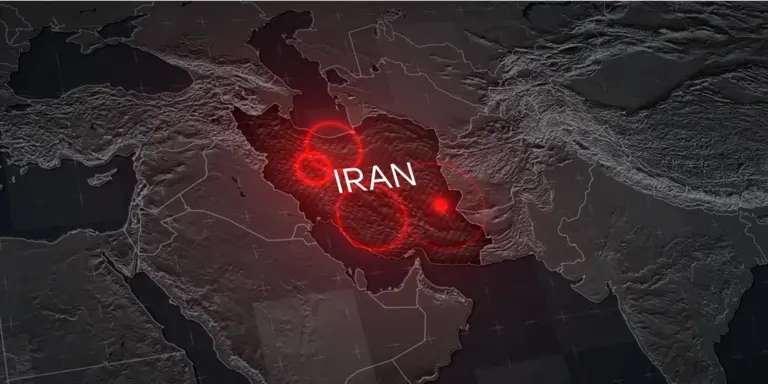
US intelligence agencies are scrambling after detecting a suspicious encrypted broadcast believed to have originated in Iran, raising fears it could be a covert signal to operatives positioned abroad. Authorities say the transmission — picked up across multiple countries — may represent an attempt to activate “sleeper assets” outside Iran as tensions spiral following the reported death of Iran’s supreme leader, Ali Khamenei, during the escalating conflict with the United States and Israel. A signal that set off alarms According to officials briefed on the alert, law enforcement agencies were warned Monday about unusual encrypted communications detected through preliminary signals analysis. The broadcast’s origin is believed to be Iran, though investigators say its precise content remains unknown. Its encrypted format suggests the message was designed for specific recipients rather than open broadcast. Security analysts fear the signal could function as an operational trigger — a coded instruction aimed at activating covert networks already embedded overseas. War escalation fuels retaliation fears The warning lands as tensions remain dangerously high after US and Israeli strikes earlier this year on Iranian targets. Tehran previously warned that attacks on its nuclear facilities could trigger retaliation beyond the Middle East. Intelligence officials now fear any response could come indirectly — through proxy groups or sleeper agents operating far from the battlefield. The conflict has already killed more than 1,000 people, according to regional estimates, deepening fears that the war could spill into global security arenas. White House acknowledges threat Speaking to reporters, US President Donald Trump said the administration was closely monitoring potential covert threats. “We’ve got very, very good intelligence into that,” he said when asked about sleeper operatives, adding that authorities “know a lot about them.” Trump also blamed the partial government shutdown for disrupting some intelligence operations. Officials declined to reveal further details about the broadcast or whether any specific cells had been identified. Security agencies brace for worst-case scenario Former FBI assistant director Chris Swecker warned that the current climate could create conditions for militant networks to act. “If ever there’s going to be a Hezbollah cell or a Hamas cell act in the United States in a violent way, it’s now,” he said. Meanwhile, FBI director Kash Patel said federal counter-terrorism task forces across the country remain on continuous alert, working to detect and disrupt any emerging threats before they materialise. US intelligence flags suspicious broadcast from Iran
-
. Dr Kristin Roman, the medical examiner who performed Jeffrey Epstein's autopsy, wanted to interview the officer who found Epstein and view his jail cell, but these requests were denied, though she received photos of the scene. Despite the official ruling of suicide by then-Chief Medical Examiner Dr Barbara Sampson, theories of homicide persist, supported by forensic pathologist Dr Michael Baden and Epstein's brother, citing neck fractures. Ghislaine Maxwell, Epstein's convicted accomplice, also stated she does not believe he died by suicide, as new documents related to the case continue to be released under the Epstein Files Transparency Act. Doctor who examined Epstein’s body initially hesitated to issue ruling
-
Trump claiming the Iranians were responsible for the attack on the girls' school
-
the Guan Yuan Fu Xing Merchant ships are altering their identities mid-voyage in a desperate bid to survive the escalating crisis in the Strait of Hormuz — broadcasting false links to China to deter Iranian attacks. Shipping data shows vessels anchored in the Gulf or attempting the hazardous crossing are rewriting their tracking signals to claim Chinese crews or ownership. Analysts say the tactic is a calculated gamble: align yourself with Beijing, Tehran’s key economic partner, and hope Iranian forces think twice before striking. Digital disguise on the world’s most dangerous waterway The manoeuvre relies on AIS transponders — the maritime tracking system that broadcasts a ship’s identity, location and destination. In recent days, around 30 vessels have altered these signals, inserting phrases such as “CHINA OWNER” or “ALL-CHINESE CREW” as they approach the strait. Trade risk analyst Ana Subasic says the messages are likely “precautionary signals” designed to reduce the chance of being targeted. But the signals can be misleading. Subasic notes they do not necessarily reflect genuine Chinese ownership or control. The latest run through the gauntlet The Panama-flagged cargo ship Guan Yuan Fu Xing became the latest vessel to slip through the strait on Monday. Two days earlier it had quietly altered its destination data to read “CHINA OWNER”. Other ships have used similar tricks. The Marshall Islands-registered Iron Maiden and Liberia-flagged Sino Ocean both displayed Chinese links while crossing — then deleted the messages once clear of danger. Some vessels have experimented with different shields. One declared itself a “Muslim vessel”. Others briefly claimed Turkish ownership. Dark ships and silent crossings Not all captains are willing to broadcast anything at all. Several ships have attempted the passage with their transponders switched off entirely — effectively disappearing from marine trackers until they emerge safely beyond the choke point. Among the vessels still transmitting signals, nine oil tankers and two LNG carriers have attempted the crossing since last week. Before the conflict erupted, about 138 ships passed through the strait every day. Oil shock and geopolitical pressure The waterway carries roughly a quarter of the world’s seaborne oil and one-fifth of global LNG. Its disruption has already sent crude surging past $100 a barrel — the highest level since Russia’s 2022 invasion of Ukraine. Analysts say Tehran’s strategy is clear: raise insurance costs, squeeze global energy markets and force Washington and Gulf states onto the defensive. European leaders are now weighing a response. France says allies are preparing a defensive naval mission to escort ships and reopen the vital corridor. Iran insists the strait is not formally closed. But its security chief has issued a blunt warning — as long as the war continues, Hormuz will not be safe. Ships brandish China-links to weave through Strait of Hormuz

-
Josh, Amanda and Matt A mother-of-two has pushed back at online critics after revealing her new boyfriend now helps care for the husband she says she “lost” to a catastrophic brain injury. Amanda Robinson, 39, says trolls accusing her of breaking her wedding vows do not understand the reality she has lived since a horrific crash in 2021 left her husband Matt, 42, with life-altering injuries. “I don’t have a marriage anymore,” she says bluntly. “But I still love him.” A crash that shattered a life overnight Amanda and Matt were childhood sweethearts who met in high school in 2003 and married just two years later. For 15 years, they built a family life with their two sons. Then, in February 2021, Matt’s truck was struck by another vehicle. The crash crushed his head, leaving him with a severe brain injury that changed his vision, personality, memory and behaviour. Doctors warned the family to prepare for the worst. From wife to full-time carer A nurse by profession, Amanda spent four years caring for Matt through his long recovery — feeding, dressing and cleaning him daily. When he finally left hospital after 10 months, he could walk and talk again. But the damage soon became clear. His memory collapsed, his eyesight vanished and hallucinations blurred his sense of reality. “In his mind he’s still living life before the accident,” Amanda says. “Sometimes he thinks he’s going to work. Sometimes he thinks he’s still in school.” The impossible decision Eventually, exhaustion forced Amanda to place Matt in a nearby care home. The decision, she says, broke her heart — but it allowed her to rebuild some normality for herself and her sons. Then, unexpectedly, she met Josh, a 38-year-old country singer performing at her local bar. When he later looked up Matt’s story online, Josh’s reaction surprised her. “He said Matt sounded like a great guy,” she recalls. A relationship that includes her husband Josh didn’t just accept Matt’s presence in Amanda’s life — he embraced it. Months into their relationship, he began joining Amanda on visits to the care home. The pair now support Matt together, forming an unusual but stable routine. “I did this all by myself for years,” Amanda says. “Now I’m not doing it alone.” Defying the online backlash The arrangement has triggered fierce criticism online, with some accusing Amanda of betraying her vows. She rejects that argument outright. “I lost everything too,” she says. “My career, time with my kids, my whole life changed.” Josh insists he respects Matt deeply — and says he would step aside if a miracle recovery ever happened. “I wish he could get his family back together,” he says. “I’d be happy for them.” My new boyfriend helps care for my disabled husband - it's time for me to be happy

-
I hope you didn't abandon them.
-
As expatriates rush to leave the Gulf amid escalating regional conflict, animal welfare groups in Dubai say a disturbing trend is emerging: pets abandoned as families scramble to escape. Animal shelters and veterinary clinics across the United Arab Emirates report a surge in desperate calls from owners seeking to rehome animals before boarding flights out of the region. Some pets have been found tied to lamp posts or left without food and water. Shelters Swamped by Sudden Wave of Abandonment Rescue organisations say the situation has deteriorated rapidly. Volunteers at K9 Friends Dubai report an influx of abandoned puppies and urgent requests from owners who no longer want to take their animals with them. At pet boarding centre The Barking Lot, staff say shelters are already “at breaking point”. Rescue workers warn hundreds more animals than usual are now arriving at facilities already stretched thin. Airlines Ground Pet Travel, Leaving Owners Trapped The crisis is partly being driven by travel restrictions. Reduced flight schedules mean airlines are not accepting animals on many routes. Mandatory rabies vaccination rules can also delay pet relocation by several weeks — a barrier for families trying to leave quickly. As a result, some owners claim they have no practical way to transport their animals out of the region. Disturbing Reports From Clinics and Borders Veterinary clinics say the pressure is turning darker. Some vets report owners asking about euthanising healthy animals rather than paying relocation costs or dealing with paperwork. Animal sanctuary workers say others have simply abandoned pets in desert areas near the border with Oman after being told animals could not cross. Rescuers claim several dogs have been found injured or killed in those areas. Rescuers Condemn ‘Heartless’ Decisions Animal welfare advocates say the behaviour is unacceptable. At the Six Hounds Animal Sanctuary, volunteers say boxes of kittens and abandoned dogs are arriving daily. Charities warn the trend mirrors patterns seen during conflicts in places such as Iraq and Ukraine. With more than 100,000 British nationals registered in the region through the UK Foreign Office, rescuers fear the surge in abandoned animals may only just be beginning. Expats fleeing Dubai abandon pets as they flee war-hit Gulf state

-
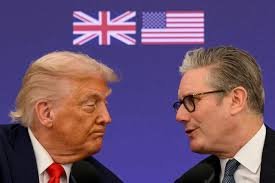
Nine days into the war against Iran, critics say the escalating conflict is forcing United Kingdom leaders to confront an uncomfortable reality: the actions of Donald Trump may now pose a direct challenge to Britain’s security and the international order. Airstrikes continue across Iranian territory while regional tensions surge. As the conflict widens, pressure is building on Prime Minister Keir Starmer to define Britain’s stance toward a war launched by its closest military ally. War Without Limits The conflict has already stretched far beyond Iran’s borders. Reports of a US submarine attack on an Iranian naval vessel near Sri Lanka have reinforced fears the battlefield is expanding. Critics argue Washington’s campaign has moved rapidly from targeted strikes to a broader confrontation without a clear diplomatic path. Civilian casualties and infrastructure damage inside Iran have further fuelled international alarm. A White House Under Fire Inside Washington, the messaging has been erratic. Trump has publicly suggested he should influence who succeeds Iran’s late supreme leader Ali Khamenei, killed earlier in the conflict. Meanwhile US Defence Secretary Pete Hegseth has adopted a hardline tone, warning enemies of overwhelming retaliation. The shifting rhetoric has raised concerns among European governments about the absence of a coherent strategy. Allies Fracture as War Spreads The war is also exposing divisions among Western partners. In Spain, Prime Minister Pedro Sánchez has condemned the conflict as a grave mistake. Across Europe, leaders worry the escalation could trigger economic turmoil, refugee flows and deeper instability across the Middle East. Countries such as Lebanon and several Gulf states are already absorbing the fallout from Iranian drone and missile strikes. Legal and Political Pressure Mounts International scrutiny is intensifying over the conduct of the war. Israeli Prime Minister Benjamin Netanyahu already faces legal pressure over operations in Gaza. Critics argue the campaign against Iran could intensify calls for international accountability. Diplomats warn that the erosion of legal norms around warfare risks further destabilising the global system. Britain Faces a Strategic Choice For London, the crisis has revived a long-running debate about dependence on Washington. Britain’s defence and nuclear deterrent remain closely tied to US technology and intelligence networks. Yet as the war drags on, analysts say the government may be forced to weigh loyalty to its ally against broader national and diplomatic interests. With the conflict still escalating, the stakes now stretch far beyond Iran — reaching into the foundations of the Western alliance itself. The first lesson of war is ‘know your enemy’ – and Britain’s enemy now is Donald Trump | Simon Tisdall | The Guardian
-
Meanwhile another drone that got through- Bahrain's Health Ministry said 32 civilians were injured in an Iranian drone attack on the island of Sitra, south of the capital Manama. All those injured were Bahraini citizens, the ministry said early on Monday in a statement carried by the Gulf nation's state news agency. Among them were children and four people were in serious condition, it said. Bahrain reports dozens injured in Iranian drone attack
-
The European Union could soon begin defining a clearer path for Ukraine to join the bloc, after the Netherlands signalled it will open talks with partners on a possible accession timeline. Dutch Prime Minister Rob Jetten said the coming months could provide Kyiv with crucial clarity about its future in Europe. His remarks came during a joint briefing with Ukrainian President Volodymyr Zelenskyy as the war with Russia continues to reshape the continent’s political landscape. Dutch Government Backs Ukraine’s European Future Jetten said the Netherlands remains firmly committed to Ukraine eventually joining the European project. “The Netherlands realises absolutely clearly that Ukraine’s future is in Europe,” he said. “Ukraine must become an EU member as a result of this process.” The Dutch government plans to begin consultations with EU partners to outline what a realistic accession timeline might look like. Reforms Continue Despite War The Dutch leader also praised Kyiv’s reform efforts during wartime. Ukraine has pushed ahead with anti-corruption measures, judicial reforms and economic restructuring despite the pressure of Russia’s full-scale invasion. Jetten said the progress made under such conditions was “impressive”. Those reforms remain a central requirement for EU membership. Kyiv Pushes for a Clear Date President Zelenskyy has urged European leaders to go further by setting a firm accession target. He argues that without a clear political commitment, the process could be delayed indefinitely by sceptical governments or geopolitical pressure from Moscow. A timeline, Kyiv says, would send a powerful signal to investors and Ukrainian citizens that the country’s European path is irreversible. EU Divided on Speed of Enlargement Inside the EU, however, the debate remains unresolved. Ursula von der Leyen, president of the European Commission, has cautioned that accession dates cannot yet be set because membership depends on meeting strict political and economic criteria. Some EU governments also fear rapid enlargement could destabilise the bloc’s finances and decision-making structures. Europe Preparing for a Bigger Union The EU has already begun reviewing its own rules to prepare for potential expansion. Officials are examining changes to budget systems and voting procedures designed decades ago for a smaller union. Ukraine’s accession would be one of the largest geopolitical shifts in the bloc’s history. For Kyiv, the message is simple: the war may still rage, but its long-term destination remains Europe. Netherlands to start talks with partners on Ukraine's accession timeline — Dutch PM

-
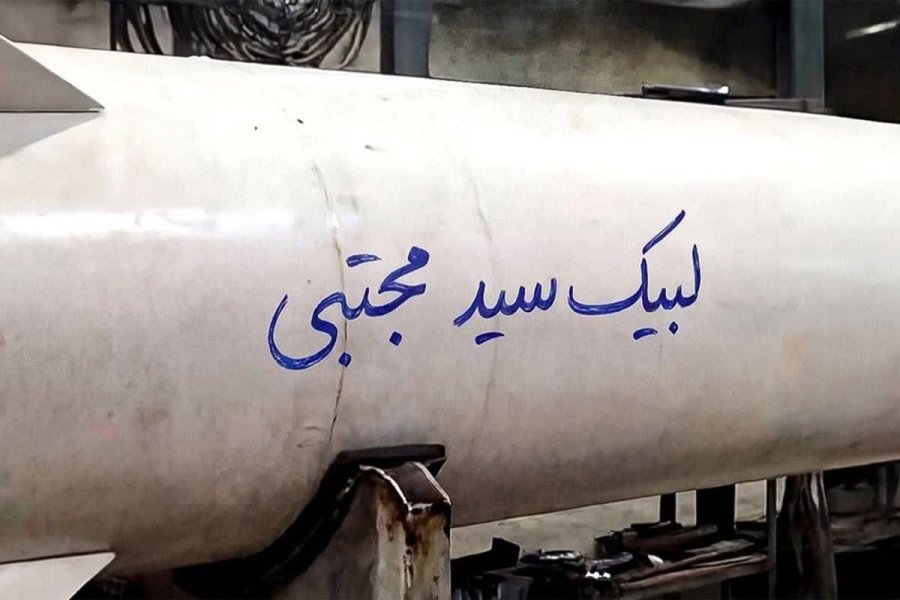
Iran’s new supreme leader has signed a message on a missile aimed at Israel, as he launched his first strikes just hours after his appointment. Mojtaba Khamenei, 56, was appointed the supreme leader of the Islamic Republic of Iran on Sunday. In one of his first moves in power, a picture of a projectile which featured the words “At your service, Sayyid Mojtaba", was posted on the state broadcaster IRIB's Telegram channel. Iran’s new supreme leader signs missile aimed at Israel
-
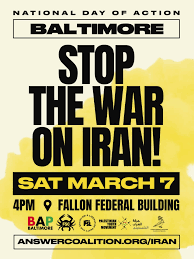
The war against Iran is rapidly reshaping global alliances — and critics say the biggest strategic winner may be Vladimir Putin. Nine days into the conflict launched by Donald Trump and Benjamin Netanyahu, tensions are growing not only across the Middle East but within the Western alliance itself. European leaders are uneasy, diplomatic ties are fraying and the Kremlin appears content to watch rivals turn on each other. Russia Accused of Aiding Iran — Washington Shrugs Reports that Moscow may have provided targeting information to Iranian forces have triggered alarm in Washington. Yet senior officials in the Trump administration have publicly dismissed concerns. White House press secretary Karoline Leavitt said Russia’s alleged actions were “not making a difference” because US forces were already “decimating” Iranian capabilities. US Defence Secretary Pete Hegseth also played down the threat, insisting American troops were not in danger. Allies Alarmed as War Fractures Western Unity The war is already straining relationships across the Atlantic. In Spain, Prime Minister Pedro Sánchez has openly condemned the conflict as a strategic mistake. Trump has threatened trade retaliation after Madrid refused to allow US warplanes to operate from Spanish bases. Meanwhile Britain’s Keir Starmer is under pressure to navigate the crisis as London weighs how closely to align with Washington. Putin’s Strategic Windfall For the Kremlin, the timing could hardly be better. The conflict has diverted international attention away from Russia’s invasion of Ukraine while exposing divisions between Washington and its allies. It also gives Moscow an opportunity to deepen ties with Xi Jinping, whose government has strengthened its partnership with Russia in recent years. As the war drags on, analysts say the perception of a fractured Western bloc could prove strategically valuable for Moscow. Diplomacy in Ruins, Endgame Unclear Critics argue the conflict lacks a clear political strategy. The White House claims Iran posed an imminent threat to US security, but detailed evidence has yet to be presented publicly. Without a plan for what follows the war, diplomats warn the conflict could expand into a prolonged regional crisis. For now, one reality is clear: while Washington and its allies argue over the path ahead, the Kremlin can afford to sit back — and watch its adversaries divide themselves. Trump is isolating the US by attacking its allies – it’s exactly what Putin wants
.thumb.jpg.3ee24d9400fb02605ea21bc13b1bf901.jpg)