Bacon1
Global Moderator
-
Joined
-
Last visited
Everything posted by Bacon1
-
Unintelligible post removed @Cameroni Offensive post removed @Ralf001 Offensive post removed @Harrisfan Reply to removed post @fredwiggy
-
Troll post removed @Harrisfan
-
Post with incorrect attribution removed @pixelaoffy @Mutt Daeng
-
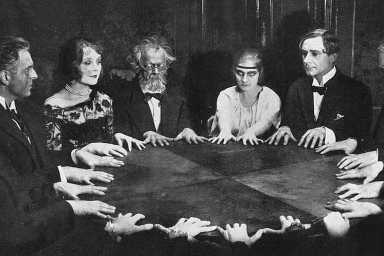
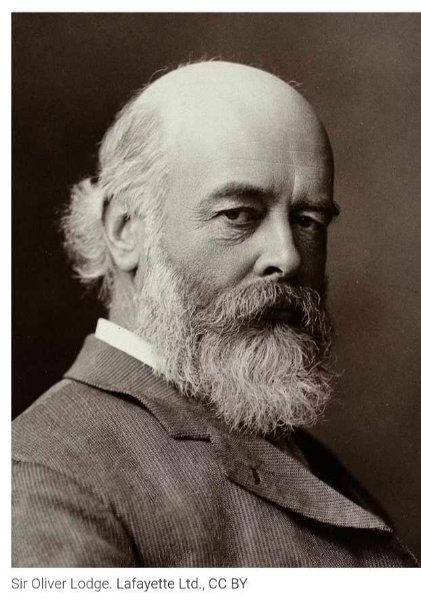
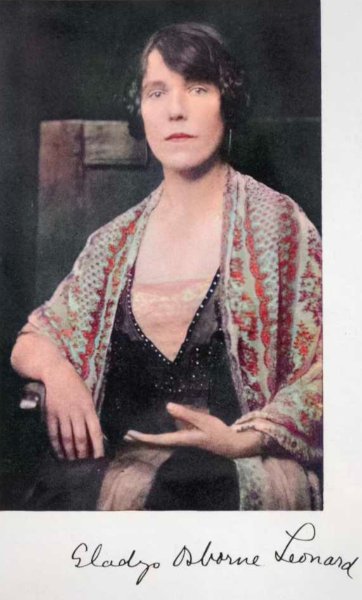
The unprecedented, colossal scale of loss during the First World War created a profound spiritual and cultural crisis, leading to a massive resurgence in Spiritualism and the popular practice of holding seances. With nearly nine million dead soldiers, families across Britain and beyond struggled to cope with immediate, massive grief and the cruel reality that many young men perished far from home, their final moments unknown. This intense need for closure and reassurance drove millions to seek comfort by attempting to communicate with their loved ones in the afterlife. The popularity of Spiritualism, which believes in the possibility of communicating with the dead, exploded as a direct result of this collective trauma. The movement gained immense credibility and mainstream attention through the actions of Sir Oliver Lodge, a highly respected British physicist. Lodge’s son, Raymond Lodge, was killed in 1915, and within weeks, Sir Oliver began meticulously documenting messages he believed came directly from Raymond via a professional medium. These transcripts, which often detailed a “utopian” and peaceful afterlife, were compiled into the 1916 bestseller, Raymond, or Life and Death. The book became an immediate sensation, circulating widely among both grieving relatives and soldiers on the front, providing a comforting counter-narrative to the brutal reality of the trenches. Raymond's popularity triggered a wave of "copycat" publications, allowing countless other families to feel that their dead soldiers were also special and at peace. For many, the seance room provided the only means to process their intense trauma, transforming the anxiety of an unknown fate into the soothing certainty of eternal rest. This cultural phenomenon was not merely a fleeting craze but a profound historical response to trauma. By offering a direct voice to the deceased, the Spiritualist movement fundamentally shaped modern perspectives on grief, mortality, and the possibility of communication with the deceased following the tragedy of WWI. The collective search for the voices of those lost became a defining feature of the post-war era. Key Takeaways WWI Trauma Fueled Spiritualism: The devastating loss of life—nearly nine million soldiers—during the First World War created an emotional crisis that drove millions of people to seek comfort and communication through Spiritualism and seances. Scientific Legitimacy: The movement gained mainstream acceptance when Sir Oliver Lodge, a prominent physicist, publicly documented and published alleged messages from his dead soldier son, Raymond Lodge, in the 1916 bestseller, Raymond, or Life and Death. The Afterlife Narrative: Seances allowed grieving families to transform the trauma of an unknown battlefield death into a comforting narrative, where the dead soldiers were "writing home" about a peaceful, utopian afterlife. Adapted From https://theconversation.com/after-the-first-world-war-seances-boomed-and-dead-soldiers-wrote-home-266508
-
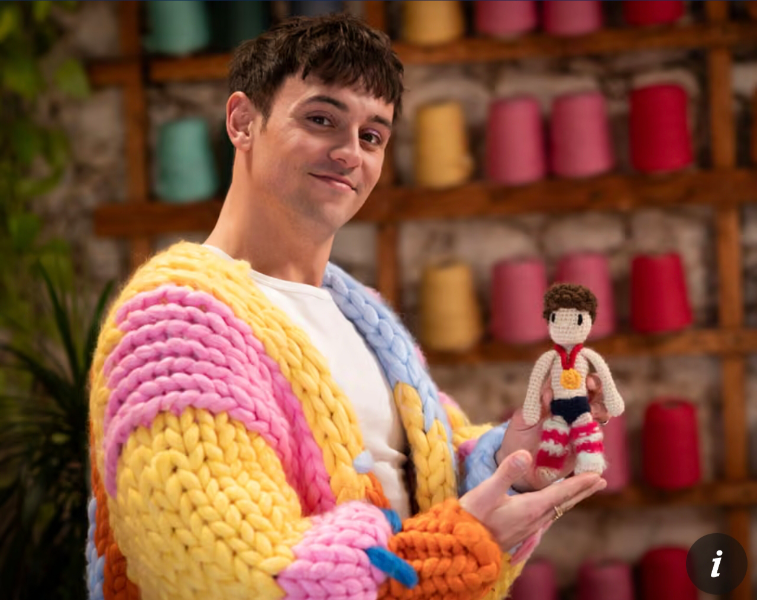
Olympic diver & TV presenter Tom Daley is swapping the diving board for the knitting needles in his new show, The Game of Wool: Britain’s Best Knitter, arriving on Channel 4 this November. Daley reveals that one contestant in the competitive craft series even knitted anatomically accurate vulvas as part of their challenge, highlighting the bold and playful creativity the show encourages. Aside from showcasing unexpected wool creations, Daley talks about his experience on the reality series Celebrity Traitors—in which he was eliminated early—and suggests he’d like a “resurrection” twist added to the format. Daley also reflects on his personal journey into knitting: what began as a lockdown hobby turned into crafting chandeliers, scarves and now a full-blown TV role. He hopes the show will inspire a new audience to pick up yarn and needles—and maybe swap screen time for some calm, creative craft time. Key Takeaways Tom Daley transitions from elite athlete to craft-show host, merging sports-star credibility with quirky wool artistry. The Game of Wool features bold creations—including anatomically correct wool vulvas—underscoring its unconventional and creative edge. Daley aims to make knitting more mainstream and fun, tapping into nostalgic handmade culture and encouraging people to unp lug and craft. Adapted From https://www.theguardian.com/tv-and-radio/2025/oct/30/vulvas-tom-daley-knitting-game-of-wool-traitors-olympian

-
Flame post & reply removed. @Harrisfan @Will B Good
-
-
Flame removed @Harrisfan
-
-
Post removed @mason 45 Unnecessary remark about nationality
-
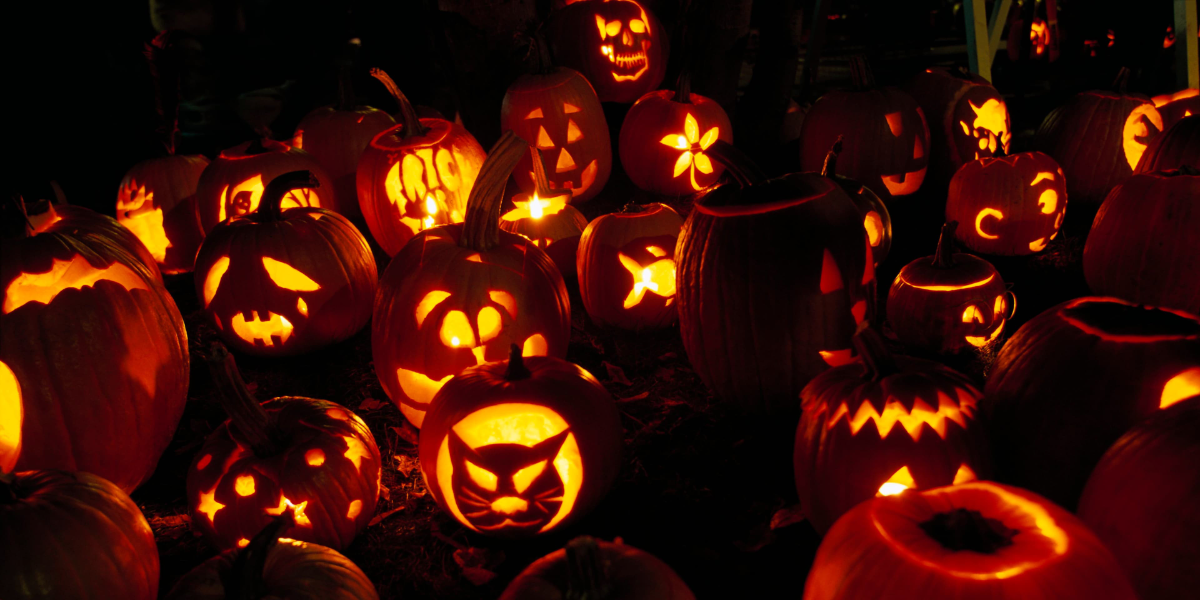
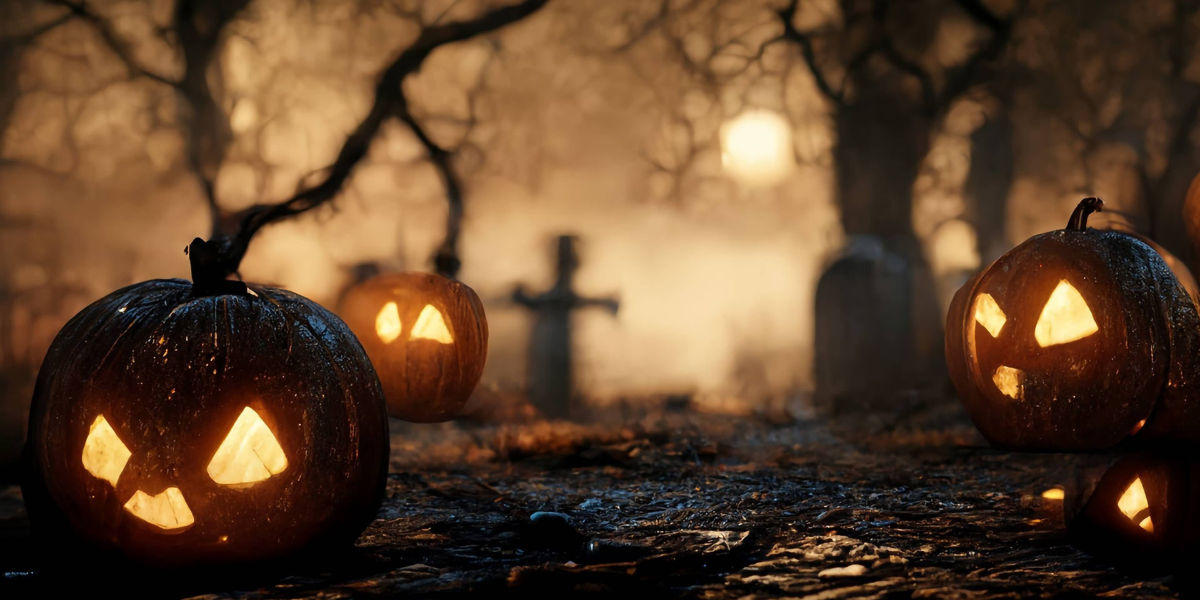
The holiday of Halloween, celebrated each year on October 31, has deep roots in ancient Celtic and Christian traditions. Beginning with the Samhain festival in Ireland and Britain over 2,000 years ago, communities marked the end of harvest season and the onset of winter by lighting bonfires, wearing costumes of animal skins and masks, and believing the boundary between the living and dead was a little thinner that night. With the spread of Christianity, the church established All Saints’ Day on November 1 and the evening before became known as “All-Hallows Eve”—eventually evolving into what we call Halloween. In America, immigrant traditions blended with local practices: by the mid-19th century Irish and other European arrivals helped popularize Halloween customs, and by the 20th century it transformed into a community-centered celebration featuring costumes, parties, and trick-or-treating. What began as a ritual rooted in reverence and superstition has become a largely secular, festive occasion where carving jack-o’-lanterns, dressing up, and enjoying sweet treats have displaced the older fears of wandering spirits. Key Takeaways: 1. Halloween traces back to the Celtic Samhain festival, where fire and costumes marked the boundary between life and death. 2. The church’s move to observe All Saints and All Souls Days helped merge Christian and pagan traditions into the Halloween we know today. 3. In the United States, Halloween evolved from cross-cultural roots into a mainstream commercial and family-friendly holiday focused on costumes, parties and trick-or-treating. Original Source: https://www.history.com/articles/history-of-halloween
-
A journalist with BBC has been barred from leaving Vietnam and subjected to repeated interrogations by authorities, raising fresh concerns about press freedoms in the one-party state. The reporter, a Vietnamese national residing in Thailand, returned to Vietnam in August to renew their passport and visit family. According to the BBC, although a new passport was issued, local police confiscated it—along with the journalist’s ID card—and questioned them for several days about their reporting. The incident comes as Vietnam’s leader, Tô Lâm, visits the UK to meet with Keir Starmer and other British officials. Friends of the journalist are calling on the UK government to raise the case during talks and publicly demand the individual’s release and safe exit. Press-freedom organisations note that Vietnam is ranked among the world’s lowest in terms of media liberties, citing frequent persecution of independent journalists and bloggers. Key Takeaways: Travel ban and detention: The journalist has been unable to leave Vietnam for several months after authorities confiscated their ID and renewed passport. Questioning of journalistic work: Authorities reportedly interrogated the journalist for days, focusing on their articles and sources. Diplomatic pressure point: The case coincides with a high-level Vietnam-UK visit, raising questions about how media freedom will be addressed in bilateral discussions. Original source: https://www.theguardian.com/world/2025/oct/29/bbc-journalist-barred-from-leaving-vietnam-and-repeatedly-interrogated

-
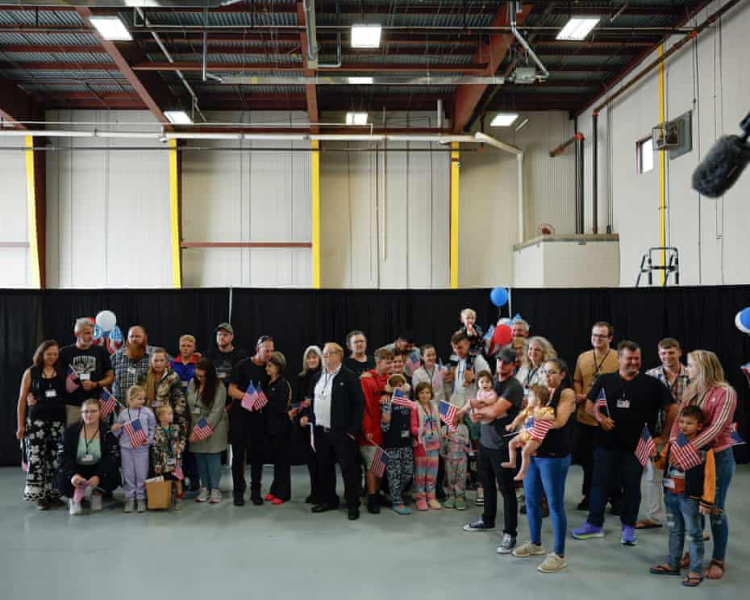
The Trump administration has announced a drastic reduction in the annual US refugee admissions ceiling, setting it at just 7,500 for fiscal year 2026—down sharply from the 125,000 approved under the Joe Biden administration. According to the official notice, those admitted will largely be white South Africans, a move flagged by refugee advocacy groups as favouring one specific demographic over broadly vetted refugees from global conflict zones. The change was published in the Federal Register and offers no detailed explanation beyond citing humanitarian justification or “national interest.” The decision swiftly triggered criticism. The International Refugee Assistance Project described the policy as politicising what it calls “a crown-jewel” of America’s humanitarian commitments—arguing that excluding thousands of already-approved refugees while focusing on one small subgroup undermines the program’s credibility. The context for the policy includes the US government’s earlier sanctions on the South Africa government by the Trump administration, citing alleged land-expropriation and discrimination against white Afrikaners—a minority population in South Africa. The refugee admissions cap mirrors earlier actions by the administration: during its first term, refugee limits were reduced to 18,000 for FY 2020 and 15,000 for FY 2021. This shift signals a major re-orientation of US immigration and refugee policy: a steep cut in refugee numbers, selective demographic preference, and a move away from broader global protection toward more narrow criteria. Key Takeaways: 1. Massive drop in US refugee admissions—from 125,000 under Biden to 7,500 under the Trump administration. 2. Priority given to white South Africans, a move criticised as favouring one demographic and undermining long-standing humanitarian norms. 3. Refugee advocates alarmed, warning that the change risks politicising the US refugee programme and weakening America’s global standing. Original source: https://www.theguardian.com/us-news/2025/oct/30/trump-refugee-restrictions-white-south-africans
-
A new infographic from Benchmark Mineral Intelligence chronicles three decades of global rare-earth elements (REE) mining, highlighting shifting production dynamics, dominant regions and emerging supply challenges. Over the past 30 years, China has solidified its role as the pre-eminent producer, while other regions have struggled to scale operations in the face of cost, regulation and geological hurdles. The visual summary shows the ascent of China’s output to more than 60 % of world production, while countries such as the U.S., Australia and parts of Africa have remained marginal by comparison. The infographic reveals a clear pattern: early mining efforts outside China peaked in the 1990s and early 2000s, then receded as China ramped up. Key mines in Australia and the U.S. lost competitiveness, prompting closures or mothballing. Meanwhile, China’s vertically integrated industry — from extraction to separation and magnet manufacturing — has fortified its dominance. The graphic also surfaces concerns about supply chain vulnerability and the lack of global diversification. As demand for rare-earths grows — driven by electric vehicles, renewable energy systems, and advanced electronics — the imbalance poses risk for downstream manufacturers. The infographic underscores the importance of investment in non-Chinese mining, refining and processing capacity to mitigate supply-side risk. In essence, the last three decades of REE mining tell a story of consolidation, dominance and emerging strategic fragility. While China remains the cornerstone of the sector, global efforts to develop alternative sources are increasingly vital if the industry is to meet future clean-energy and technological demand. Key Takeaways: 1. China has maintained and expanded its dominance in rare-earth elements mining and processing over the past 30 years. 2. Non-Chinese producers peaked early but failed to grow sufficiently, leaving the supply chain heavily concentrated. 3. Rising demand for clean-tech minerals exposes the need to diversify mining, refining and processing beyond China. Original source: https://source.benchmarkminerals.com/article/infographic-the-last-30-years-of-rare-earths-mining


-
Offensive & insulting post removed @darbie-foos 9. You will not post disruptive or inflammatory messages. You will respect other members and post in a civil manner. Personal attacks, insults or hate speech posted on the forum or sent by private message are not allowed.
-
Incorrectly attributed post removed
-
And: Genetics, infections, lifestyle habits, social and economic conditions, aging, and chronic physiological stressors like hormonal imbalances and immune system issues also shape health.
-
That's an oversimplification & doesn't describe the process of "getting sick", accurately. Healthy, well-nourished, and physically fit people are susceptible to both symptomatic and asymptomatic diseases, infections, et al.
-
Comment on moderation removed @newbee2022
-
Post only containing emoji, removed. @Trippy
-
@newbee2022 You have posted 10 thumbs down emojis on this thread. If you strongly disagree with what’s being posted, it would be more constructive to share your opinion directly, rather than using a “cartoon” approach. Please keep this in mind and apply it going forward.
-
The study concerns the use of a 23 Valent vaccine PCV 13 which has now been replaced by a 20 valent vaccine - PCV 20. It shows the unsuccessful use of one vaccine, not "the flu vaccine' I
-
Vid_20251030_052911.mp4 (Regenerated using AI) Researchers at University College London (UCL) have discovered that the human skull evolved significantly faster than those of other apes, indicating accelerated changes tied to brain expansion and facial flattening. By creating detailed 3D digital models of skulls from seven great-ape species and nine lesser apes (gibbons), the team measured variation across four regions of the skull: upper face, lower face, front of the head and back of the head. Their analysis found that the human skull changed roughly twice as much as expected under normal evolutionary rates when compared with other apes. While brain size undoubtedly played a major role in these morphological changes, the researchers suggest that social selection pressures may also have been significant in shaping human skull evolution. This study, published in Proceedings of the Royal Society B: Biological Sciences, provides one of the most detailed comparative examinations of skull structure among apes and highlights how unique the human lineage has been in terms of cranio-facial adaptations. In short: humans didn’t just slowly drift ahead — our skulls rapidly adapted, likely driven by the dual forces of brain growth and complex social behaviour that other apes did not experience in the same way. Key Takeaways 1. Human skulls evolved twice as fast as those of other great apes, signifying rapid anatomical change. 2. Enlarged brain size and flatter faces in humans are likely tied to cognitive and social evolutionary advantages. 3. Beyond intelligence, social dynamics and selection (such as status, communication, group living) may have accelerated human cranio-facial evolution. Adapted From: https://www.sciencedaily.com/releases/2025/10/251029100152.htm
-
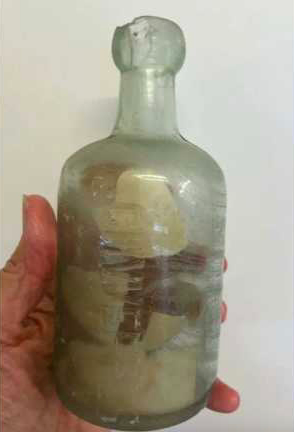
More than a century after two Australian soldiers penned heartfelt notes during their journey to World War One, their messages in a bottle have been discovered on a remote Western Australian beach. The letters, written in 1916 by Private Malcolm Neville and Private William Harley, were found this month on Wharton Beach near Esperance by local resident Deb Brown and her family during a beach cleanup. Inside a weathered glass bottle, the two notes revealed a snapshot of life aboard a troopship heading to France. Neville’s cheerful letter to his mother described the ship’s food as “real good” and said the men were “as happy as Larry.” Tragically, he was killed in action months later at age 28. His great-nephew, Herbie Neville, called the discovery “unbelievable,” noting that Neville’s niece still remembers her uncle leaving for war and never coming home. Harley, who was 37 at the time, addressed his message simply “to the finder,” as his mother had died years earlier. He survived the war and returned to Australia. His granddaughter, Ann Turner, said her family was “stunned” and felt as if “our grandfather has reached out from the grave.” Experts believe the bottle was thrown “somewhere in the Bight,” referring to the Great Australian Bight, and likely spent only weeks in the water before washing ashore — where it may have remained buried for over 100 years. Key Takeaways 1. Historic Discovery: Two WWI letters written in 1916 were uncovered in a bottle on Wharton Beach, Western Australia. 2. Emotional Connection: One soldier died in battle, while the other survived — both families were deeply moved by the find. 3. Century-Long Journey: Experts say the bottle likely washed ashore soon after being tossed overboard, remain ing buried for decades. Adapted From https://www.bbc.com/news/articles/clyg6pny0e8o

-
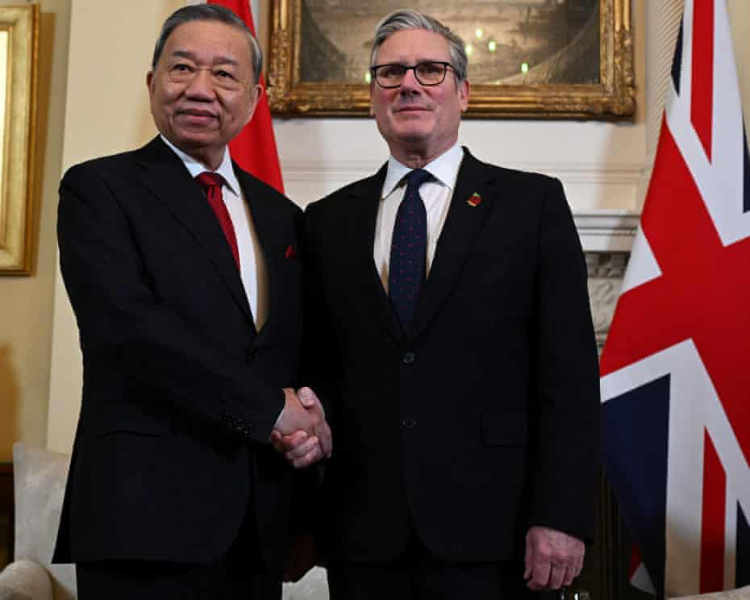
The UK government has announced a new agreement with Vietnam aimed at speeding up the deportation of Vietnamese nationals who arrive in Britain by irregular means. Under the deal signed at 10 Downing Street, those entering via small boats or lorries will face significantly faster return processing if they have no right to stay. Data show Vietnamese nationals made up 20 % of small-boat arrivals in the first quarter of 2024 — a ten-fold surge compared to the previous year. The deal is described by the government as its strongest migration treaty of this kind with another country. It invites enhanced cooperation including biometric data-sharing, quicker document issuance and efforts to break up criminal smuggling networks. Prime Minister Keir Starmer stated the agreement sends “a clear message: if you come to the UK illegally, you will be swiftly returned.” Its administrative reforms aim to reduce processing times by 75 % (potentially up to 90 %) for documented cases, and increase the number of removals of those with no legal status. At the signing ceremony, Vietnamese leader Tô Lâm joined Starmer in Downing Street, highlighting the strengthened bilateral ties. While the government emphasizes border protection and disrupting illegal migration, rights groups caution about safeguards for trafficking victims and due-process for asylum claims. Key Takeaways: The UK-Vietnam agreement will fast-track deportation of Vietnamese nationals who arrive via irregular routes and have no right to remain. New measures include biometric data-sharing, expedited documentation and a cut in processing times by up to 90 %. The deal is billed as the UK’s strongest migration treaty, but rights-groups raise concerns about the treatment of trafficking victims and asylum safeguards. Adapted From https://www.theguardian.com/uk-news/2025/oct/29/vietnamese-arrivals-in-uk-by-irregular-means-will-be-fast-tracked-for-deportation-says-no-10