



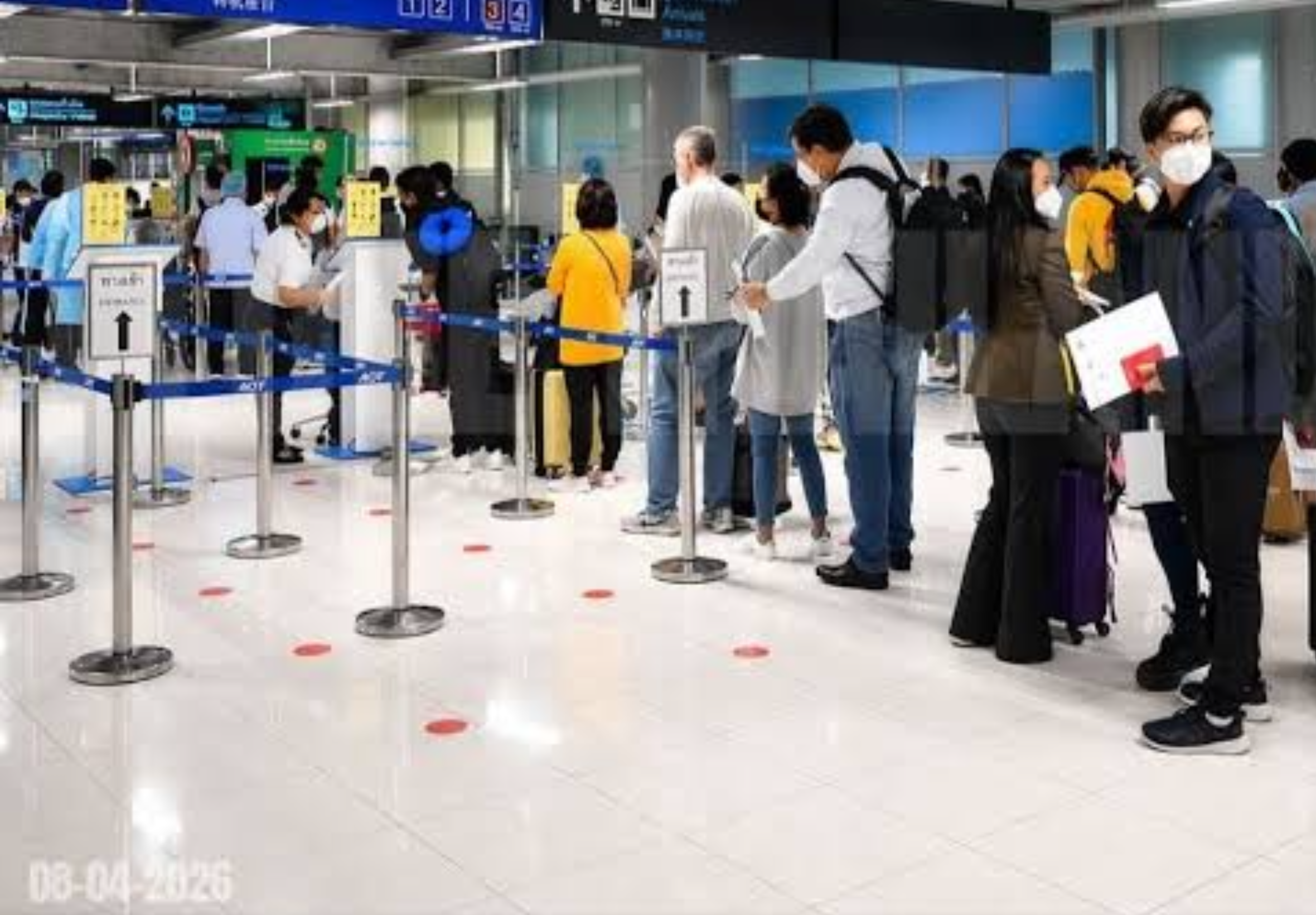

The Thai government’s plan to collect a tourism fee of at least 300 baht through airlines has encountered another obstacle after aviation bodies said the proposal is impractical. Industry representatives argue that airlines’ booking and back-office systems are not designed to collect the charge and have instead recommended using the Thailand Digital Arrival Card (TDAC) system, which foreign visitors must complete before entering the country.
Get today's headlines by email 
The Ministry of Tourism and Sports last month asked airlines to act as intermediaries to collect the fee on behalf of the government. Under the National Tourism Policy Act, Thai citizens are exempt from the levy, making it unlawful to charge them. The ministry suggested airlines collect the fee from all passengers before reimbursing Thai travellers, with the government covering the administrative costs.
However, Sheldon Hee, Regional Vice-President for Asia-Pacific at the International Air Transport Association (IATA), said the proposal would create unnecessary complications. He noted that airlines generally do not require passengers to provide nationality, passport details or residential addresses when initially booking flights, as only a passenger’s name and destination are typically needed.
Mr Hee said the TDAC digital immigration system would provide a more suitable platform because it is already mandatory for foreign visitors entering Thailand. Aviation stakeholders and the Airlines Association of Thailand (AAT) supported this approach during a recent meeting with officials from the Tourism Ministry.
The AAT said Thai airlines operate different reservation and back-office systems, while more than 100 foreign airlines also serve Thailand. Embedding the tourism fee into airfares across so many carriers would add significant complexity. The association added that TDAC is managed by the Immigration Bureau and reports directly to the government, making it a more appropriate mechanism than relying on independent airlines.
The tourism fee was first proposed in 2020 but has yet to be introduced because of repeated government changes and technical challenges. Most of the revenue is intended to fund insurance for tourists, while the remainder would be used to maintain tourist attractions and improve infrastructure.
The Bangkokpost reported that the final amount of the levy will depend largely on the projected cost of accident insurance and treatment at private hospitals. Studies have found that unpaid medical bills left by foreign visitors cost Thai hospitals around 2.5 billion baht each year.
Join the discussion? 

10 July 2026
-
 10
10
Recommended Comments
Create an account or sign in to comment