



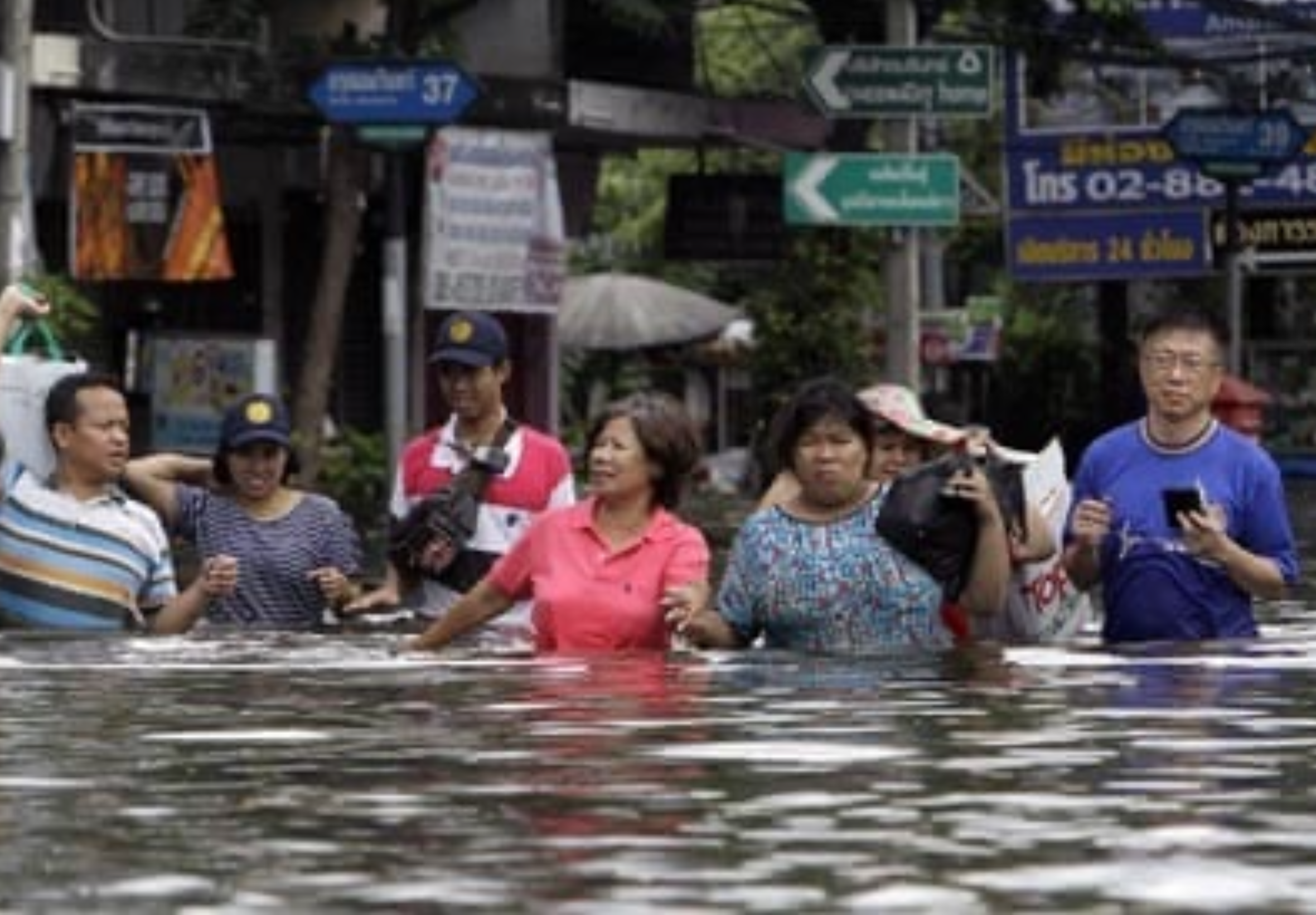

Bangkok City Hall is developing a long-term drainage master plan designed to handle rainfall of up to 100 millimetres an hour, as the capital prepares for heavier downpours linked to climate change.
The Bangkok Metropolitan Administration (BMA) is working with the Japan International Cooperation Agency (Jica) on the five-year Thai-Japanese cooperation project. Deputy Bangkok governor Wisanu Sapsompon chaired the steering committee's first meeting on Monday at the city's drainage and sewerage department.
The current system is designed for rainfall of about 76mm an hour. Studies indicate that hourly rainfall could reach 80-97mm between 2046 and 2065 under climate-change scenarios, an increase of 5.4-27%, Mr Wisanu said.
The BMA has therefore set 100mm an hour as the benchmark for future planning.
More than drains and pumping stations
The proposed Urban Drainage Grand Design will cover expansion of drainage networks and pumping capacity, but will also look at creating more drainage routes, controlling runoff and protecting water-retention areas.
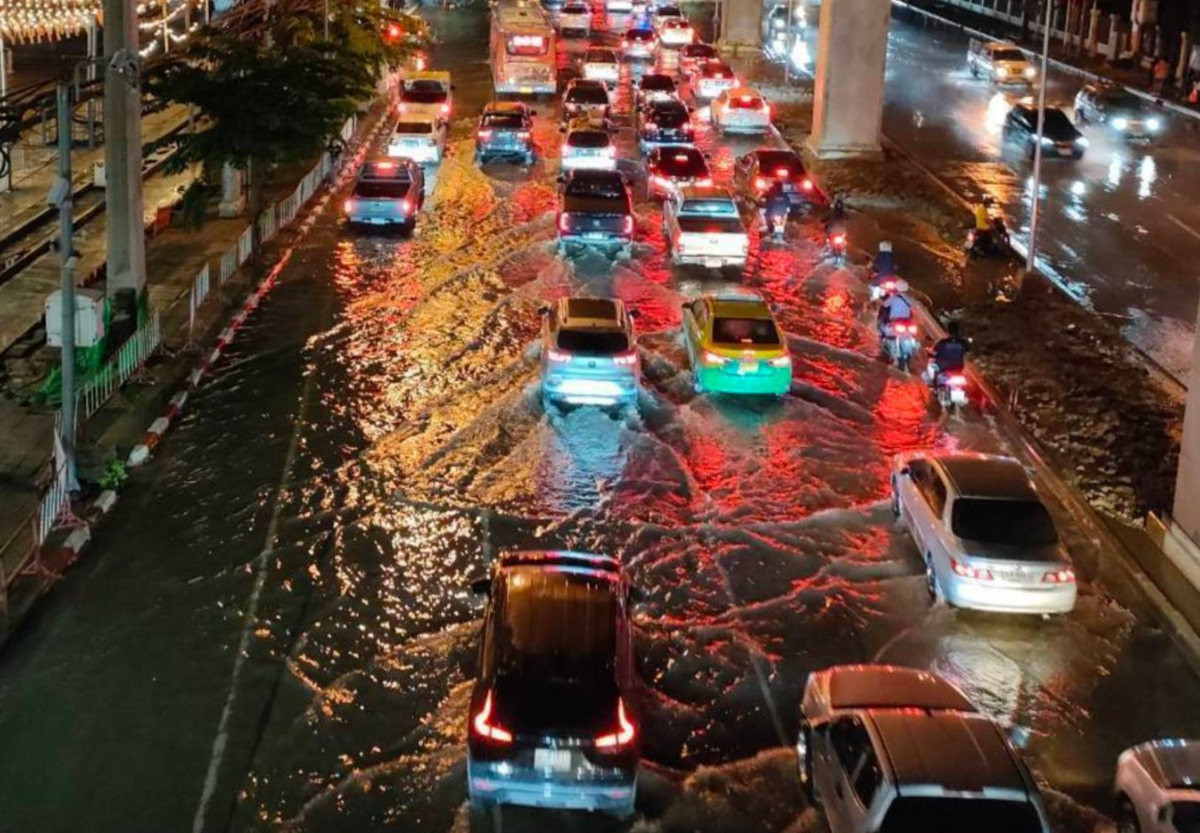
For residents, including foreign homeowners, tenants and visitors, the project is intended to reduce the disruption caused by intense rain: flooded roads, difficult journeys and waterlogged neighbourhoods.
City Hall wants urban areas to play a larger role in holding rainwater. Roads, pavements, public parks, schools and public buildings could be fitted with permeable surfaces, detention areas, rain gardens, underground storage and additional green space.
Officials have also proposed runoff-control targets for individual drainage zones, measured by the volume of water that can be reduced.
Under possible land-use and building-control measures, at least 50% of open space would be designated permeable, in line with the Open Space Ratio. The BMA is also considering changes to the Biotope Area Factor, which requires part of a development plot to serve as ecologically green space, to reflect different land uses.
Data from public parks and projects subject to environmental impact assessments will be used in preparing the plan.
Canal levels and floodgate operations under review
The project will also assess how Bangkok manages pumping stations and floodgates before heavy rain arrives.
One proposal, called the Pink Plan, would lower canal levels below existing targets at selected stations when severe rainfall is forecast. Officials will assess the measure against concerns including water quality, sediment levels and odours.
The BMA said it would review operation records, maintenance information and station checklists to produce clearer manuals. At present, flood responses rely heavily on local officials' experience and judgement.
Four working groups will cover the grand design, facilities, land-use and development controls, and operational improvements. Jica experts will provide technical advice.
The BMA drainage and sewerage department proposed the cooperation in May 2023. Jica approved it in February 2024, followed by discussions on its scope and joint field surveys. The project has two phases: an initial three-year stage followed by a further two years.
Join the discussion? 

23 September 2026
-
 1
1
Recommended Comments
Create an account or sign in to comment