



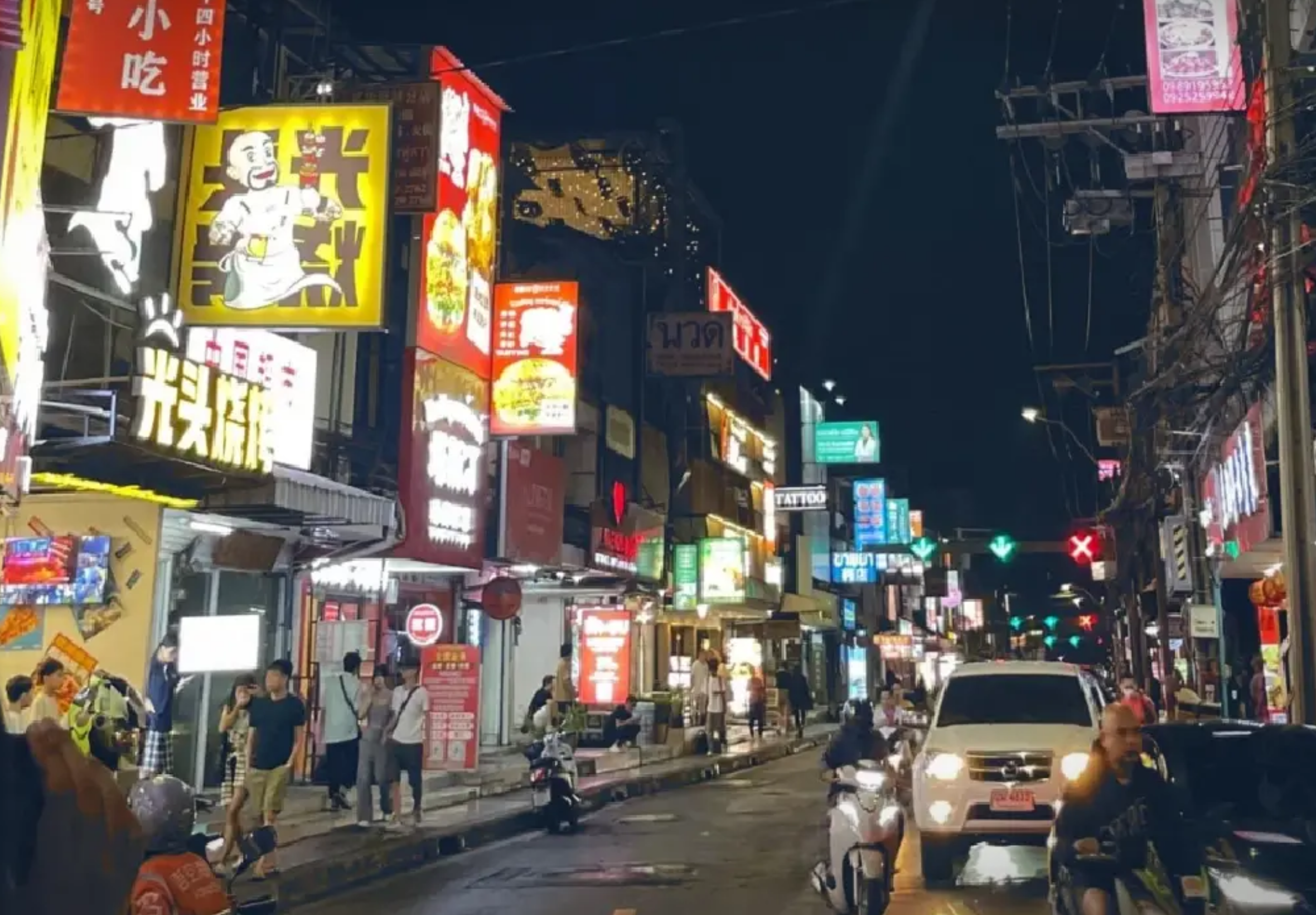

Bangkok’s Huai Khwang district has come under renewed scrutiny after a Chinese restaurant controversy reignited questions about closed-loop business networks, nominee ownership and regulatory enforcement in Thailand.
Get today's headlines by email 
The issue gained national attention when a Chinese influencer posted a video claiming that a restaurant in Huai Khwang accepted only Chinese cash and not payments through Thailand’s QR code system. The video quickly went viral, prompting criticism on social media and raising concerns about whether some foreign-owned businesses were operating outside Thai regulations.
Huai Khwang has undergone a significant transformation in recent years as increasing numbers of Chinese migrants, investors and entrepreneurs have established businesses in the district. Chinese restaurants, supermarkets, beauty clinics and other enterprises now occupy many streets, creating an environment that largely serves Chinese residents and visitors.
According to Pagon Gatchalee, deputy secretary of the Thai-Chinese Journalists Association and founder of the Facebook page “Ai Zhong”, Huai Khwang became attractive to Chinese investors because of its strategic location, relatively affordable business costs and access to a growing Chinese community.
Pagon said some businesses appear to operate within closed networks where Chinese investors, suppliers, employees and customers remain largely within the same community. He noted that such business ecosystems do not automatically indicate legal violations but said authorities should ensure all businesses comply with Thai regulations and ownership requirements.
The restaurant controversy also revived concerns about tax compliance, foreign ownership restrictions and the possible use of Thai nominee shareholders. Following the incident, authorities inspected businesses in the area, while some restaurants and shops displayed stickers confirming they accept Thai baht and had been certified by Bangkok authorities.
The Department of Business Development (DBD) later announced that it had identified 53 foreign-linked companies in Huai Khwang as potential nominee-risk cases requiring further investigation. The agency also took action against the restaurant at the centre of the controversy.
Member of Parliament Chaichana Detdacho said the issue extends beyond Huai Khwang, arguing that several provinces face similar concerns involving foreign investors who may be using Thai nominees to bypass ownership restrictions. He called for stronger business registration screening and proposed a dedicated government centre to coordinate enforcement and identify legal loopholes.
The government has since stepped up inspections in Huai Khwang and elsewhere. The DBD has forwarded information on the 53 companies to the Anti-Money Laundering Office (AMLO) and other agencies, while the Ministry of Commerce is considering amendments to the Foreign Business Act to close potential loopholes.
The Nation reported that as investigations continue, authorities face the challenge of balancing legitimate foreign investment with stronger oversight, transparency and compliance with Thai law.
Related stories
Chinese-diner-questions-Yuan-only-restaurant-in-Bangkok
Huai-Khwang-probe-targets-suspected-Chinese-nominees
Join the discussion? 
Already a member? 
 Adapted by ASEAN Now Nation 23 June 2026
Recommended Comments
Create an account or sign in to comment