



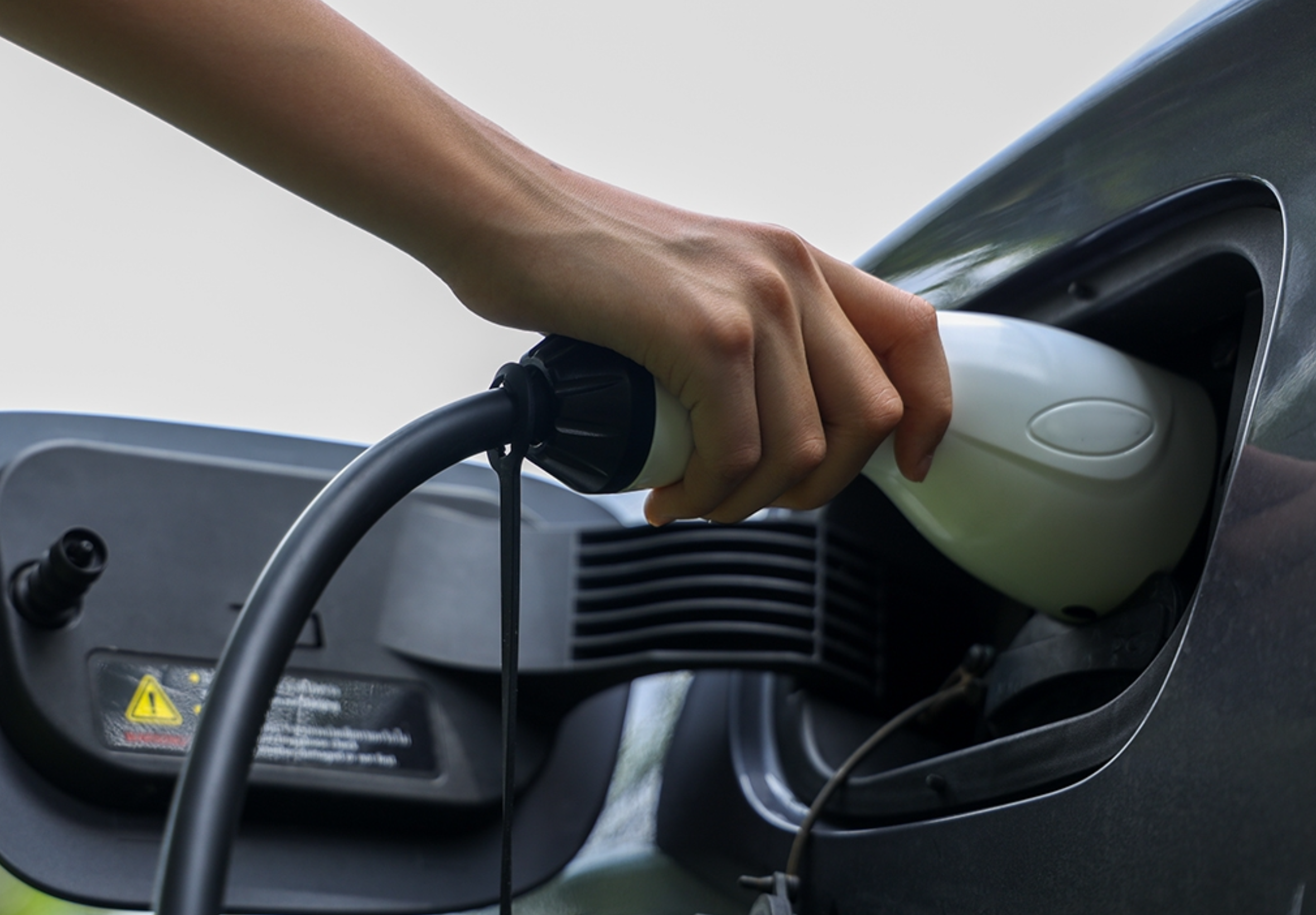

Thailand’s Department of Land Transport (DLT) has clarified that proposed blue reflective number plates for electric vehicles (EVs) are not yet mandatory and remain under public consultation. The announcement aims to address public confusion following media reports suggesting that all EV owners would be required to replace their existing registration plates.
Get today's headlines by email 
DLT Director-General Sorapong Paitoonphong explained that the draft ministerial regulation governing the size, design and colour of vehicle registration plates has not yet come into legal effect. He stressed that EVs already registered in Thailand will not be required to replace their existing plates and may continue using them as normal.
The proposed changes form part of efforts to support the growth of electric vehicles in Thailand and align with policies aimed at reducing PM2.5 air pollution. Under the draft regulation, newly registered private electric cars and motorcycles would receive reflective blue registration plates.
Public-service EVs and specialised-use electric vehicles would continue using their existing plate colours but would be required to display a special identifying mark. Existing EVs, including those with auctioned registration numbers and standard white plates, would not need replacement plates. Instead, owners would only be required to attach a special identifier to their current plates within one year of the regulation taking effect.
The DLT said that while vehicle energy types are already recorded in its database, visible physical identification would provide practical benefits. The department believes clearly distinguishable EV plates would allow members of the public, emergency responders and relevant authorities to immediately recognise electric vehicles involved in road accidents.
According to the department, EVs require specific emergency response procedures and equipment because of their high-voltage battery systems. Faster identification could help reduce risks associated with electrical leakage and battery fires while supporting safer rescue operations. The DLT also noted that long-term monitoring of battery quality and temperature may require closer oversight as batteries age.
The department added that clearly identifiable EV registration plates could support future benefits for electric vehicle users. Operators of motorways, shopping centres and potential Zero Emission Zones may be able to provide privileges or services more efficiently without having to verify vehicle information through central databases.
ThaiRath reported that the DLT is encouraging EV owners and the wider public to submit feedback on the draft regulation through Thailand’s central legal consultation website, law.go.th, under the section covering amendments to vehicle registration plate regulations for electric vehicles. Public comments will be considered before any final regulation is issued and enforced.
Join the discussion? 
Already a member? 
 Adapted by ASEAN Now ThaiRath 2 June 2026
-
 1
1
Recommended Comments
Create an account or sign in to comment