



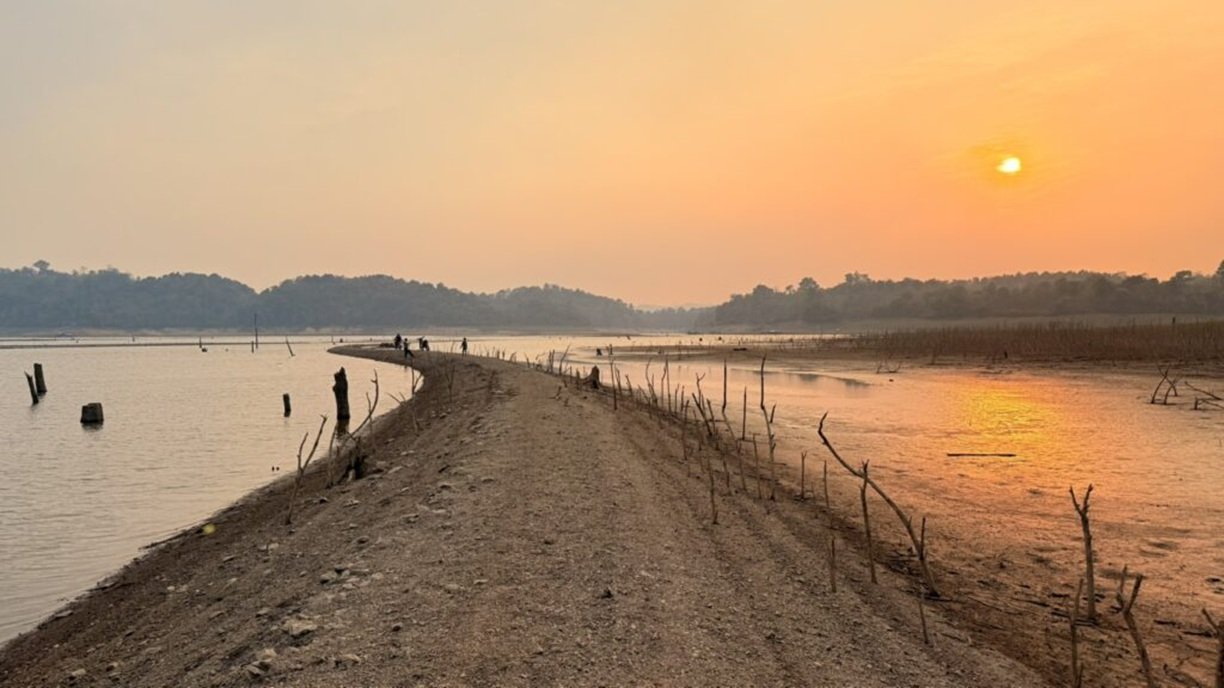

Sections of the World War II-era "Death Railway" have emerged in Thailand's Rantee River for the first time in 42 years. This follows a drop in water levels caused by dam maintenance, drawing significant online attention. The resurfacing occurred near Sangkhlaburi district after water was released from the Vajiralongkorn Dam, revealing parts of the historic railway route that had been submerged since the dam's completion in 1984.
Get today's headlines by email 
Local resident Kitti discovered the remnants stretching about eight kilometers from the Rantee Bridge to Sangkhlaburi. The findings include a laterite roadbed and a concrete water structure, likely used to refill steam locomotives. Authorities note that these features might remain visible only between April and June, contingent on water levels.
The Death Railway, built by Japanese forces during World War II, served as a strategic supply route between Thailand and Myanmar. Constructed from October 1942 to October 1943, it relied heavily on forced labor, including Allied prisoners of war and Asian workers. Many suffered and perished due to brutal conditions, disease, and malnutrition. After the war, parts of the railway were either dismantled or submerged due to the dam project, making these uncovered sections a poignant reminder of past atrocities.
Kitti encourages visitors, especially during the Songkran holiday, to explore the site to appreciate its historical depth. The railway's emergence not only captivates historians and tourists but also highlights the fragile relationship between history, nature, and human intervention.
Looking ahead, the area may temporarily become a tourist spot, raising awareness about the human cost of the railway's construction. As the water levels are unpredictable, this phenomenon might not last long, urging prompt visits for those interested.
Join the discussion? 
Already a member? 
 Adapted by ASEAN Now · Khaosod · 10 Apr 2026
-
 1
1
Recommended Comments
Create an account or sign in to comment