



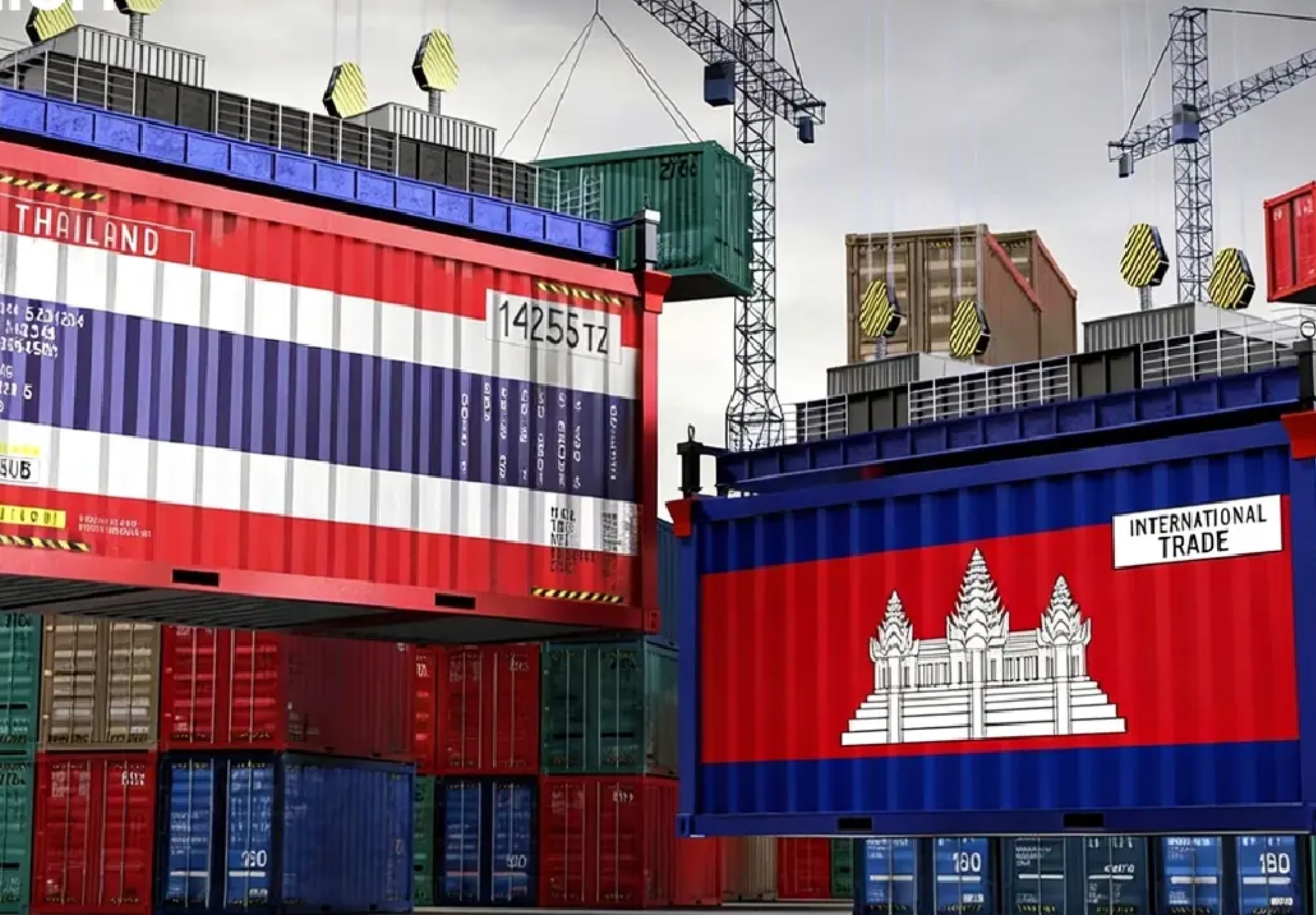

The Thai-Cambodian border conflict and subsequent border closures have caused an estimated THB180 billion loss in import-export trade over the past year, according to the Thailand-Cambodia Business Council. The disruption has also forced around 30% of border businesses to close and has affected Thai investments in Cambodia worth between US$4 billion and US$5 billion.
Get today's headlines by email 
Voratat Tantimongkolsuk, chairman of the Thailand-Cambodia Business Council, told Thansettakij that the economic damage extended across trade, investment and border economies in both countries. He said both Thailand and Cambodia had publicly downplayed the impact because neither side wanted to appear weakened by the prolonged dispute.
The losses have been linked not only to the border restrictions but also to wider global economic pressures, including the Russia-Ukraine war, conflict in the Middle East, tariff disputes and concerns over scam gangs, all of which have affected trade and travel confidence.
Thai businesses operating in Cambodia have reportedly started downsizing, suspending operations or selling assets, particularly in the retail, garment manufacturing, hotel, restaurant and border service sectors. Businesses along the border have faced a severe shortage of customers as cross-border activity slowed.
A report by the Trade Policy and Strategy Office under Thailand’s Ministry of Commerce found that about 30% of border businesses had already closed because they could no longer absorb operating costs. Transport firms, trading companies, restaurants and hotels were among the hardest hit.
Many companies have also paused recruitment and reduced warehouse and salary expenses in an effort to remain operational for as long as possible. Voratat said the prolonged uncertainty was creating mounting pressure on operators and workers on both sides of the border.
The conflict has also created opportunities for competing regional exporters. Data from the first two months of this year showed goods from Vietnam, Malaysia and Singapore increasingly replacing Thai products in the Cambodian market despite higher transport costs.
According to Voratat, Singapore’s trade value with Cambodia rose by more than 200%, while Vietnam increased by more than 20% and Malaysia by about 30-40%. He said anti-Thai goods sentiment in Cambodia had further reduced demand for products from Thailand.
Voratat urged both governments to revive negotiations quickly and reduce conditions driving the dispute. He said unresolved issues could be given extended negotiation timeframes while agreements already within reach should be implemented immediately to restore confidence in trade and investment.
The Nation reported he also warned that rising public sentiment in both countries over perceived unfairness could increase political pressure and make compromise more difficult. Voratat said continued conflict would further harm businesses, workers and both economies unless talks resumed soon.
Join the discussion? 
Already a member? 
 Adapted by ASEAN Now Nation 14 May 2026
Recommended Comments
Create an account or sign in to comment