



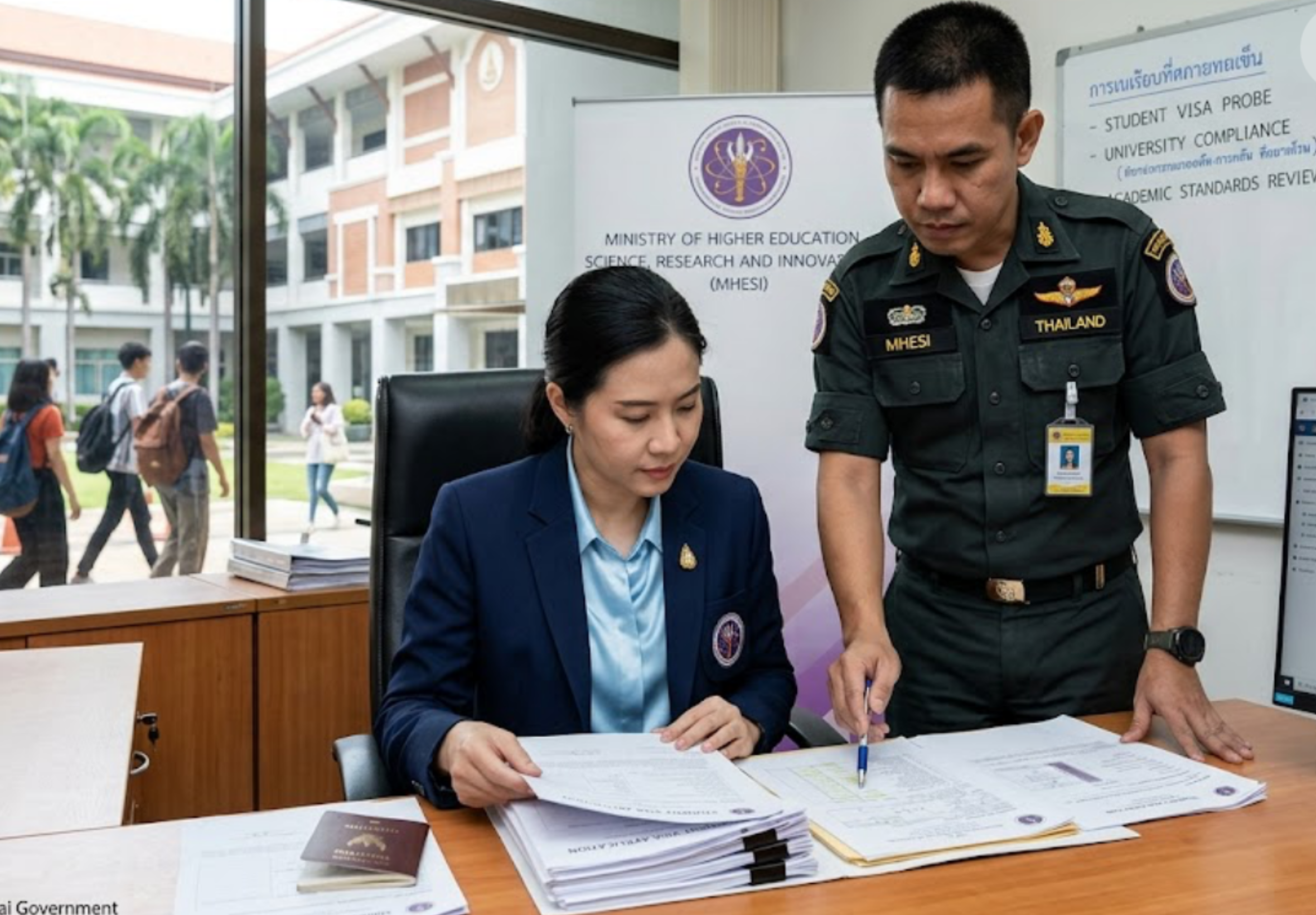

Thailand has ordered an investigation into universities suspected of improperly admitting foreign students, while officials review student visa procedures for loopholes that could be exploited.
Deputy Government Spokesperson Patdarasm Thongsaluaykorn said on August 6 that the Ministry of Higher Education, Science, Research and Innovation (MHESI) had been instructed to carry out a comprehensive review.
The move follows media reports questioning whether some universities had accepted foreign students without meeting required academic standards.
Universities must explain admission procedures
Universities under scrutiny will have to account for how they admit overseas students to both degree and non-degree programmes.
Officials will examine the full route from a student's enrolment to their visa application. The stated aim is to identify weaknesses that could enable misuse of education visas.
Patdarasm said the investigation would be conducted impartially. The government intends to close gaps that could be used for personal gain or damage confidence in Thailand's higher education system, she added.
Any university found to have broken laws, regulations or academic standards will face legal action without exception, according to the deputy spokesperson.
Short courses already face tighter controls
MHESI introduced stricter rules last year aimed at preventing foreign nationals from using short courses as a route to work illegally in Thailand.
Under those rules, higher education institutions must submit short-course programmes for government assessment. They are also required to meet tighter standards on course quality, student management and reporting.
Short courses must include at least 60% onsite teaching and may run for no more than 180 days. Universities must monitor attendance, provide the ministry with foreign student data and file regular progress reports through its tracking database.
Institutions that do not comply risk having their short courses cancelled. MHESI has said the measures are intended both to prevent abuse of student visas and to strengthen confidence in Thailand's higher education sector.
For expats, visitors and those considering study as part of a longer stay in Thailand, the practical message is to choose an established institution and ensure the course is genuine, properly registered and includes the required in-person study. Enrolment alone does not guarantee a visa, and applicants should expect immigration authorities to assess applications alongside the school's documentation.

Picture courtesy of Thai Government
Join the discussion? 

8 August 2026
Recommended Comments
Create an account or sign in to comment