



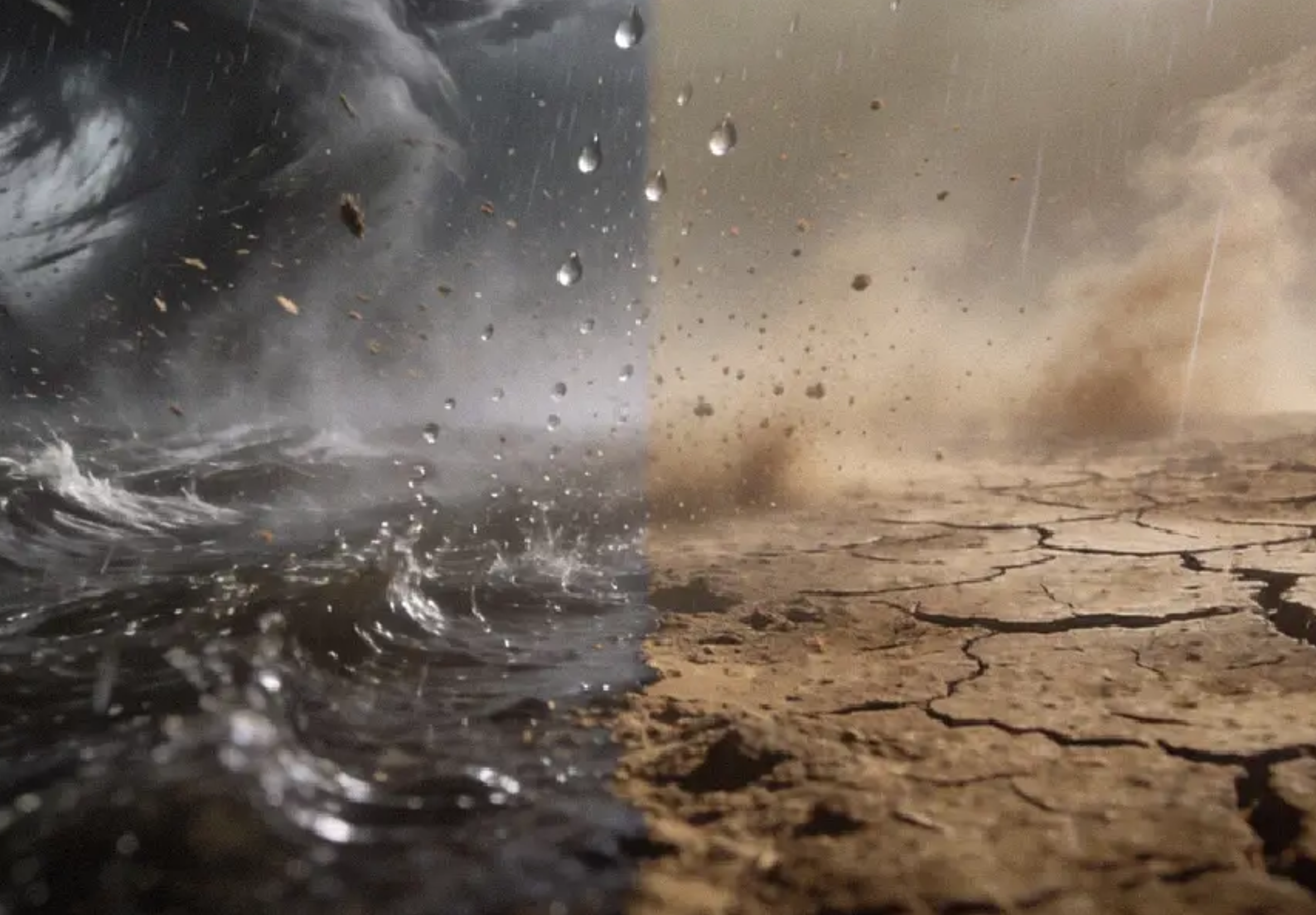

Thailand is forecast to face an El Nino event from May to July 2026, raising the risk of a dual water crisis involving drought, extreme heat, heavy rain and flooding within the same year. Authorities warn that many areas could face water shortages between May and August before heavy rainfall and flooding risks increase from September to November.
Get today's headlines by email 
The Thai Meteorological Department said El Nino conditions are likely to develop during mid-2026, while climate experts warned that global warming could intensify the effects. The Provincial Waterworks Authority (PWA) has identified 20 branches in 17 provinces at risk of raw-water shortages and another seven branches in five provinces facing potential water-quality problems.
Tara Buakamsri, director of the Climate Connectors programme, said the World Meteorological Organisation (WMO) had assessed that El Nino was highly likely to begin forming from mid-2026 and affect temperatures and rainfall patterns worldwide. Latest data from the equatorial Pacific Ocean shows sea-surface temperatures warming rapidly, creating a chance that El Nino could return as early as May to July 2026.
“There is currently no clear evidence that climate change is directly making El Nino occur more often or become more severe. However, global warming helps amplify the impacts of El Nino, making them more severe than before,” Tara said. He added that warmer oceans and atmosphere could lead to more intense heatwaves, heavy rain and extreme weather.
The United Nations warned the world is entering a state of “water bankruptcy” due to water use exceeding ecosystems’ capacity. It reported that water levels in 70% of major groundwater sources globally have permanently fallen, affecting nearly two billion people, while global wetlands have shrunk by 4.1 million square kilometres and glaciers have declined by more than 30% since 1970.
PWA governor Chakapong Kamchan said the authority was accelerating plans to secure backup water sources and maintain tap-water production throughout the year. Measures include improving raw-water management, maintaining production and distribution systems during crises, and providing free tap water to disaster-hit residents. More than 52 million litres of free water were distributed over the past year.
Associate Professor Dr Seree Supratid, director of the Climate Change and Disaster Centre at Rangsit University and an expert for the Intergovernmental Panel on Climate Change (IPCC), said there was more than an 80% likelihood that the world was transitioning into El Nino during 2026. He warned that Thailand could still face flooding despite lower overall rainfall because climate variability remains high.
Seree said weather patterns in 2026 resemble those of 2023 but are expected to be more variable, increasing the chances of both drought and flooding in the same year. He warned that low-lying northern areas could face floods, central provinces may experience overflowing rivers, and southern regions remain vulnerable to flash floods and runoff later in the year. Mae Sai district in Chiang Rai province was identified as an area requiring special monitoring due to likely heavy rain upstream in Myanmar’s Shan State.
The Nation reported that the Thailand Environment Institute urged authorities to follow the National Adaptation Plan by improving water management systems, promoting water reuse, strengthening community water-sharing mechanisms, adjusting farming practices and monitoring water quality to reduce future risks.
Join the discussion? 
Already a member? 
 Adapted by ASEAN Now Nation 12 May 2026
Recommended Comments
Create an account or sign in to comment