
Skip to content
View in the app

A better way to browse. Learn more.

Thailand News and Discussion Forum | ASEANNOW

A full-screen app on your home screen with push notifications, badges and more.

To install this app on iOS and iPadOS
  1. Tap the Share icon in Safari
  2. Scroll the menu and tap Add to Home Screen.
  3. Tap Add in the top-right corner.
To install this app on Android
  1. Tap the 3-dot menu (⋮) in the top-right corner of the browser.
  2. Tap Add to Home screen or Install app.
  3. Confirm by tapping Install.

Tunnel Collapse Kills Two at Chiang Rai Rail Project

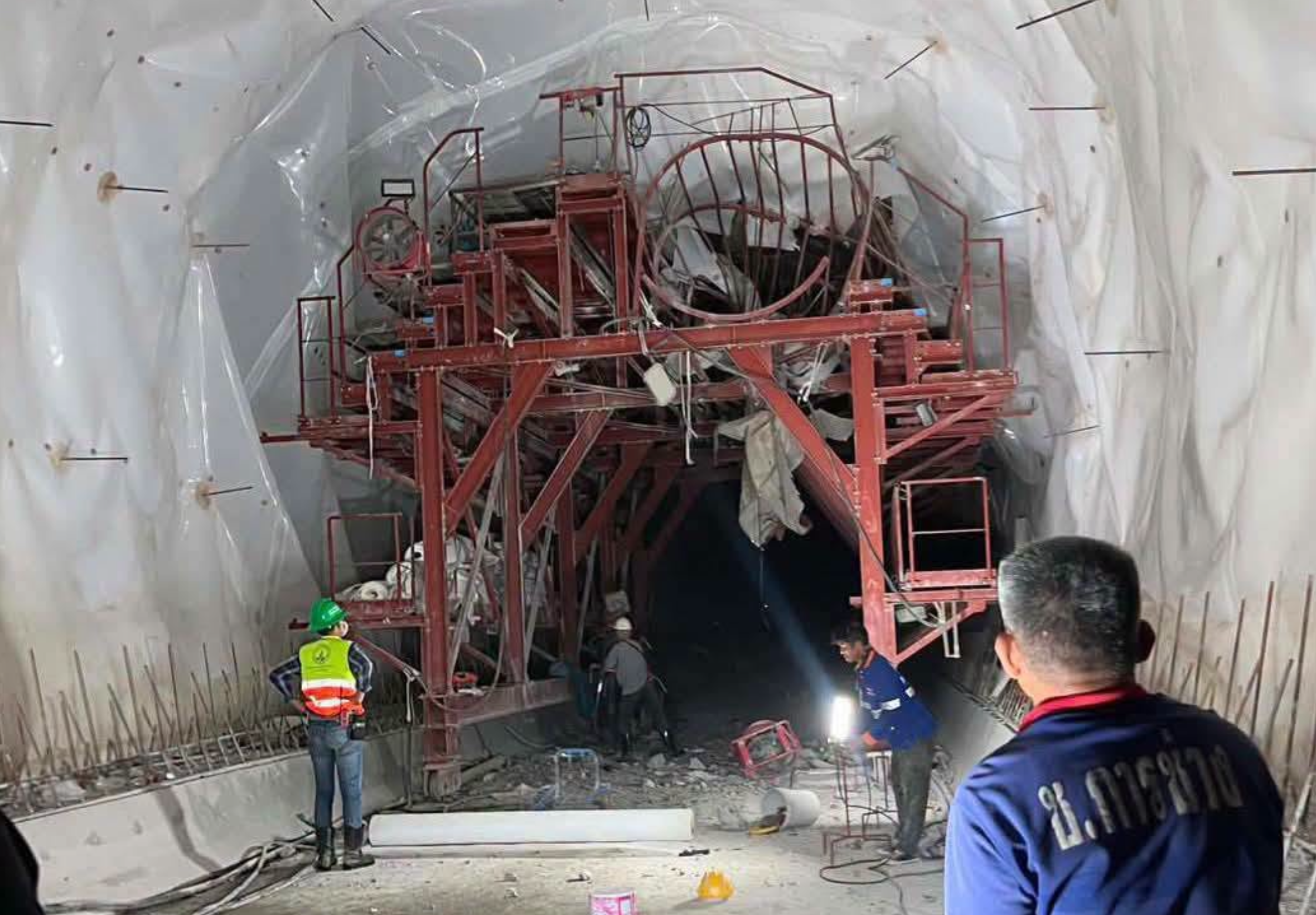
Two workers were killed and two others injured after a section of wall collapsed inside the Doi Luang railway tunnel on the Den Chai-Chiang Rai-Chiang Khong railway project in Doi Luang district, Chiang Rai, on 20 June 2026. The collapse occurred in an area of the tunnel that had not yet been lined with concrete, with debris falling onto workers inside the construction site.

Get today's headlines by email image.png

According to project engineer Pattapong Boonkaew, the Doi Luang tunnel is 3.4 kilometres long and was successfully bored through last year. Construction is currently focused on installing a permanent concrete lining to protect the tunnel walls, with more than three-quarters of the work already completed. The collapse occurred in an exposed section that was awaiting protective treatment as part of the normal construction process.

Pattapong said preliminary findings suggest the collapse was caused by an “unforeseeable geological event”. He explained that Chiang Rai has experienced unusually heavy and prolonged rainfall over the past two to three years, resulting in excessive water accumulation within rock layers beneath Doi Luang mountain. This is believed to have affected temporary support structures in the exposed section, causing a localised failure and collapse.

The engineer stressed that the tunnel’s main structure, including sections already lined with permanent concrete, remains stable and safe. He said the incident would not affect the overall construction schedule or the future safety of railway operations. Geological specialists will now conduct a detailed assessment of rock conditions, while additional safety measures and reinforced temporary supports will be introduced to prevent similar incidents.
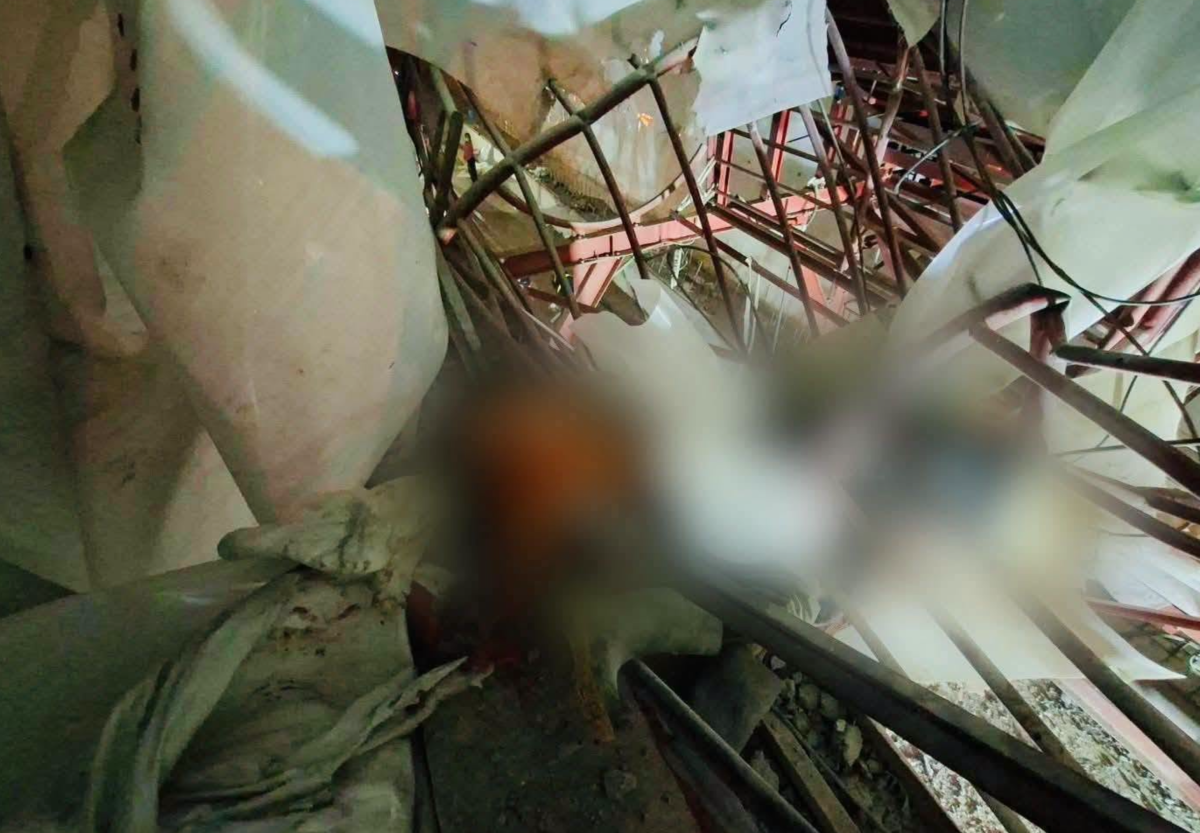
image.png

Authorities confirmed that two workers died at the scene and two others were injured. All casualties were transferred to Chiangrai Prachanukroh Hospital.

Chiang Rai Governor Chucheep Pongchai visited the site shortly after receiving reports of the incident. He said he had been attending official duties in Wiang Kaen district when informed by the Doi Luang district chief. The matter was immediately reported to the Director-General of the Department of Disaster Prevention and Mitigation and the Permanent Secretary of the Ministry of Interior, who were attending duties with the Prime Minister.

The governor said the Prime Minister had expressed concern and ordered an immediate on-site assessment. He described the collapse as an engineering accident influenced by natural factors, including persistent rainfall. He added that accumulated rainfall data would be incorporated into future construction planning during the wet season.

Authorities have coordinated with Chiangrai Prachanukroh Hospital to ensure support and compensation for the injured workers and the families of those who died. Chucheep emphasised that the collapse was confined to a specific construction area within the tunnel and did not involve a major structural failure of the project.

Matichon reported that the Den Chai-Chiang Rai railway project was approved by the Cabinet on 31 July 2018 with a budget of 85.345 billion baht and a construction period of seven years. The line is expected to open in January 2028 and includes four railway tunnels.
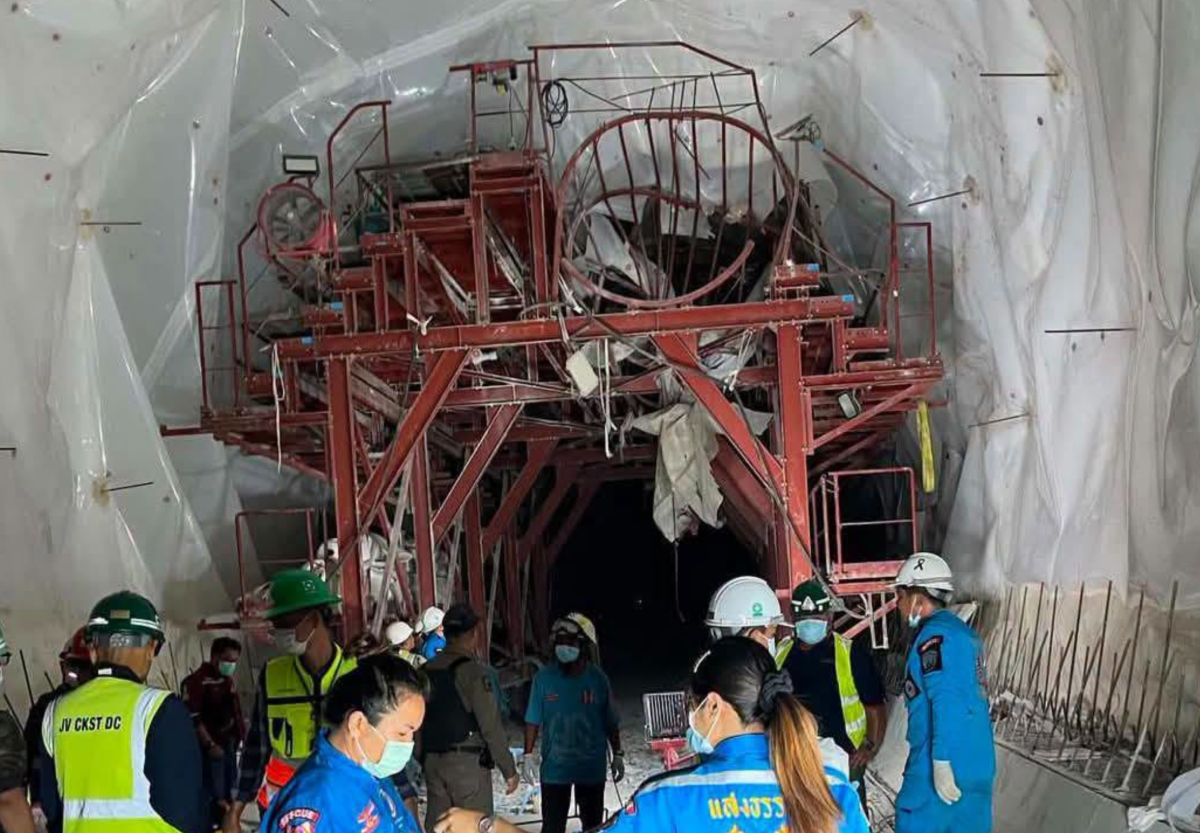
image.png

Pictures courtesy of Matichon

Join the discussion? image.png

Already a member? image.png

image.png Adapted by ASEAN Now Matichon 21 June 2026

User Feedback

Recommended Comments

MikeandDow Ruby Member

MikeandDow

Advanced Member

Typical Thai safety ! NONE !! First rule in under ground safety,! you do not go any where near unsupported ground,!

StevieAus Gold Member

StevieAus

Advanced Member
12 hours ago, MikeandDow said:

Typical Thai safety ! NONE !! First rule in under ground safety,! you do not go any where near unsupported ground,!

And of course this type of accident never occurs anywhere else in the world where safety standards are supposed to be higher.

richard_smith237 Star Member

richard_smith237

Advanced Member
35 minutes ago, StevieAus said:

And of course this type of accident never occurs anywhere else in the world where safety standards are supposed to be higher.

No one is suggesting such tragedies do not occur elsewhere. The UK suffered the King's Cross Fire on 18 November 1987 and the Grenfell Tower Fire on 14 June 2017. Belgium experienced the Saint-Georges-sur-Meuse rail crossing disaster on 5 April 2016 and, as recently as 26 May 2026, a train collided with a school minibus at a level crossing in Buggenhout, killing four people.

Accidents happen everywhere. The distinction is not that tragedy occurs, but how often the same types of tragedy continue to occur after the warnings have already been written in blood.

Repeated fatalities and construction failures on Rama II Road, buses routinely plunging into ravines, overloaded trucks suffering brake failures, ferries and tour boats capsizing, these are not isolated incidents. They are recurring patterns which have persisted for years despite countless investigations, headlines and promises of reform.

One incident is a tragedy. A second should be a wake-up call. By the third, fourth or fifth occurrence, it becomes increasingly difficult to blame fate, bad luck or unforeseeable circumstances.

That is where many find themselves at the pit-face of cynicism.

A single event is a warning. Repeated events signify systemic failure. When the same preventable causes continue to produce the same preventable deaths, the issue is no longer misfortune. It becomes incompetence, a lack of accountability and, ultimately, a degree of negligence that many would argue borders on the criminal.

And mark these words - before the month is out - we'll have another 'tour-boat' over turn, a bus rolling down a ravine, children drowning in a village pond.... tragic - but preventable.

MikeandDow Ruby Member

MikeandDow

Advanced Member

Occupational Health and Safety (OHS) in Thailand is primarily governed by the Occupational Safety, Health and Environment Act B.E. 2554 (2011). The law legally mandates employers to provide safe, hygienic working conditions and requires employees to utilize Personal Protective Equipment (PPE) and cooperate with safety management systems.

As a quick observation in the photo we can see how Thailand safety is implemented i can count 5/6 with out PPE

Thailand has a plethora of safety protocols and standards but without enforcement it is just paper

Occupational Health and Safety (OHS) is primarily enforced by the Department of Labour Protection and Welfare (DLPW) under the Ministry of Labour. They are responsible for enforcing the Occupational Safety, Health, and Environment Act and inspecting workplaces for compliance, does this happen I would hazard a guess and say yes, BUT is there baht passed you bet !!!

jacko45k Star Member

jacko45k

Advanced Member
17 hours ago, StevieAus said:

And of course this type of accident never occurs anywhere else in the world where safety standards are supposed to be higher.

Silly deflection comment, we are in a Thailand forum discussing an incident in Chiang Rai. Thailand does have a high number of accidents, particularly in construction...

BrandonJT Gold Member

Without serious enforcement and penalties, it's purely a business decision. I'm sure they knew it has been raining and what the risks involved with that were, but how much more money would it have cost them to reinforce to the level that would account for that?

How much would it end up costing them if they didn't do anything extra, but there was an accident that resulted in X number of lost lives?

If the extra precautions cost more than the possible results of doing nothing, then it's cheaper in all cases to not do it. These executives don't care about a life beyond what it costs.

Sigmund Gold Member

Sigmund

Advanced Member

Each time we pass below that fatal highway fly over construction near bangkok that either crashed or had a crane crash over ?? twice during construction...it does send a shiver above the spine.

MikeandDow Ruby Member

MikeandDow

Advanced Member
11 hours ago, BrandonJT said:

Without serious enforcement and penalties, it's purely a business decision. I'm sure they knew it has been raining and what the risks involved with that were, but how much more money would it have cost them to reinforce to the level that would account for that?

How much would it end up costing them if they didn't do anything extra, but there was an accident that resulted in X number of lost lives?

If the extra precautions cost more than the possible results of doing nothing, then it's cheaper in all cases to not do it. These executives don't care about a life beyond what it costs.

Thailand has enforcement and penalties, That is not the problem ! CORRUPTION is the problem ! you must be very Naive if you think that the almighty baht was not exchanged for a pass on inspections

Create an account or sign in to comment

Account

Navigation

Search

Search

Configure browser push notifications

Chrome (Android)
  1. Tap the lock icon next to the address bar.
  2. Tap Permissions → Notifications.
  3. Adjust your preference.
Chrome (Desktop)
  1. Click the padlock icon in the address bar.
  2. Select Site settings.
  3. Find Notifications and adjust your preference.