



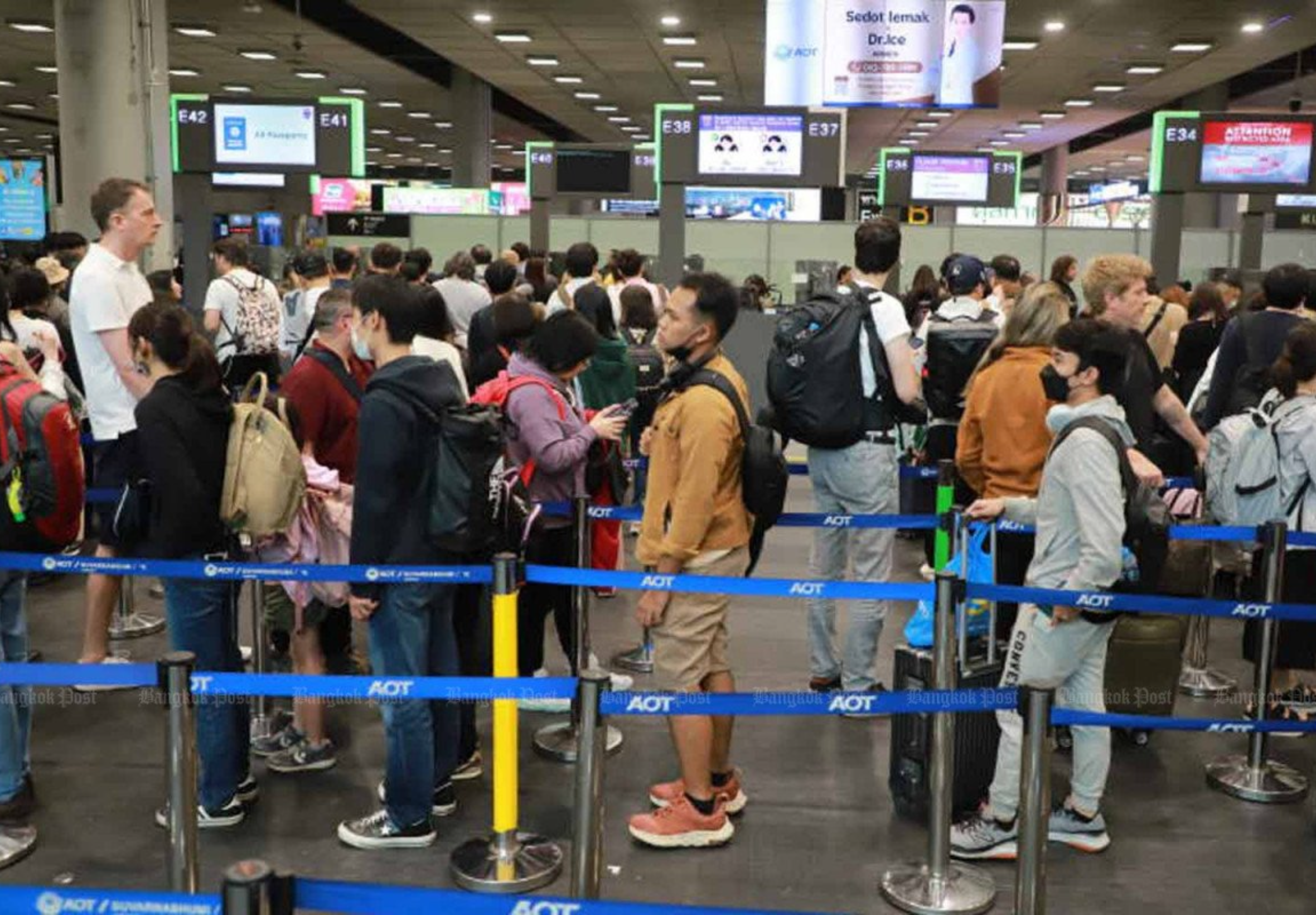

Thailand is considering reducing its visa-free tourist stay from 60 days to 30 days, a proposal that has added to a series of recent policy shifts affecting foreign visitors. The Ministry of Foreign Affairs are close to approving the plan, while other measures under discussion include a possible 300-baht tourism fee on arrivals and insurance requirements intended to reduce the burden of medical costs on the state. Immigration Police have also increased scrutiny of so-called visa runs, contributing to what officials describe as tighter border management signals.
Get today's headlines by email 
The proposed reduction follows earlier decisions to extend visa-free stays to 60 days only about a year ago, alongside efforts to promote long-stay tourism through schemes such as the Destination Thailand Visa, which allows stays of up to five years. The policy mix has created uncertainty over whether Thailand is prioritising longer visits or tightening entry conditions. Foreign Minister Sihasak Phuangketkeow said the 60-day allowance has been used for “purposes other than those intended”, adding that 30 days is sufficient for tourism, while 60 days increases the risk of delinquency.
Government concerns have focused on so-called grey activities and scams, with officials suggesting stricter visa rules are needed to address misuse. However, available data indicates 3,249 visas were revoked for crimes and unrest in 2025, out of more than 30 million foreign arrivals. Visa revocations linked to student visa abuse are significantly higher, exceeding 10,000 cases annually, including incidents involving foreign nationals entering under student visas to work on projects such as the State Audit Office construction case involving engineers from China.
Experts have questioned whether reducing visa duration will address underlying issues. Sawet Vienthong, a professor of political science at Mahamakut Buddhist University, said stronger background checks on entrants and monitoring of links to illegal networks would be more effective than adjusting visa length alone. Meanwhile, Paisan Sukcharoen, acting chairman of the Chiang Mai Tourism Industry Council, supported the intent but warned that proposed extensions beyond 30 days could create loopholes for misuse. He also noted potential impacts on legitimate long-stay visitors, including digital nomads.
The Bangkokpost reported that the policy debate highlights competing goals between attracting long-stay tourists and strengthening enforcement against criminal activity. Critics argue that those intent on abuse may bypass visa rules through other means, including corruption or alternative visa categories. The government is expected to continue reviewing enforcement mechanisms and visa structures as it seeks to balance tourism growth with security concerns.
Join the discussion? 
Already a member? 
 Adapted by ASEAN Now Bangkokpost 12 Apr 2026
Recommended Comments
Create an account or sign in to comment