



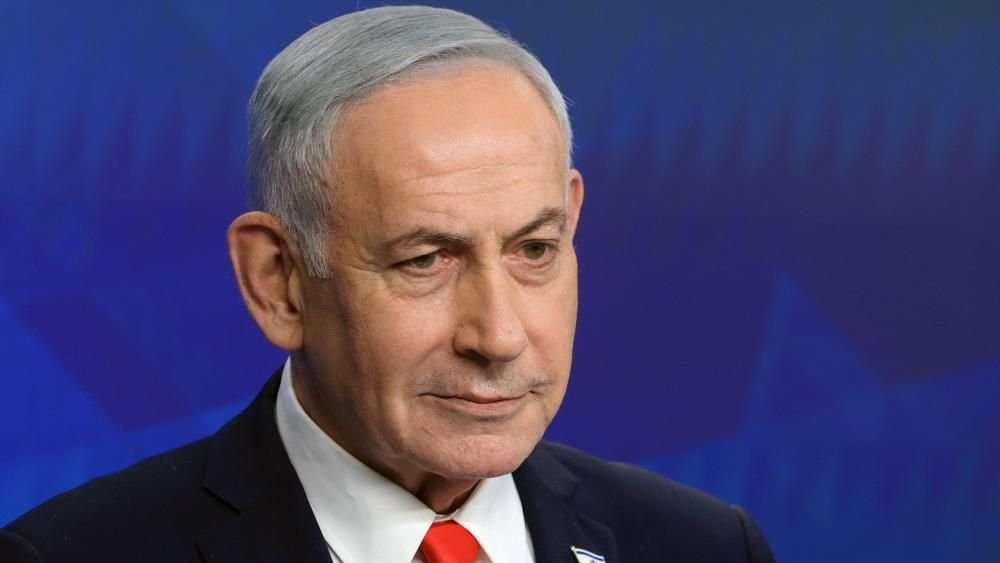

The ceasefire agreement brokered by US President Donald Trump with Iran has created a major political challenge for Israeli Prime Minister Benjamin Netanyahu, undermining key pillars of the security and foreign policy credentials that have defined his career.
Get today's headlines by email 
For years, Netanyahu portrayed himself as a leader with significant influence in Washington and positioned confronting Iran as the centrepiece of Israel’s national security strategy. The new agreement, however, has raised questions about both claims, with Israel appearing sidelined during negotiations and Iran emerging from the conflict without the outcome Netanyahu had sought.
Alliance Strains After Ceasefire Agreement
The deal has also intensified concerns over Israel’s ability to continue military operations against Hezbollah in Lebanon, after Tehran insisted that the ceasefire should apply to military activity across multiple fronts, including Lebanon.
Growing Political Pressure at Home
The agreement has drawn criticism from across Israel’s political spectrum. Opposition leader Yair Lapid told parliament that Netanyahu faced a choice between a damaging confrontation with Israel’s closest ally or accepting an arrangement that could compromise Israeli interests.
Trump’s public criticism of Netanyahu following an Israeli strike on Beirut has further fuelled debate ahead of an election that must be held before the end of October. Political rivals and commentators have seized on the remarks as evidence of deteriorating relations between Washington and Jerusalem.
Pressure is also emerging from within Netanyahu’s governing coalition. Far-right National Security Minister Itamar Ben-Gvir argued that Israel was not bound by an agreement that failed to guarantee its security.
Likud lawmaker Ariel Kallner said Israel would continue to defend itself, while declining to specify whether military operations would continue under the new arrangement.
Former Mossad official and Iran specialist Sima Shine questioned why the United States had accepted terms that could allow Iran to maintain influence through Hezbollah in Lebanon, describing the deal as deeply unpopular among both Israel’s political leadership and security establishment.
Security Strategy Under Scrutiny
Netanyahu has so far remained largely silent, an unusual stance for a leader who has often been quick to declare success after military operations. His reluctance to comment has been interpreted by some observers as a sign of the difficult choices now facing his government.
Since the Hamas-led attacks of 7 October 2023, Netanyahu has pursued a more aggressive security doctrine aimed at eliminating threats before they fully emerge. That approach has led to extended Israeli military operations in Gaza, Lebanon and Syria.
Despite Israel’s campaign in Gaza, Hamas continues to retain control over significant parts of the territory, while international efforts to establish a post-war political framework remain stalled. At the same time, Israel’s military commitments across several fronts have increased pressure on armed forces and reservists.
Limited Room for Manoeuvre
Critics argue that repeated confrontations with Hezbollah and Iran have failed to eliminate Israel’s principal adversaries. Instead, some analysts say Iran’s leadership has become more hardline and continues to wield influence across the region.
Security analyst Danny Citrinowicz said Israel must reassess its strategy towards Tehran and adopt more realistic objectives. He warned that any Israeli action viewed in Washington as an attempt to undermine the agreement could provoke a strong response from the United States.
Unlike previous disputes with US administrations, analysts note that Netanyahu has fewer opportunities to bypass the White House by appealing directly to Congress or public opinion in the United States.
As Israel heads towards a general election, Netanyahu’s long-standing argument that he offers the strongest protection against regional threats is facing renewed scrutiny. Rather than securing a decisive victory over Iran, the ceasefire has left him confronting a difficult choice between challenging a key ally or adapting to an agreement he did not shape.
Join the discussion? 
Already a member? 
 Adapted by ASEAN Now. Source 16 June 2026
-
 3
3
Recommended Comments
Create an account or sign in to comment