





At 8.46am on September 11, 2001, American Airlines Flight 11 was deliberately crashed into the North Tower of New York's World Trade Centre. Seventeen minutes later, United Airlines Flight 175 struck the South Tower, and at 9.37am American Airlines Flight 77 was flown into the Pentagon. The fourth aircraft, United Airlines Flight 93, crashed into a field near Shanksville, Pennsylvania, at 10.03am after passengers attempted to retake control.

The attacks killed 2,977 people, excluding the 19 al-Qaeda hijackers, and injured thousands more. It was an unprecedented attack on American soil, watched in disbelief around the world. The emergency response became the largest mobilisation of emergency personnel in American history.
At the World Trade Centre, thousands were inside the complex when the first aircraft struck. The majority of those below the impact zones managed to evacuate, while others were trapped above. Firefighters, police officers, paramedics and other emergency personnel rushed towards the burning towers as civilians attempted to escape.
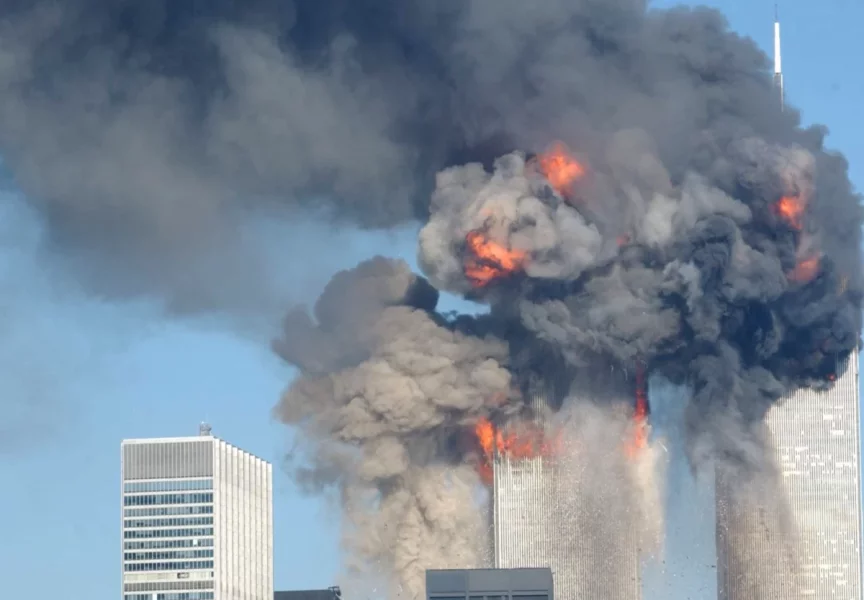
At 9.59am the South Tower collapsed, followed by the North Tower at 10.28am. The destruction created an enormous field of debris and fires at what became known as Ground Zero. Against almost impossible odds, 18 people were rescued alive from the debris following the collapse.
Among those killed were 343 members of the New York City Fire Department, 37 Port Authority Police Department officers and 23 New York Police Department officers. Firehouses lost multiple members at once, and police units suffered devastating casualties. Families waited for news that in many cases never came.
The rescue operation soon became a recovery operation. For weeks and months, firefighters, police officers, construction workers, engineers, volunteers and medical personnel worked among the ruins searching for victims and recovering remains. The Memorial's names are arranged so that colleagues and members of the same emergency-service units are remembered together.

Thousands of firefighters, police officers, paramedics, construction workers and volunteers who worked at Ground Zero were exposed to toxic dust and substances. Many later developed respiratory diseases, cancers and other illnesses. The World Trade Centre Health Programme continues to treat and monitor affected people, with more than 150,000 survivors and responders cared for through the programme.
The victims came from many countries, professions, backgrounds and generations. They included office workers, airline passengers and crew, Pentagon staff, firefighters, police officers, paramedics and people near the World Trade Centre. Children lost parents, parents lost children, husbands and wives lost partners.
The story of Flight 93 has become one of the most powerful accounts of courage from that morning.

Passengers learned what had happened in New York and Washington and decided to confront the hijackers. Nobody aboard survived, but their actions prevented the aircraft from reaching its intended target.
The attacks fundamentally altered the United States. Security procedures at airports changed permanently, intelligence and counter-terrorism operations were expanded, and wars followed in Afghanistan and Iraq. The geopolitical consequences continued for decades.
Twenty-five years later, the National September 11 Memorial & Museum continues its mission to honour those killed, recognise survivors and salute those who risked their lives. The anniversary remains a time to remember who was lost, who survived, who responded and who continues to live with the consequences.
Join the discussion? 

10 September 2026
Recommended Comments
Create an account or sign in to comment