



Skip to content
View in the app

A better way to browse. Learn more.

Thailand News and Discussion Forum | ASEANNOW

A full-screen app on your home screen with push notifications, badges and more.

To install this app on iOS and iPadOS
  1. Tap the Share icon in Safari
  2. Scroll the menu and tap Add to Home Screen.
  3. Tap Add in the top-right corner.
To install this app on Android
  1. Tap the 3-dot menu (⋮) in the top-right corner of the browser.
  2. Tap Add to Home screen or Install app.
  3. Confirm by tapping Install.

Become a member

Become a member

Aramco Warns of Oil Market ‘Catastrophe’ if Strait of Hormuz Remains Closed

Oil Giant Issues Stark Warning

Saudi Aramco has warned that the global oil market could face “catastrophic consequences” if the conflict between Iran, Israel and the United States continues to disrupt shipping through the Strait of Hormuz.

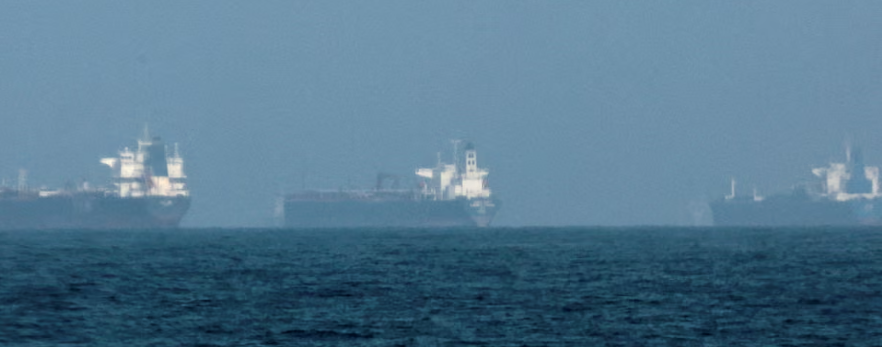
The narrow waterway, one of the most critical energy routes in the world, has effectively been closed to most commercial shipping since US strikes on Iran began nearly two weeks ago.

The disruption has removed an estimated 20 million barrels of oil per day from the global market, raising concerns about supply shortages and economic fallout.

Get the latest headlines in your email subscribe-orange.png

Amin Nasser, chief executive of Saudi Aramco, described the situation as the most serious crisis the region’s oil and gas industry has faced.

“While we have faced disruptions in the past, this one by far is the biggest crisis the region’s oil and gas industry has faced,” he said.

Alternative Routes to Maintain Supplies

Despite the disruption, the Saudi state oil giant said it expects to continue supplying around 70% of its usual crude exports by rerouting shipments.

The company plans to send oil through its east-west pipeline across Saudi Arabia to the Red Sea port of Yanbu.

The pipeline can transport up to 7 million barrels of oil per day. According to Aramco, around 2 million barrels will be directed to domestic refineries in western Saudi Arabia, leaving roughly 5 million barrels available for export.

This would allow Saudi Arabia to maintain most of its global supply commitments, although still significantly below normal export levels.

Aramco has also begun drawing on oil reserves stored outside the Gulf region to help meet demand.

However, Nasser warned that these reserves could not be relied on indefinitely.

“They cannot be used for an extended period of time, but for the time being we are capitalising on it,” he said.

Vital Shipping Route Under Threat

Under normal conditions, roughly 100 oil tankers pass through the Strait of Hormuz each day, transporting crude oil and liquefied natural gas from major Gulf producers to global markets.

The waterway carries about one-fifth of the world’s oil supply.

But shipping traffic has dropped dramatically after Iran’s Islamic Revolutionary Guard Corps threatened to attack vessels using the route.

The group warned that ships travelling through the strait could be “set ablaze” if the conflict continues.

As a result, tanker traffic has dwindled to only a handful of ships per day, intensifying fears of a global energy shortage.

Oil Prices Volatile

Despite the supply concerns, oil prices eased slightly after comments by Donald Trump suggesting the war could end soon.

The price of Brent crude — the international oil benchmark — fell about 14% on Tuesday to around $85 per barrel.

Even with the drop, prices remain significantly higher than the roughly $72 per barrel recorded before the war began.

Earlier this week Brent crude briefly surged to $119 per barrel, its highest level since the period following Russia’s invasion of Ukraine in 2022.

Markets Show Signs of Relief

Financial markets reacted positively to the possibility of a quicker end to the conflict.

Stock indices across Europe and the United States staged a partial recovery after heavy losses earlier in the week.

In London, the FTSE 100 rose 1.6%, while Germany’s DAX climbed 2.4% and France’s CAC 40 gained 1.8%.

US markets also moved higher during afternoon trading on Wall Street.

However, analysts say the outlook for global energy markets remains highly uncertain as long as shipping through the Strait of Hormuz remains restricted.

Join the discussion? Create account. orange.png

Already a member? haveyr-say.png


image.png
  Adapted by ASEAN Now · Source · 10.03 2026

User Feedback

Recommended Comments

JBChiangRai Diamond Member

JBChiangRai

Advanced Member

This is how Iran will win this war. The pain to the rest of the world (and America) will simply become too great.

When will Republicans realise that sending billions to Israel every year and joining Israel in this war is not MAGA, it's MAPA (making America poorer again).

EastBayRay Advanced Member

EastBayRay

Member

Less oil being used

Trump doing his bit for the environment

This too shall pass

Slowhand225 Gold Member

Slowhand225

Advanced Member
15 hours ago, Autocan said:

You were there more than 40 years ago, old man. Things have changed.

Like I said, old man, land based artillery will cover all of the Strait from the Iranian side. Nothing's going through now other than Iranian-approved shipping.

And the insurance companies won't touch the Persian Gulf which basically stops shipping faster than gunboats.


It actually hasn't changed. The USA travels the straits often, they do that thing you claimed they can't do.
Unless of course you have a source for that, you do, right ?

Oh, now its land based, huh, I must have missed that.

So you have a source saying that possible more than once ? Right ?
More than a one time deal, right ?
Of course you know as soon as they fire, all of them will be destroyed . Right ?

You do know that many of them self insure, right ?

Here's your AI that you love giving the answer for you.

Shipping companies and cargo owners frequently self-insure, particularly when their annual insurance premiums exceed the cost of potential losses. This strategy involves setting aside internal funds to cover damages, theft, or loss, rather than purchasing third-party insurance, often used by companies with high volumes of low-value, robust goods.

Cahoot.ai

Autocan Advanced Member

Autocan

Member
22 minutes ago, Slowhand225 said:
15 hours ago, Autocan said:

You were there more than 40 years ago, old man. Things have changed.

Like I said, old man, land based artillery will cover all of the Strait from the Iranian side. Nothing's going through now other than Iranian-approved shipping.

And the insurance companies won't touch the Persian Gulf which basically stops shipping faster than gunboats.


It actually hasn't changed. The USA travels the straits often, they do that thing you claimed they can't do.
Unless of course you have a source for that, you do, right ?

Oh, now its land based, huh, I must have missed that.

So you have a source saying that possible more than once ? Right ?
More than a one time deal, right ?
Of course you know as soon as they fire, all of them will be destroyed . Right ?

You do know that many of them self insure, right ?

Here's your AI that you love giving the answer for you.

Shipping companies and cargo owners frequently self-insure, particularly when their annual insurance premiums exceed the cost of potential losses. This strategy involves setting aside internal funds to cover damages, theft, or loss, rather than purchasing third-party insurance, often used by companies with high volumes of low-value, robust goods.

Cahoot.ai

I stand by what I said and disagree with you.

However, I would like to take the opportunity to apologize for using the invective "old man". Now I read again what I wrote, this was rude and uncalled for. I got carried away. I unreservedly apologize.

JackGats Platinum Member

JackGats

Advanced Member

I'm surprised no one is warning about oil spills. It should be only a question of time before a major environmental catastrophe happens. I wonder who has more to lose in an oil spill, the Iranians or the other countries?

phaholyothin Explorer Member

phaholyothin

Member

I'm more concerned about supply to the electrical grid so that I can keep charging up my e-bike. Fortunately, Thailand's grid sources only about 1-3% of its energy from imported oil/diesel.

Source

Share of Electricity

Natural gas

~55–60%

Coal / lignite

~15–20%

Imports (hydro from neighbors)

~10–15%

Renewables (solar, wind, biomass)

~8–10%

Oil / diesel

~1–3%

JBChiangRai Diamond Member

JBChiangRai

Advanced Member
29 minutes ago, phaholyothin said:

I'm more concerned about supply to the electrical grid so that I can keep charging up my e-bike. Fortunately, Thailand's grid sources only about 1-3% of its energy from imported oil/diesel.

Source

Share of Electricity

Natural gas

~55–60%

Coal / lignite

~15–20%

Imports (hydro from neighbors)

~10–15%

Renewables (solar, wind, biomass)

~8–10%

Oil / diesel

~1–3%

A lot of that Natural Gas is LNG and the largest exporter of that is Qatar.

EastBayRay Advanced Member

EastBayRay

Member

All the lefties are suddenly fans of unlimited cheap oil. 😁

What happened to their windmills and solar panels powering everything?😄

What happened to their electric cars powered from cow poop powered generators ?

Greta will be out soon. “What do we want? Oil. When do we want it? Now”

Trump can reverse their so called beliefs on every subject. Rent free.

candide Star Member

candide

Advanced Member
4 hours ago, Slowhand225 said:


It actually hasn't changed. The USA travels the straits often, they do that thing you claimed they can't do.
Unless of course you have a source for that, you do, right ?

Oh, now its land based, huh, I must have missed that.

So you have a source saying that possible more than once ? Right ?
More than a one time deal, right ?
Of course you know as soon as they fire, all of them will be destroyed . Right ?

You do know that many of them self insure, right ?

Here's your AI that you love giving the answer for you.

Shipping companies and cargo owners frequently self-insure, particularly when their annual insurance premiums exceed the cost of potential losses. This strategy involves setting aside internal funds to cover damages, theft, or loss, rather than purchasing third-party insurance, often used by companies with high volumes of low-value, robust goods.

Cahoot.ai

Lol! As if self insured boats would risk to be attacked by crossing the strait! 🤣

candide Star Member

candide

Advanced Member
20 hours ago, Slowhand225 said:


They have been escorting tankers and yesterday a comercial tanker went through un escorted.

The article is BS, its not an issue for anyone except those that were buying oil from them.

It seems you are making that up.

No crossing reported, except Iran linked ships or Chinese ships.

https://www.hormuztracker.com/

https://hormuzstraitmonitor.com/


Screenshot_20260312_082404_Samsung Internet.jpg

Create an account or sign in to comment

Account

Navigation

Search

Search

Configure browser push notifications

Chrome (Android)
  1. Tap the lock icon next to the address bar.
  2. Tap Permissions → Notifications.
  3. Adjust your preference.
Chrome (Desktop)
  1. Click the padlock icon in the address bar.
  2. Select Site settings.
  3. Find Notifications and adjust your preference.

