



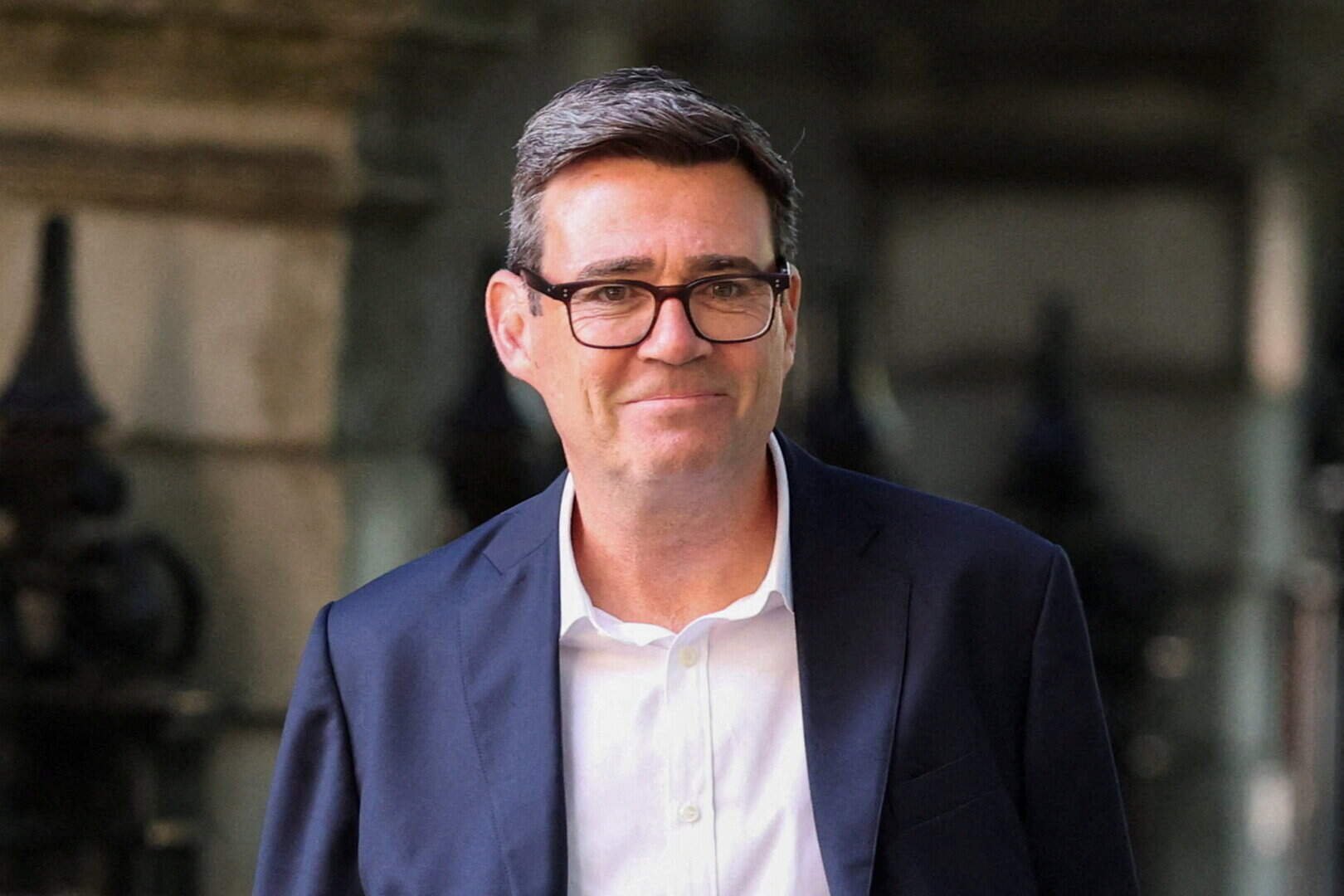

Andy Burnham is on course to become Labour leader and the UK's next prime minister after securing the backing of 322 Labour MPs in the first round of leadership nominations.
Get today's headlines by email 
Burnham, the only declared candidate since nominations opened on Thursday, is just one nomination short of the 323 needed to make it mathematically impossible for another contender to enter the race. Several MPs who were unable to vote on the opening day have indicated they will support him when they return to Parliament.
MP Support Puts Leadership Within Reach
If no rival emerges, as widely expected, Burnham is set to be confirmed as Labour leader next week before taking office as prime minister on 20 July.
The development marks a rapid political ascent for the former Greater Manchester mayor, who only recently returned to Westminster after winning the Makerfield by-election.
Burnham Outlines Vision for Labour
Responding to the wave of support, Burnham said he was "deeply grateful" to Labour MPs who had nominated him, adding that the backing reflected support from across the party.
He said the nominations showed a "shared belief that Britain needs a new approach to politics" and described his agenda as a "circuit breaker" that would shift power away from Westminster, reshape the economy to benefit ordinary people and promote growth across the country.
Later on Thursday, Burnham briefly turned to politics while presenting the Legend Award to Manchester indie band James at the Silver Clef music awards at London's Royal Albert Hall.
Although he said he would avoid discussing politics during the event, he joked about Reform UK leader Nigel Farage's decision to trigger a by-election in Clacton, where Count Binface is standing after Labour and the other major parties chose not to contest the seat.
"Count Binface, you are carrying the hopes of the nation. Don't let us down," Burnham said.
Leadership Race Appears All but Decided
Burnham's return to Parliament, combined with Labour's heavy losses in May's local elections, intensified pressure on Sir Keir Starmer to step aside. Sir Keir resigned as Labour leader on the day Burnham was sworn in as an MP, saying he had concluded he was no longer the best person to lead Labour into the next general election.
Candidates have until Wednesday to secure nominations from at least 81 Labour MPs to qualify for the leadership contest. Once Burnham reaches 323 MP nominations, no other candidate will be able to reach that threshold.
He must also receive nominations from at least three of Labour's 31 affiliated trade unions or socialist societies, a requirement expected to be completed without difficulty.
If he remains unopposed, Burnham will become Labour leader and prime minister without a vote among party members or affiliated trade union supporters.
Attention Turns to Policy Agenda
Support for Burnham gathered momentum after former defence minister Al Carns ruled out entering the contest on Wednesday, effectively clearing the path for an uncontested leadership race.
Even so, some Labour figures have called on Burnham to provide more detail about the policies he would pursue in government, particularly as he spent the past eight years outside Westminster after leaving Parliament in 2017.
His limited contact with many newer Labour MPs has increased interest in an official parliamentary hustings scheduled for Monday, where he is expected to answer questions about his plans.
Meanwhile, Burnham has begun "access talks" with senior civil servants, led by Cabinet Secretary Antonia Romeo, to discuss policy proposals ahead of a potential transition into government.
Speaking as nominations opened, Sir Keir endorsed his longtime colleague, saying he had worked closely with Burnham after first entering Parliament and believed he would make "a good prime minister."
Join the discussion? 

10 July 2026
Recommended Comments
Create an account or sign in to comment