
Skip to content
View in the app

A better way to browse. Learn more.

ASEAN NOW

A full-screen app on your home screen with push notifications, badges and more.

To install this app on iOS and iPadOS
  1. Tap the Share icon in Safari
  2. Scroll the menu and tap Add to Home Screen.
  3. Tap Add in the top-right corner.
To install this app on Android
  1. Tap the 3-dot menu (⋮) in the top-right corner of the browser.
  2. Tap Add to Home screen or Install app.
  3. Confirm by tapping Install.

Become a member

Become a member

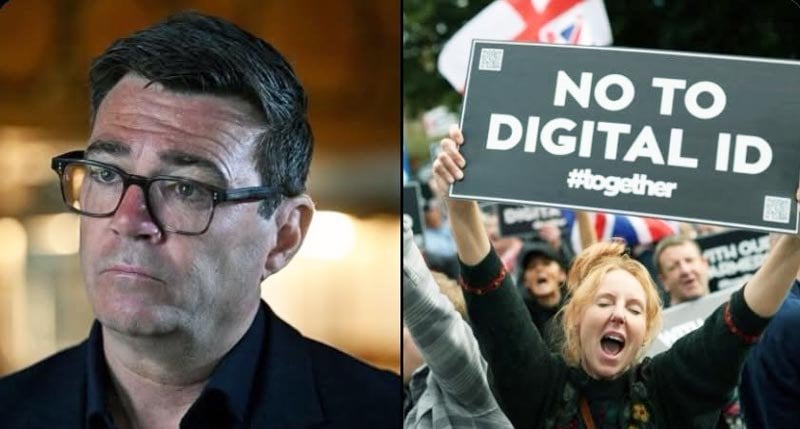
Burnham to Drop Starmer Digital ID in Priority Reset

Labour’s incoming prime minister, Andy Burnham, is expected to scrap Keir Starmer’s plans for a national digital ID scheme when he takes office on Monday, a move his team described as a “reset of priorities”.

According to details provided by Burnham’s side on Saturday, resources earmarked for the programme will be redirected towards measures to ease the cost of living.

The decision is also intended to distance Burnham from choices made by Starmer’s administration. A petition opposing the introduction of digital ID cards after they were announced last year attracted about 3m signatures.

Reset of priorities

Burnham’s spokesperson said the new government would focus on “creating breathing space” and delivering changes people could feel in daily life.

They said time and funding allocated to a national ID scheme would instead be used on support for the cost of living.

The spokesperson also argued that power should be returned to communities rather than held in Whitehall.

Starmer’s “Brit card” plan

Starmer announced the digital ID proposals last September, saying they would be introduced to tackle illegal working. The scheme was planned to be rolled out by 2029.

Under the plans, the “Brit card” would have been compulsory for people needing to prove they were allowed to work in the UK. The cards were intended to include information such as residency status, name, date of birth and nationality, alongside the holder’s photograph.

Starmer said the rollout would make it tougher to work illegally and would strengthen border security.

However, it has been unclear how much money would be saved if the project is dropped, because Starmer’s government did not publish a clear budget for the initiative.

The Office for Budget Responsibility suggested the scheme could cost about £1.8bn, but that figure was rejected by officials.

Backlash and earlier rollback

The issue has been shaped by a history of ID policy in the Labour Party. Tony Blair’s government introduced legislation in 2006 intended to enable ID cards, drawing criticism from privacy campaigners. Those plans never took effect and were ultimately scrapped by the coalition government in 2011.

After Starmer’s proposals, Labour-aligned organisations including the Tony Blair Institute welcomed the idea of using digital ID to improve public services and build trust.

At the same time, opposition politicians and civil rights groups criticised the scheme. Conservative MP David Davis said governments and technology firms had repeatedly failed to protect personal data, arguing that Whitehall would not do better.

Labour’s political opponents also disputed the policy. Conservative leader Kemi Badenoch described the announcement as a “throwaway” move designed to distract from Burnham’s “leadership manoeuvrings”, while the Liberal Democrats said they could not support a mandatory system forcing people to hand over private information to go about their daily lives.

Civil society groups warned the plan could amount to a surveillance infrastructure. Jim Killock of the Open Rights Group said Labour risked creating a “pre-crime state” in which people would constantly have to prove their identity.

Earlier this year, the government rolled back the ID-card plans and clarified that they would be voluntary, with workers able to verify their identity using existing documents such as passports. In May, Karen Bradley, chair of the Conservative home affairs select committee, said the announcement had been a “fiasco” that raised fears of government overreach and left the public with few answers.

Right-to-work checks remain

Sources close to Burnham said that, despite scrapping the digital ID project, he would still back the previous government’s crackdown on illegal working, which resulted in almost 9,000 arrests last year.

Right-to-work checks are expected to remain mandatory for employers. New legislation is also expected to extend verification requirements to parts of the gig economy, including parcel couriers and delivery drivers.

Lisa Smart, the Liberal Democrats’ cabinet office spokesperson, said people would be “hugely relieved” that they would no longer be forced to provide data for everyday activities.

The move to abandon the scheme may further unsettle technology experts already angered by Burnham’s wider plans to reshape Whitehall, including proposals to abolish the Department for Science, Innovation and Technology. Burnham has asked officials to develop plans to absorb much of the department into a more powerful business department.

Join the discussion? Create account. orange.png


image.png

19 July 2026

User Feedback

Recommended Comments

BeastOfBodmin Silver Member

BeastOfBodmin

Advanced Member

They'll have some sneaky way to get what they want via another method. OneGov for example. That's already being widely rolled out across Gubmint web sites. One of the first ones was Companies House, which has a few million accounts. Sneakily cynical.

Chomper Higgot Star Member

Chomper Higgot

Advanced Member
2 minutes ago, BeastOfBodmin said:

They'll have some sneaky way to get what they want via another method. OneGov for example. That's already being widely rolled out across Gubmint web sites. One of the first ones was Companies House, which has a few million accounts. Sneakily cynical.

Burnham wipes out swaths of Digital ID conspiracy theories, only for another to pop up.

They grow like weeds in compost.

BeastOfBodmin Silver Member

BeastOfBodmin

Advanced Member
Just now, Chomper Higgot said:

Burnham wipes out swaths of Digital ID conspiracy theories, only for another to pop up.

They grow like weeds in compost.

Gubmint machinations whack-a-mole.

Thingamabob Diamond Member

Thingamabob

Advanced Member

Every country I've ever lived and worked in has required me to have an ID card or to carry my passport at all times, apart from Britain where a majority appears to oppose this for some reason.

OJAS Ruby Member

OJAS

Advanced Member
11 minutes ago, FinChin67 said:

BS

Burnham is NOT scrapping Britain’s digital identity architecture.

He is scrapping the unpopular name and one proposed national credential.

▪️http://GOV.UK One Login stays.
▪️The Government Wallet stays.
▪️Digital driving licences stay.
▪️Police access to DVLA records stays.
▪️eVisas and digital right-to-work checks stay.
▪️Mandatory Companies House identity verification stays.
▪️The statutory Digital Identity Trust Framework stays.
▪️NHS Login, the NHS App and the Single Patient Record stay.
▪️A unique identifying number for every child stays.
▪️Plans for universal newborn genomic testing and DNA storage stay.

The framework, legislation and machinery are already embedded across government departments.

And he certainly won’t dismantle the systems and legislation already being assembled to link your government “you” file together.

HMPO's online passport renewal service is presumably also staying - except that we're not allowed to use it when renewing our passports from Thailand for some bloody ridiculous reason!

But a pity that the http://GOV.UK One Login white elephant is staying, though, and that those of us with Government Gateway accounts will still be forced to migrate to it in due course. A classic example of change for pure change's sake, I think:

https://www.gov.uk/using-your-gov-uk-one-login

Chomper Higgot Star Member

Chomper Higgot

Advanced Member
1 hour ago, FinChin67 said:

BS

Burnham is NOT scrapping Britain’s digital identity architecture.

He is scrapping the unpopular name and one proposed national credential.

▪️http://GOV.UK One Login stays.
▪️The Government Wallet stays.
▪️Digital driving licences stay.
▪️Police access to DVLA records stays.
▪️eVisas and digital right-to-work checks stay.
▪️Mandatory Companies House identity verification stays.
▪️The statutory Digital Identity Trust Framework stays.
▪️NHS Login, the NHS App and the Single Patient Record stay.
▪️A unique identifying number for every child stays.
▪️Plans for universal newborn genomic testing and DNA storage stay.

The framework, legislation and machinery are already embedded across government departments.

And he certainly won’t dismantle the systems and legislation already being assembled to link your government “you” file together.

You forgot National Insurance Number.… and the Government keeps records of your NI contributions.

Create an account or sign in to comment

Account

Navigation

Search

Search

Configure browser push notifications

Chrome (Android)
  1. Tap the lock icon next to the address bar.
  2. Tap Permissions → Notifications.
  3. Adjust your preference.
Chrome (Desktop)
  1. Click the padlock icon in the address bar.
  2. Select Site settings.
  3. Find Notifications and adjust your preference.