



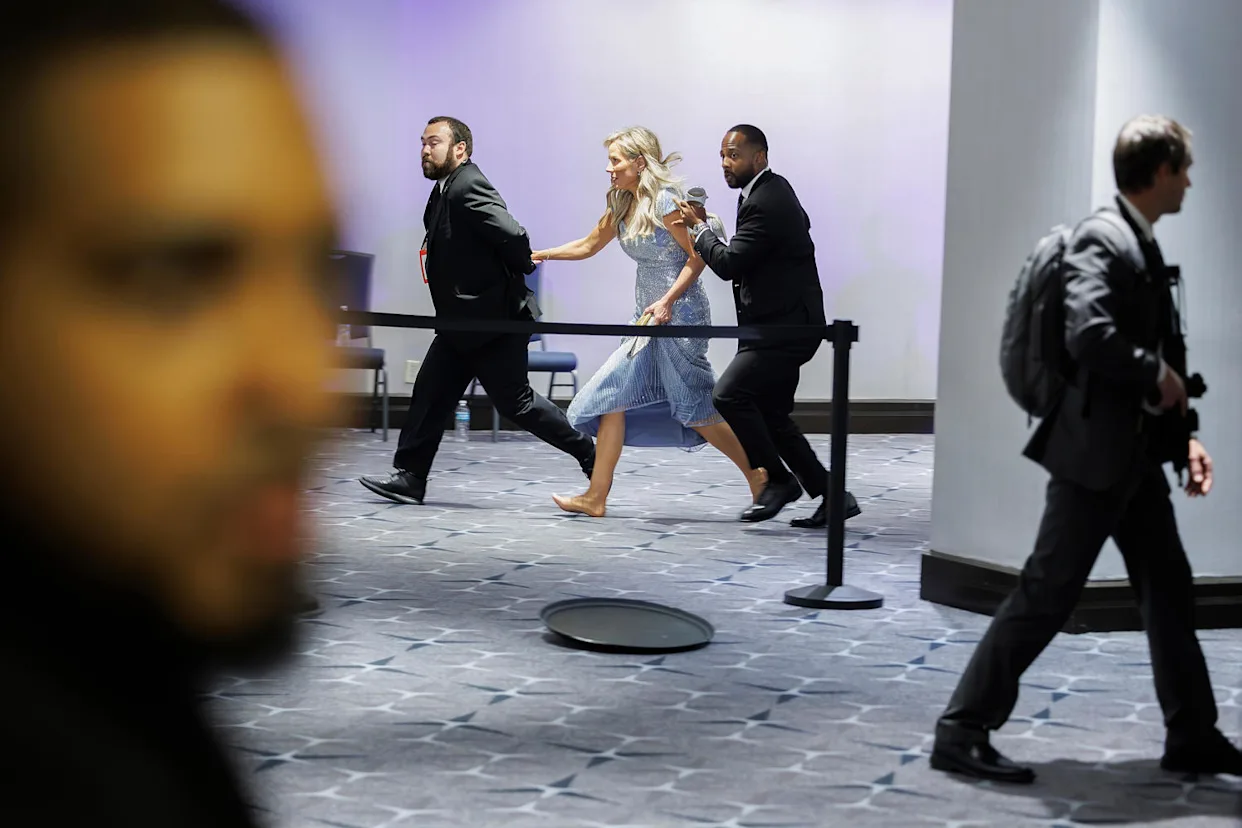

Misinformation spread rapidly online after the shooting at the White House Correspondents’ Association dinner, with unfounded claims that the incident had been staged gaining traction across several social media platforms. Within minutes of the first reports of gunfire at Saturday night’s event, posts speculating that the attack was a “false flag” began circulating. By the following day the theory had spread widely, despite authorities and journalists who attended the dinner releasing verified information about what had occurred. Officials say there is no evidence the attack was staged.
Get today's headlines by email 
Authorities have identified the suspect as Cole Tomas Allen, 31, from Torrance, California. Investigators say Allen rushed toward the event while armed before being stopped by law enforcement officers.
A senior administration official said Allen’s brother had previously received writings from him expressing anti-Trump views, which had also been shared with other family members before the incident.
Conspiracy claims spread online
Online speculation accelerated through the weekend as posts questioning the authenticity of the incident appeared across multiple platforms.
On Reddit, several widely shared posts suggested or joked that the shooting might have been staged. Comment threads frequently reflected skepticism toward official accounts.
On Instagram, posts proposing that the White House or the president had been involved attracted thousands of interactions. On X, the term “staged” trended alongside “Butler,” referencing a previous assassination attempt on Donald Trump in Pennsylvania that has also been the subject of conspiracy theories.
Trump himself commented on how quickly the speculation had emerged. In an interview with CBS’s “60 Minutes” on Sunday, he remarked that conspiracy theories about major events usually take longer to appear.
“Usually it takes a little bit longer,” he said. “Usually they wait about two or three months to start saying that.”
Experts warn of rising conspiratorial thinking
Researchers who study misinformation say the speed of the response reflects a broader trend in public discourse.
Michael Barkun, a political science professor emeritus at Syracuse University, said the rapid spread of conspiracy theories was not surprising.
He said society had become “saturated with conspiracism,” adding that suspicion toward official explanations had become a common reaction to breaking news events.
Although staged or “false flag” attacks have occasionally occurred in history, experts say they are extremely rare. Nevertheless, the idea has become a recurring theme in online conspiracy culture.
In recent years, some commentators have claimed that events ranging from the Sandy Hook school shooting to the 6 January 2021 attack on the US Capitol were orchestrated as false flags.
Mark Fenster, a scholar at the University of Florida who researches conspiracy theories and government transparency, said such beliefs tend to rise and fall over time.
He noted that the modern media environment allows these claims to circulate faster and more visibly than before.
False images and misleading clips
Alongside speculation about the motive for the shooting, other misleading or fabricated content also circulated widely.
Some posts shared images falsely claiming to show the suspect, while others distributed altered security footage of him running through a checkpoint. One viral post suggesting the attack involved time travel drew more than 1.2 million views.
An apparently AI-generated video featuring a fabricated clip of commentator Tucker Carlson discussing the theory also spread online. A propaganda video linked to pro-Iran accounts referenced the conspiracy claims as well.
Another widely shared clip showed White House press secretary Karoline Leavitt speaking on the red carpet before the dinner. In the interview she said “shots will be fired,” referring to remarks planned for the president’s speech. Edited versions of the video circulated online suggesting the comment was evidence of foreknowledge.
Political reactions and concerns
Some political figures from both sides criticised the speculation.
A White House spokesman dismissed the claims outright, saying anyone who believed the president had staged an assassination attempt was “a complete moron”.
Others argued that mistrust of institutions and increasingly partisan politics had helped fuel such reactions.
Analysts warn that the spread of conspiracy theories can have broader consequences for democratic systems. Fenster said widespread suspicion of political opponents and government institutions could make cooperation and compromise more difficult.
Even before the dinner concluded, some attendees predicted that conspiracy narratives would emerge. Representative Jamie Raskin told reporters as he left the event that the attack was likely to intensify existing conspiracy theories surrounding earlier assassination attempts on Trump.
Growing visibility of misinformation
Researchers say the episode illustrates how quickly misinformation can develop during breaking news events.
The combination of algorithm-driven social media platforms, political polarization and declining trust in institutions has created an environment in which speculative claims often circulate alongside verified information.
While investigators continue examining the shooting itself, experts say the online response highlights a parallel challenge: the rapid spread of false or misleading narratives in the aftermath of major incidents.
Join the discussion? 
Already a member? 
 Adapted by ASEAN Now. Source 28 April 2026
Recommended Comments
Create an account or sign in to comment