



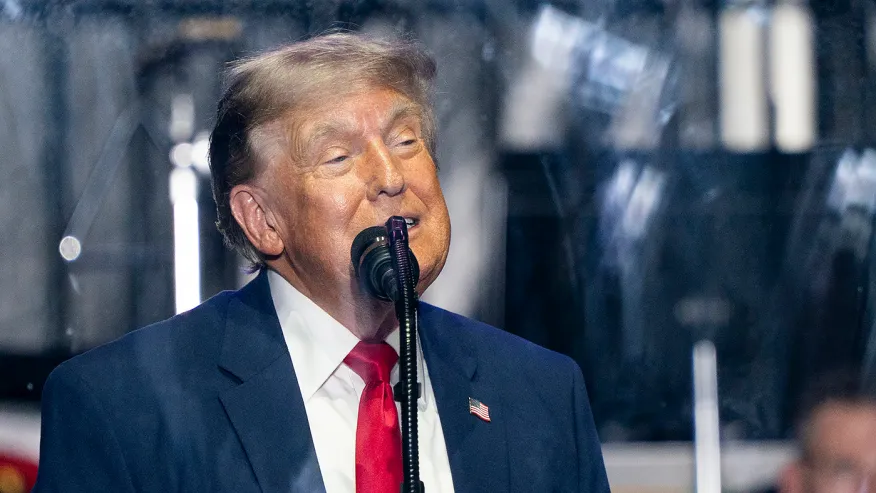

Republican lawmakers are expressing growing concern that President Donald Trump is increasingly out of step with both GOP candidates and voters on the economy, as inflation and rising living costs remain central issues ahead of the 2026 midterm elections.
Get today's headlines by email 
Several Republican senators have urged Trump to focus more closely on household finances and promote his administration's economic record. Instead, they say, the president has concentrated on foreign policy, internal party disputes and election-related legislation, raising fears that Republicans could struggle to retain voter support.
Housing bill sparks frustration
Tensions intensified after Trump declined to sign the bipartisan 21st Century ROAD to Housing Act, despite the measure passing Congress with overwhelming support. The president said he would not approve the legislation until Congress passed the Safeguard American Voter Eligibility (SAVE America) Act, a proposal that faces long odds of becoming law.
The decision surprised Senate Majority Leader John Thune and other Republican lawmakers, who argued that delaying the housing bill undermines efforts to address affordability concerns during a difficult political period.
Sen. John Cornyn said Republicans needed to remember that the midterm elections were approaching, while other lawmakers warned that abandoning widely supported legislation could further weaken the party's standing with independent voters.
Concerns over economic messaging
Republican senators have also questioned Trump's public comments about the economy, saying they risk reinforcing voter concerns about rising prices.
Sen. Thom Tillis said Americans wanted to know that leaders understood the financial pressures they faced and had a clear plan to address them. Recalling his own struggles with fuel costs decades ago, Tillis said voters would give policymakers time to solve economic problems if they believed their concerns were being acknowledged.
He suggested the conflict involving Iran had diverted the president's attention from domestic economic issues but argued that the administration should communicate more clearly that tackling inflation and living costs remains a priority.
Trump has also drawn criticism after saying he was not thinking about Americans' financial situations while working to negotiate an end to the Iran conflict. His allies argued the remarks were taken out of context and that he was referring to his focus on preventing Iran from acquiring a nuclear weapon. Nevertheless, some Republican senators privately expressed discomfort with the comments.
Polls add to Republican concerns
Republican strategists say the economy remains the dominant issue for many voters, even as Trump prioritises national security and election-related measures.
Ron Bonjean, a Republican strategist, said the president's focus on Iran and the SAVE America Act was not aligned with the issues most important to many Americans, despite his belief that he was acting in their best interests.
A Republican senator, speaking anonymously, said internal polling showed independent voters moving away from Republicans. The lawmaker said negative perceptions of Trump's handling of the economy had worsened following US military strikes against Iran, which were followed by the closure of the Strait of Hormuz, higher fuel prices and increased fertiliser costs.
Recent public polling has also pointed to economic dissatisfaction. A Fox News survey found that 59% of registered voters felt pessimistic about the economy, while 44% said they were falling behind financially, both figures higher than a year earlier.
A PBS/NPR/Marist poll found that 33% of Americans approved of Trump's handling of the economy, the lowest level recorded by Marist on that issue since it began tracking the measure in 2019.
Pressure ahead of the midterms
Concerns about the political impact of the economy have also surfaced during private Republican meetings. According to a senior Republican aide, Sen. Tim Scott warned colleagues that polling had deteriorated for both the party and the president, arguing that the Justice Department's proposed $1.8 billion anti-weaponisation fund would further damage Republican prospects.
Veteran Republican strategist Vin Weber said voters would ultimately judge the administration based on economic conditions rather than messaging alone. While acknowledging that the president should show greater empathy toward voters' financial concerns, Weber argued that the overall state of the economy would remain the decisive factor in the election.
He added that Democrats were likely to highlight Trump's comments about the economy but said the broader economic environment and the president's approval ratings would have a greater influence on the outcome of the midterm elections.
Join the discussion? 
Already a member? 
 Adapted by ASEAN Now. Source 29 June 2026
Recommended Comments
Create an account or sign in to comment