




Arab Gulf states are increasingly concerned that President Donald Trump’s emerging agreement with Iran could reshape the regional balance of power in Tehran’s favor, raising new questions about Washington’s role as the Gulf’s primary security guarantor.
Get today's headlines by email 
For decades, Gulf leaders viewed the United States as a strategic partner central to their security. Trump, however, has often described the relationship in more transactional terms. During his first term, he publicly suggested that Saudi Arabia depended heavily on US protection and should pay more for its defense.
Doubts Over US Security Commitments
Those concerns intensified after the 2019 attacks on major Saudi oil facilities, which temporarily disrupted roughly half of the kingdom’s crude production. Although Washington blamed Iran and condemned the strikes, Gulf governments questioned how far the US would go to confront Tehran on their behalf.
By the start of Trump’s second term, Gulf states had begun adjusting their expectations. While pledging trillions of dollars in investments in the US economy, they also sought assurances that American security commitments remained firm.
War Rekindles Regional Anxiety
Those assurances faced a major test this year when the United States and Israel launched military operations against Iran despite Gulf efforts to avoid a broader regional conflict.
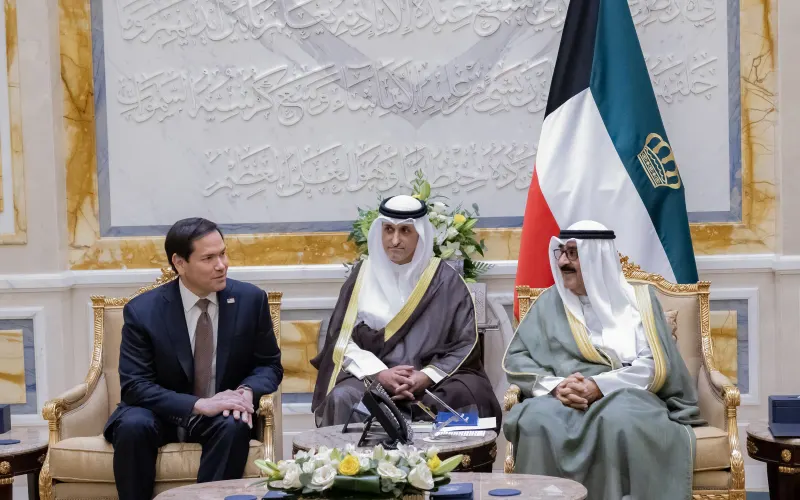
Iran responded with attacks across the Gulf, forcing regional governments to reassess their dependence on Washington. During a visit this week to the United Arab Emirates, Bahrain and Kuwait, US Secretary of State Marco Rubio sought to reassure allies that American commitments remained unchanged.
Speaking in Kuwait, Rubio said the United States would not take steps that undermine the security of its long-standing Gulf partners. He stressed that regional allies would be consulted throughout negotiations with Iran and said he had not detected doubts about US security guarantees.
Despite those assurances, analysts say confidence in Washington has weakened significantly. Hasan Alhasan, a senior fellow at the International Institute for Strategic Studies, described the conflict as a major setback for the Gulf security order.
While Gulf governments supported the ceasefire agreement between Washington and Tehran, Alhasan argued that they view it as a preferable alternative to continued conflict rather than an ideal outcome.
Concerns Over the Emerging Pact
Gulf states opposed the 2015 nuclear agreement between Iran and the United States under President Barack Obama and welcomed Trump’s decision to withdraw from it in 2018. The new arrangement is expected to generate even greater unease.
Among the most controversial elements is a provision granting Iran a role alongside Oman in overseeing commercial traffic through the Strait of Hormuz, a critical route for Gulf trade and energy exports.
The agreement also leaves unresolved concerns about Iran’s missile program and its network of allied militant groups, issues many Gulf governments regard as more urgent than Tehran’s nuclear activities.
Another source of uncertainty is a proposed $300 billion reconstruction fund for Iran. Trump has suggested Gulf states could contribute, but Saudi Arabia has said it lacks details about the proposal, while Qatar has only expressed preliminary interest. Rubio said this week that seeking financial commitments was not part of his current regional discussions.
Gulf States Explore New Strategies
As doubts grow over long-term US involvement in the region, Gulf governments are considering ways to diversify their security arrangements.
Officials are exploring stronger defense cooperation among Gulf states and looking at alternative military suppliers, including Turkey. At the same time, some leaders are considering whether a future regional non-aggression pact with Iran could help reduce tensions.
Analysts caution, however, that diplomacy alone may not be enough. Alhasan argued that Gulf states would need stronger and more integrated defense capabilities to create a credible deterrent before any such agreement could succeed.
The debate reflects a broader reassessment taking place across the Gulf. Increasingly, policymakers are reconsidering not only how to manage relations with Iran, but also how much they can rely on the United States in the years ahead.
Firas Maksad of Eurasia Group said years of disappointments had eroded confidence in Washington. As a result, Gulf states may pursue a dual strategy of engaging Iran diplomatically while strengthening their own military capabilities to reduce dependence on external protection.
Join the discussion? 
Already a member? 
 Adapted by ASEAN Now. Source 25 June 2026
Recommended Comments
Create an account or sign in to comment