



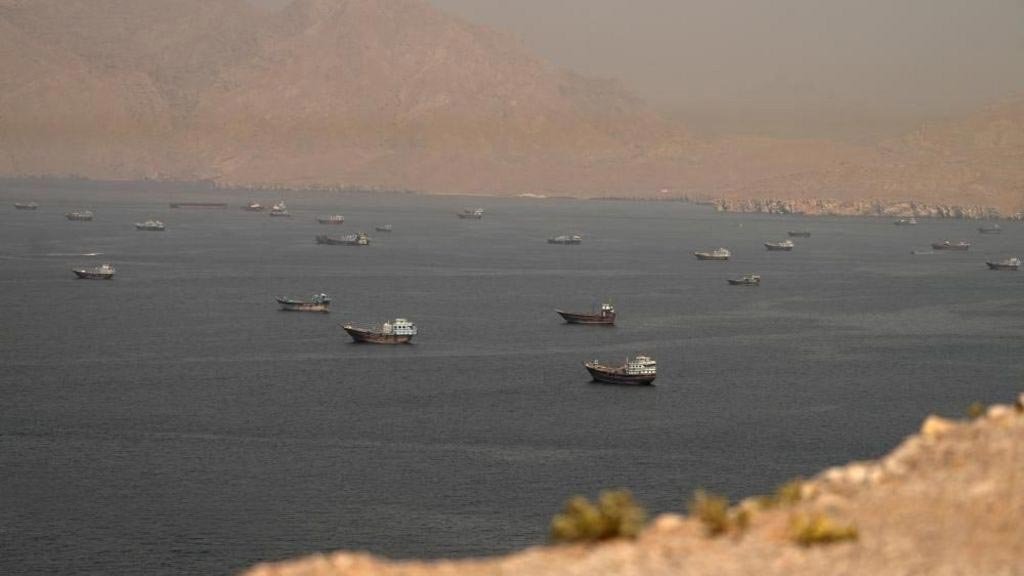

A fragile arrangement between the United States and Iran, agreed last month and designed to prevent renewed conflict, has shown signs of slipping toward war, analysts and regional sources say. Efforts by Arab and Pakistani mediators to preserve the on-again, off-again calm may not be enough if tensions over maritime access around the Strait of Hormuz intensify.
Get today's headlines by email 
Officials in both capitals have also signalled they want to avoid a return to a prolonged, full-scale confrontation. But the central dispute concerns the status and management of the strategic strait, where Iran is pressing claims that it says cannot be overridden by military, economic or diplomatic pressure.
Strait of Hormuz becomes the key fault line
Iran’s lead negotiator, Mohammad Bagher Ghalibaf, said in a recent social media post that Iran would “keep your word or pay the price”, linking the warning to the agreement. Tehran points to the memorandum of understanding that was drafted rapidly in June and lays out a 14-point framework.
Iran argues that point five gives it scope to manage the corridor. The clause says Iran will “make arrangements using its best efforts for the safe passage of commercial vessels”.
The US interpretation is broader, according to the article’s accounts: Washington reads the language as requiring Iran to allow the free flow of global oil and gas and other essential goods, including inputs used to produce fertiliser.
An Arab oil executive described the drafting as ambiguous, saying the wording could be interpreted in multiple ways.
Mistrust, internal splits and IRGC role
While Iran’s new leadership is described as aligned on its broad approach, there are growing signs of disagreements about how to proceed. Robert Malley of the International Crisis Group, who helped negotiate the 2015 nuclear deal that President Donald Trump withdrew from during his first term, said some in Tehran want to use battlefield gains as leverage through diplomacy, while others believe the ceasefire came before Iran had inflicted enough damage on the United States.
Recent attacks on three vessels, including a Qatari-flagged liquefied natural gas tanker sailing near Oman’s coastline, were described by a regional diplomatic source as the work of a “rogue unit” within the Islamic Revolutionary Guard Corps (IRGC). With the IRGC playing a dominant role in Iran’s security system, Iran’s stated position is that ships must follow routes designated by Tehran.
Iran’s parliament also moved to codify control. A bill presented “last night” aims to govern the strait through the “Strategic Action for the Security and Sustainable Progress of the Strait of Hormuz and the Persian Gulf”. The measure was posted on X by Ebrahim Azizi, head of the assembly’s national security commission. He said controlling the waterway is Iran’s “inalienable right”, and when asked when Iran would relinquish control, replied: “never”.
Iran views control of the corridor as both leverage and deterrence, as well as an economic fallback if sanctions remain in place and overseas assets continue to be frozen.
Neighbours raise objections; possible fee compromise
The push to reshape rules in the region has increased friction with neighbouring states, including Qatar, which has played a role in mediation. Tensions also extend to Oman, a longstanding ally that has acted behind the scenes for years.
The United Arab Emirates has indicated that Iran’s plans to charge “service fees” for shipping are unacceptable and would set a harmful precedent. A source familiar with the exchange also said Oman objected to including language in point five stating that Iran will hold dialogue with the Sultanate of Oman to define future administration and maritime services. Muscat, the source said, now finds itself balancing Washington’s expectations against Tehran’s aims for a discreet mediating role.
Some observers think an eventual compromise may still be possible. Simon Gass, a former senior British diplomat involved in talks on the 2015 deal, said a solution could involve no tolls for passage but allow shipping fees that demonstrate Iran’s authority.
Even if the truce survives, the underlying problem is a mismatch in how each side reads the other’s constraints. Each side, according to the accounts here, believes it has the upper hand and expects the opponent to back down first due to its own vulnerabilities. The piece notes that Iran was able to take advantage of a brief window when US sanctions on exports of its oil were waived, but that opportunity has since closed.
Recent reporting also points to pressure on Iran’s economy, including high inflation around 80% and widespread job losses, alongside internet disruptions. The crisis over the strait has further crowded out discussion of the core nuclear issue, while the memorandum’s 60-day period for intensive talks is described as unrealistic. Malley said he believes the truce may recover in some form, but added that given dysfunction on both sides, it cannot be assumed.
Join the discussion? 

15 July 2026
Recommended Comments
Create an account or sign in to comment