



Skip to content
View in the app

A better way to browse. Learn more.

Thailand News and Discussion Forum | ASEANNOW

A full-screen app on your home screen with push notifications, badges and more.

To install this app on iOS and iPadOS
  1. Tap the Share icon in Safari
  2. Scroll the menu and tap Add to Home Screen.
  3. Tap Add in the top-right corner.
To install this app on Android
  1. Tap the 3-dot menu (⋮) in the top-right corner of the browser.
  2. Tap Add to Home screen or Install app.
  3. Confirm by tapping Install.

Become a member

Become a member

How Trump’s Iran Deal Differs From Obama’s

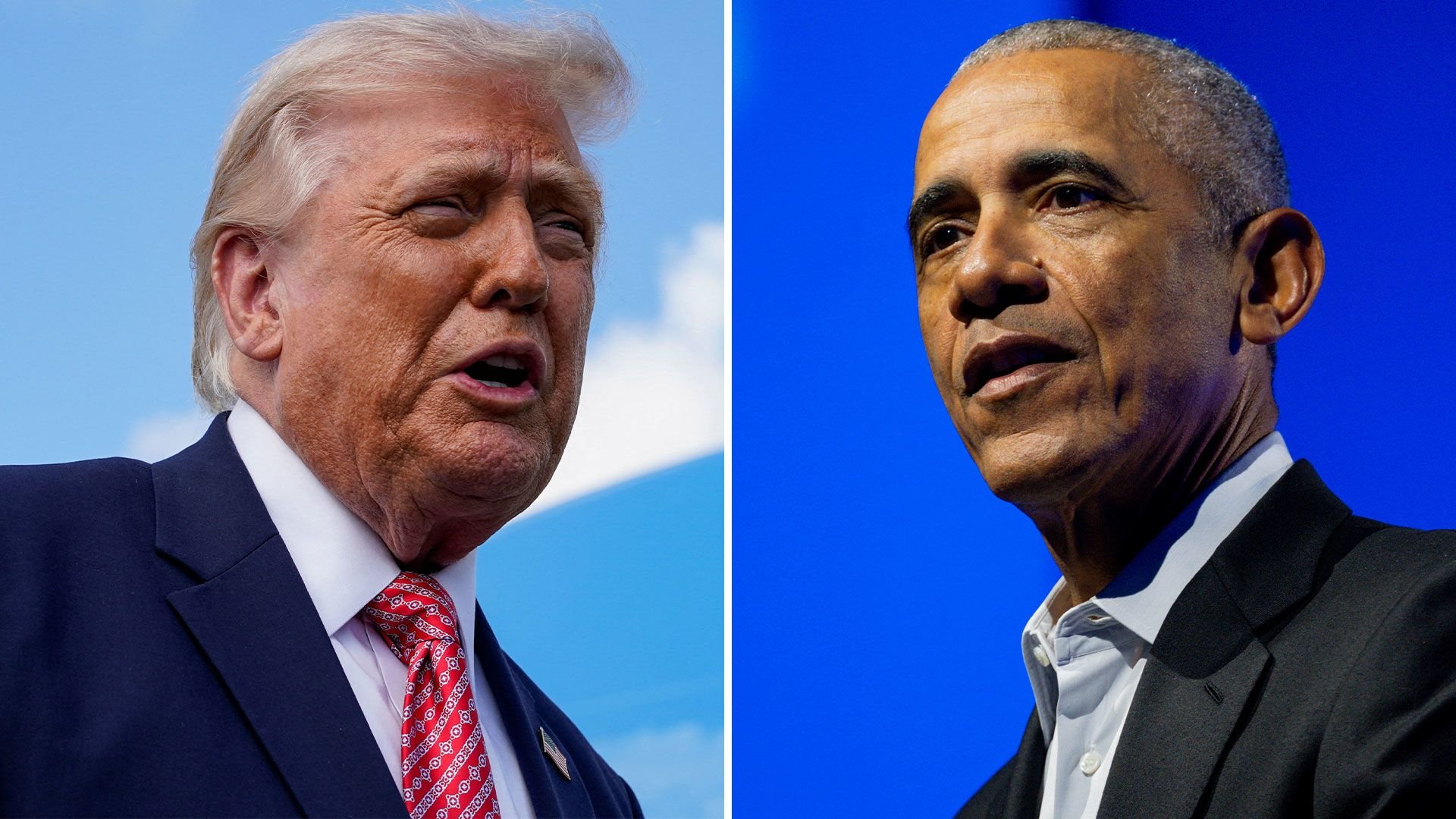
With President Donald Trump announcing a memorandum of understanding (MOU) with Iran, comparisons have quickly emerged with the landmark nuclear agreement negotiated by President Barack Obama in 2015. While both arrangements involve Iran and sanctions relief, the similarities largely end there.

Get today's headlines by email image.png

ANALYSIS

The most important distinction is that Obama’s agreement — the Joint Comprehensive Plan of Action (JCPOA) — was a completed nuclear accord. Negotiated among Iran, the United States, China, Russia, France, the United Kingdom, Germany and the European Union, it imposed specific restrictions on Iran’s nuclear programme in exchange for sanctions relief.

One Is a Nuclear Deal, the Other Is Not

Trump’s agreement is not a final nuclear deal. The MOU primarily establishes a framework to halt the current conflict, reopen the Strait of Hormuz and launch further nuclear negotiations. While Iran has again pledged not to obtain a nuclear weapon, details on verification and enforcement remain unresolved and are expected to be negotiated during a 60-day follow-up process.

As a result, the MOU resembles a ceasefire and negotiating framework more than a completed nuclear accord.

Diplomacy Versus Military Pressure

The paths leading to the two agreements were markedly different.

The Obama administration spent roughly 20 months conducting negotiations that culminated in the JCPOA.

The Trump administration also pursued diplomacy but ultimately concluded that military action was necessary. In July 2025, the United States launched strikes against Iranian nuclear facilities, which experts said set back Tehran’s nuclear programme significantly.

Later, Washington and Israel conducted Operation Epic Fury, targeting nuclear infrastructure and military assets. Iran responded by disrupting shipping through the Strait of Hormuz and launching attacks against U.S. interests and regional partners. Israel meanwhile remained engaged in conflict with Iran-backed groups in Lebanon.

The fighting carried substantial costs. Thirteen U.S. service members were reported killed during Operation Epic Fury, while the overall conflict has been estimated to have cost American taxpayers more than $25 billion.

What Iran Received

Both agreements offered economic incentives to Iran, but the terms differed substantially.

Under the JCPOA, Iran gained access to frozen assets and received relief from U.S., European Union and United Nations sanctions. Restrictions on oil exports were eased, the Iranian central bank regained broader access to the global financial system and previously seized funds, including $1.7 billion, were returned.

In exchange, Iran agreed to major nuclear restrictions. These included reducing the number of operating centrifuges, limiting uranium enrichment activities, shrinking its stockpile of enriched uranium, modifying a heavy-water reactor and accepting inspections by the International Atomic Energy Agency. Critics argued that some inspection provisions were insufficient and that the agreement’s limits would eventually expire.

Trump’s MOU also includes sanctions relief measures, the easing of oil restrictions and a proposed $300 billion reconstruction fund involving regional partners. However, much of the promised relief depends on future negotiations that have yet to produce a broader nuclear agreement.

In return, Iran agreed to reopen the Strait of Hormuz. Critics note that this largely restores conditions that existed before the conflict. Moreover, the MOU leaves open questions about the future governance of the strategic waterway. One provision states that the strait will remain toll-free for 60 days, after which Iran and Oman will discuss future administration and maritime services.

How the Deals Are Being Sold

When Obama unveiled the JCPOA, he described it as the strongest nuclear non-proliferation agreement ever negotiated. He acknowledged that Iran would receive substantial economic benefits and argued that, despite its imperfections, the agreement was preferable to military conflict.

Trump has similarly promoted his MOU, saying it achieved more than his administration initially sought.

At the same time, he has emphasized the economic risks of allowing the conflict to continue. After previously dismissing Iran’s leverage, Trump said prolonged disruption could have triggered severe economic consequences, particularly through energy markets.

Speaking after the G7 summit in France, Trump said concerns about economic damage influenced his decision to pursue an agreement, noting that financial markets reacted positively whenever prospects for peace improved. He also warned that a prolonged crisis could have risked pushing the United States into an economic downturn.

Join the discussion? Create account. orange.png

Already a member? haveyr-say.png


image.png
Adapted by ASEAN Now. Source 19 June 2026

User Feedback

Recommended Comments

Thingamabob Diamond Member

Thingamabob

Advanced Member

The Obama deal didn't stop the Iran regime from working to develop a nuclear capacity, nor will the Trump deal.

Emdog Platinum Member

Emdog

Advanced Member
1 minute ago, Thingamabob said:

The Obama deal didn't stop the Iran regime from working to develop a nuclear capacity, nor will the Trump deal.

Wrong. Read from national archives: https://obamawhitehouse.archives.gov/node/328996

https://obamawhitehouse.archives.gov/sites/default/files/image/iranDeal_graphics_1_pathways.jpg

wensiensheng Platinum Member

wensiensheng

Advanced Member
6 minutes ago, Thingamabob said:

The Obama deal didn't stop the Iran regime from working to develop a nuclear capacity, nor will the Trump deal.

I believe that to be both correct and incorrect. The frequent inspections by staff based in Iran, restricted Iran from enrichment activity. It did not stop Iran from nuclear activity completely, so long as it was restricted to civilian use using uranium enriched up to 3%.

So no, it didn’t stop Iran from having a nuclear facility, but it stopped them having a nuclear weapons program.

As pointed out in the article, Trump does not currently have a nuclear deal. Merely an agreement to talk about it and an oft repeated statement from Iran that it is not/will not develop a nuclear weapon. Something they have always said, even if secretly they may be doing so.

rudi49jr Platinum Member

rudi49jr

Advanced Member

“How Trump’s Iran Deal Differs From Obama’s”

In short: it’s orders of magnitudes worse….

OneManShow Silver Member

OneManShow

Advanced Member

Same s**t (deal) , different party. This circus was directed wrongly from the beginning, near 50 years ago.

Purdey Diamond Member

Purdey

Advanced Member

I still think that if Iran was truefully setting out to build nuclear reactors for civil energy then they could have agreed to allow America or France to build one or two for them. Once built there would be no way they needed to enrich more than needed.

Donga Silver Member

Donga

Advanced Member

Let alone all their nuclear development, deep underground in mountains lol

I shudder at the naivety of the Western luvvies and much of the media.

unblocktheplanet Diamond Member

unblocktheplanet

Advanced Member

Obama smart, Trump not.

Thingamabob Diamond Member

Thingamabob

Advanced Member
On 6/20/2026 at 8:59 AM, Emdog said:

Wrong. Read from national archives: https://obamawhitehouse.archives.gov/node/328996

https://obamawhitehouse.archives.gov/sites/default/files/image/iranDeal_graphics_1_pathways.jpg

Not wrong. As everybody knows after the Obama deal was signed the regime in Iran continued working on a nuclear weapons capability. Later many of the facilities involved were bombed, but not all.

Emdog Platinum Member

Emdog

Advanced Member
2 hours ago, Thingamabob said:

Not wrong. As everybody knows after the Obama deal was signed the regime in Iran continued working on a nuclear weapons capability. Later many of the facilities involved were bombed, but not all.

Don't give 'everybody knows' as some sort of proof. I prefer sources of evidence like the IAEA who did unannounced inspections anywhere in Iran. Sound like a Fox watcher, using 'everybody knows' when you lack facts and/or legit info. And it wasn't 'the Obama deal': heavy hitters: The agreement, formally known as the Joint Comprehensive Plan of Action (JCPOA), was signed by Iran and the P5+1 nations (the five permanent members of the United Nations Security Council plus Germany) and the European Union. (look it up)

MIke B Bad Silver Member

MIke B Bad

Advanced Member
2 hours ago, Thingamabob said:

Not wrong. As everybody knows after the Obama deal was signed the regime in Iran continued working on a nuclear weapons capability. Later many of the facilities involved were bombed, but not all.

Iran only began enriching uranium to 60% purity after the United States' withdrawal from the Joint Comprehensive Plan of Action (JCPOA).

DOH!!

Thingamabob Diamond Member

Thingamabob

Advanced Member
1 hour ago, Emdog said:

Don't give 'everybody knows' as some sort of proof. I prefer sources of evidence like the IAEA who did unannounced inspections anywhere in Iran. Sound like a Fox watcher, using 'everybody knows' when you lack facts and/or legit info. And it wasn't 'the Obama deal': heavy hitters: The agreement, formally known as the Joint Comprehensive Plan of Action (JCPOA), was signed by Iran and the P5+1 nations (the five permanent members of the United Nations Security Council plus Germany) and the European Union. (look it up)

What is fox ?

Thingamabob Diamond Member

Thingamabob

Advanced Member
1 hour ago, MIke B Bad said:

Iran only began enriching uranium to 60% purity after the United States' withdrawal from the Joint Comprehensive Plan of Action (JCPOA).

DOH!!

So ?

Thingamabob Diamond Member

Thingamabob

Advanced Member
1 hour ago, MIke B Bad said:

Iran only began enriching uranium to 60% purity after the United States' withdrawal from the Joint Comprehensive Plan of Action (JCPOA).

DOH!!

1 hour ago, MIke B Bad said:

Iran only began enriching uranium to 60% purity after the United States' withdrawal from the Joint Comprehensive Plan of Action (JCPOA).

DOH!!

Hoc credulum est.

Thingamabob Diamond Member

Thingamabob

Advanced Member
2 hours ago, Emdog said:

Don't give 'everybody knows' as some sort of proof. I prefer sources of evidence like the IAEA who did unannounced inspections anywhere in Iran. Sound like a Fox watcher, using 'everybody knows' when you lack facts and/or legit info. And it wasn't 'the Obama deal': heavy hitters: The agreement, formally known as the Joint Comprehensive Plan of Action (JCPOA), was signed by Iran and the P5+1 nations (the five permanent members of the United Nations Security Council plus Germany) and the European Union. (look it

On 6/20/2026 at 8:59 AM, Emdog said:

Wrong. Read from national archives: https://obamawhitehouse.archives.gov/node/328996

https://obamawhitehouse.archives.gov/sites/default/files/image/iranDeal_graphics_1_pathways.jpg

Naive.

Create an account or sign in to comment

Account

Navigation

Search

Search

Configure browser push notifications

Chrome (Android)
  1. Tap the lock icon next to the address bar.
  2. Tap Permissions → Notifications.
  3. Adjust your preference.
Chrome (Desktop)
  1. Click the padlock icon in the address bar.
  2. Select Site settings.
  3. Find Notifications and adjust your preference.

