



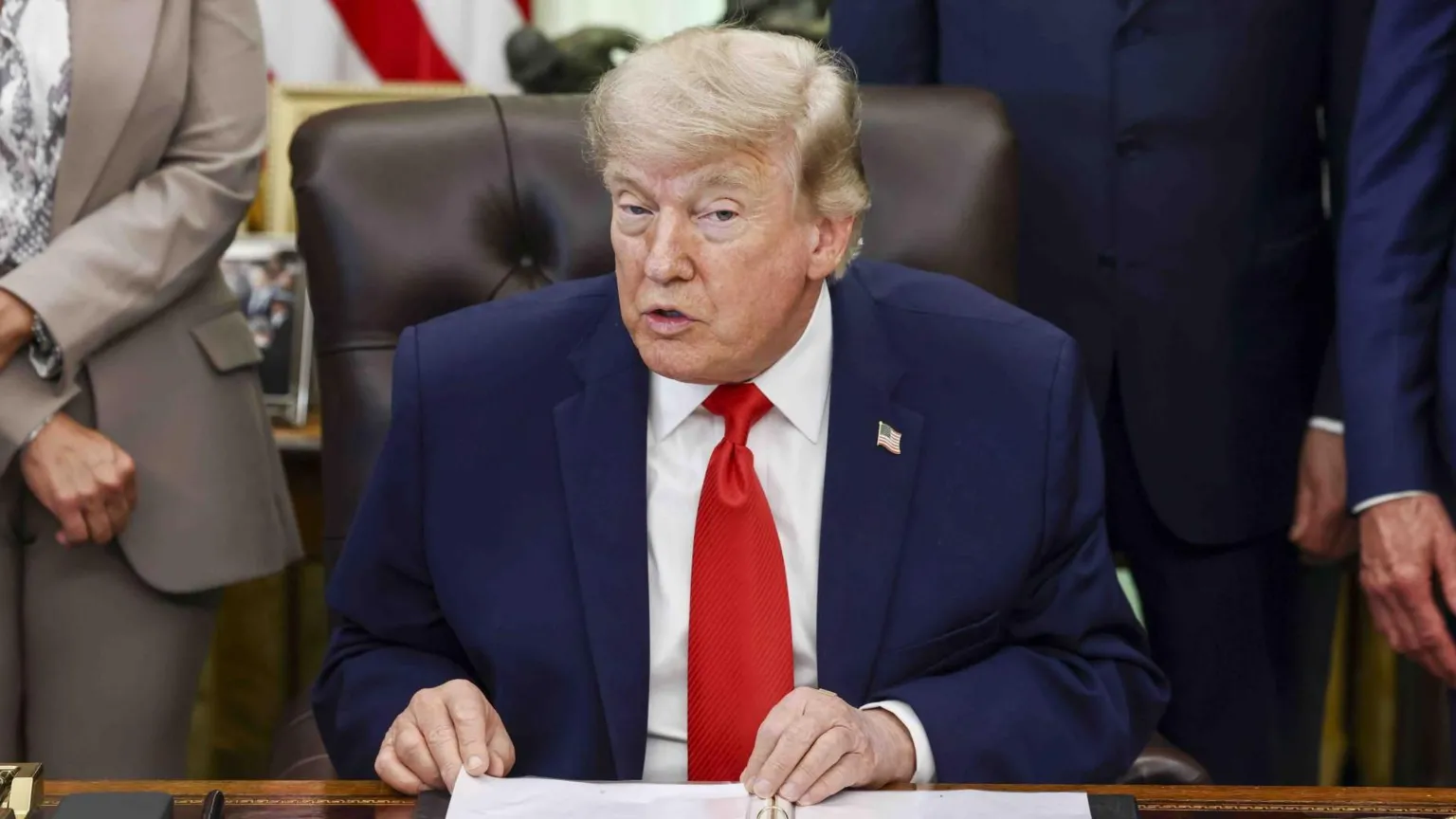

Iran has said no final agreement has been reached to end its conflict with the United States, pushing back against President Donald Trump's assertion that a deal could be signed within days.
Get today's headlines by email 
Trump had earlier threatened fresh military action against Iran, warning that the US would strike the country "very hard" again. However, he later said planned attacks had been called off because negotiators had reached what he described as a "great settlement" with Tehran.
Speaking to reporters, Trump said the agreement was awaiting the completion of final documents and suggested a signing ceremony could take place in Europe. He added that the paperwork was in its final stages and could be completed quickly.
Tehran rejects reports of completed agreement
Iran's foreign ministry spokesperson, Esmail Baghaei, dismissed reports of a completed agreement as premature.
He said claims that a deal had been reached were "speculative" and stressed that "nothing has been finalised". While acknowledging that much of the proposed memorandum had already been drafted, Baghaei said Washington had introduced what he described as excessive demands and additional conditions.
He also reiterated that Iran would not cross its "red lines" during negotiations.
Conflict continues despite ceasefire
The latest diplomatic exchanges come after months of conflict that began when the US and Israel launched extensive strikes against Iran on 28 February.
Iran responded with attacks on Israel and US-aligned states in the Gulf and effectively shut down the Strait of Hormuz, a crucial route for global oil and liquefied natural gas shipments.
Although a ceasefire was agreed in April, tensions have remained high. The US and Iran have continued to exchange sporadic attacks, including two rounds of retaliatory strikes this week.
Hours before speaking optimistically about a potential agreement, Trump had warned that the United States would strike Iran again and threatened action against key oil facilities, including Kharg Island, through which most Iranian oil exports pass.
Iran responded with warnings of stronger retaliation if further attacks occurred. The country's military said that if Iran's oil and gas exports were threatened, energy exports throughout the region could also be affected.
Oil prices fall as hopes for deal grow
Trump said the proposed agreement would ensure Iran never obtained a nuclear weapon, describing that objective as the central reason for the conflict.
He also suggested the Strait of Hormuz would reopen once an agreement was formally signed. According to Trump, regional leaders, including Gulf allies and Israeli Prime Minister Benjamin Netanyahu, had reacted positively to the developments.
Israel confirmed that Netanyahu had spoken with Trump but stressed that Israel was not a party to the memorandum of understanding under discussion. The Israeli government said it supported efforts aimed at limiting Iran's nuclear programme, missile production and regional influence.
Financial markets reacted positively to the prospect of an agreement. Brent crude oil prices fell about 4.4% to roughly $89 a barrel.
Recent clashes raise tensions
The latest military exchanges followed the crash of a US Apache helicopter in the Gulf on Monday.
On Wednesday, the US Central Command said it had carried out strikes against military, surveillance and radar installations in southern Iran.
Iran's Islamic Revolutionary Guard Corps later said it targeted American bases in Bahrain, Kuwait and Jordan. Authorities in Bahrain reported that an 11-year-old girl was injured in a drone attack and that several homes and vehicles were damaged.
Negotiations between Washington and Tehran have continued for months, with Trump repeatedly expressing confidence that an agreement was near. However, previous claims of imminent progress have not resulted in a final deal.
Join the discussion? 
Already a member? 
 Adapted by ASEAN Now. Source 12 June 2026
Recommended Comments
Create an account or sign in to comment