



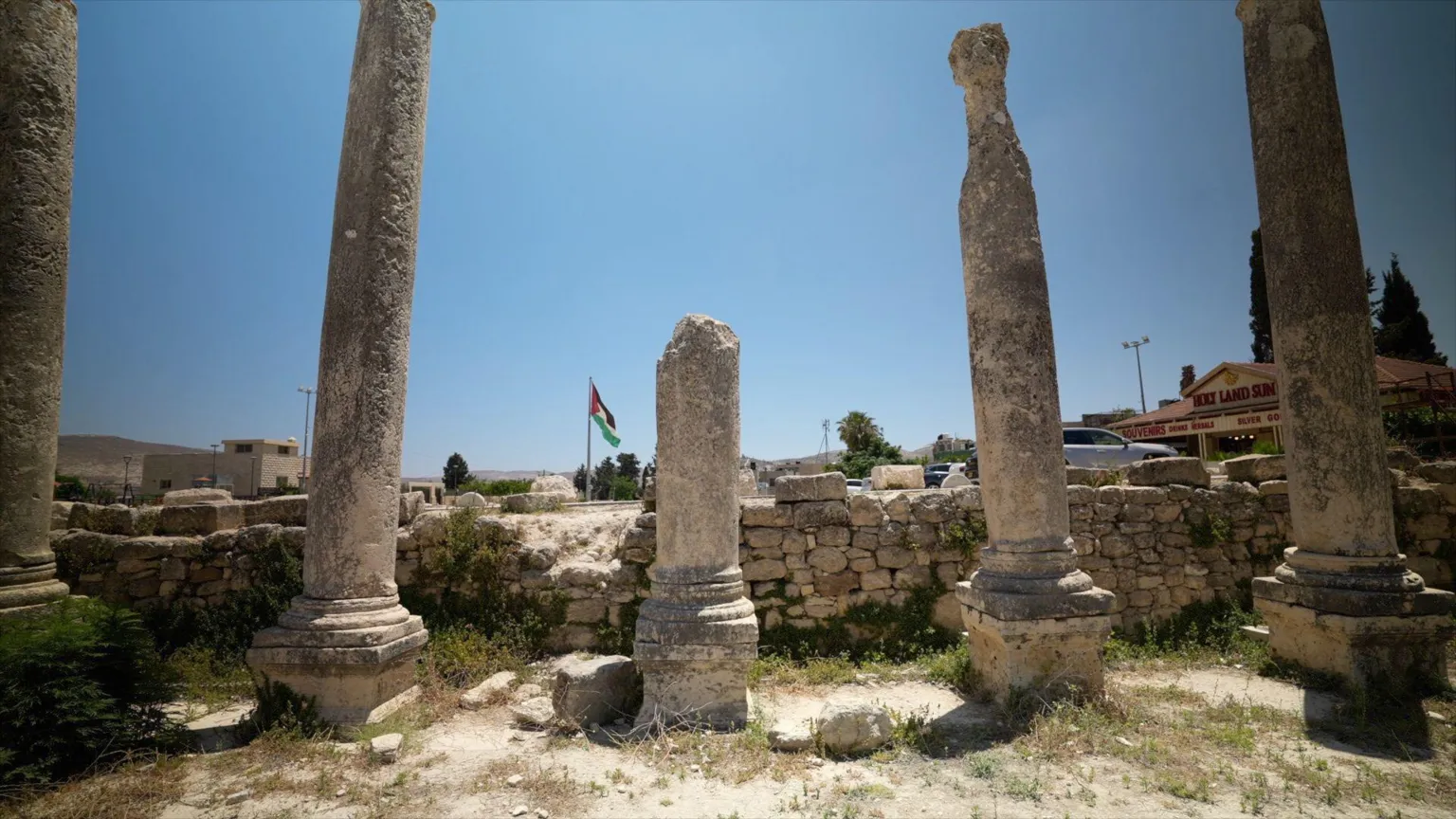

Olive groves on a hillside overlooking the Roman columns of Sebastia, in the occupied West Bank, have been cultivated for generations by Palestinian families.
One landowner, Abu Mudif, said he has received a notice that his land forms part of an Israeli move to take possession of around 450 acres. Israel says the land is needed to help protect and develop the ancient site as part of plans for a major national park.
Palestinian owners typically receive little compensation for land expropriation, and even when payments are offered, many refuse, viewing acceptance as recognition of a loss that they consider bound up with their heritage. For Mudif, the economic impact is only part of the issue.
“It feels like something essential is being torn away,” he said, adding that he struggles to imagine himself without the land.
Residents fear loss of access to the ruins
Near the site, Nahed Sakha, who owns a local restaurant, said the area is facing potential demolition. She said the Israeli plan appears to aim to separate Palestinian residents from the archaeological complex, which includes remains from the Jewish past as well as periods including the Roman, Crusader and Ottoman eras.
Sakha said restoration and excavation work has begun and that landowners were told they would not be allowed to use or plough their land.
The village mayor, Mohammed Azem, said locals are concerned about cleaning or maintaining parts of the ruins. He described uncertainty about whether doing so could create problems with Israeli security forces and settlers.
The Sebastia area is split between Area B, where Palestinian civil administration and Israeli security control apply, and Area C, under full Israeli control.
UNESCO adds Sebastia to danger list
Unesco has echoed the concerns raised by residents and local representatives. It said Sebastia is not only a World Heritage Site but has now been placed on the List of World Heritage in Danger.
Unesco cited the main threat as the “planned expropriation” and the creation of a national park called “Samaria” (Shomron), warning it could divide the property.
Israel last week allocated about 113 million shekels (£27.8m) to expand its control over archaeological sites in the West Bank, including projects in areas administered by the Palestinian Authority.
Israeli activist Alon Arad, who leads Emek Shaveh, said authorities have moved without consulting the municipality and residents of Sebastia. He said the site is Palestinian heritage and argued that development should involve the local community so it can benefit from it.
Under Israel’s proposals, Sebastia’s entrance would be relocated to the opposite side of the larger site, away from the village, car park and shops.
Palestinian officials responsible for tourism and foreign affairs said they hope Unesco’s decision will strengthen international support for their opposition to Israeli land seizures at Sebastia. Israeli Foreign Minister Gideon Saar has said Unesco cannot rewrite history.
“No vote in an international organisation can change history,” he said.
Herodium land seizure and proposed legal change
Further south, Israel has also begun expropriating land at Herodium, a manmade hill near Jerusalem where King Herod built a palace on its summit. Israel said it wants to seize about 80 acres for “preservation and development”.
Peace Now, an Israeli settlement-monitoring group, said the move is constrained under international law and by rulings of Israel’s Supreme Court, arguing Israel is prohibited from expropriating land for settlement purposes or solely for the benefit of Israeli citizens. Peace Now said Israel would likely seek to frame the expropriation as serving both Palestinian and Israeli populations, despite what it described as the apparent link to settlement expansion and Israeli control.
Shmuel Browns, who has worked on excavations at Herodium, said Israeli archaeologists and officials need to be able to oversee and protect sites with religious and historical significance. He said Israel sees itself as responsible for safeguarding archaeology, artefacts and the history of the land.
At the same time, Far-right figures in Israel’s current government have pushed for wider powers. A bill proposed earlier this year would have moved control of archaeological sites from the military-linked Civil Administration to the Israeli heritage ministry, giving it broad authority to seize land for archaeological preservation across the West Bank. The bill passed its first reading in parliament in May but is currently on hold as elections near, and may not return.
In Sebastia, Arad said the legislation proposal illustrates how archaeology is being used to advance land and governance aims, by supporting excavations and narratives while also shifting land from Palestinian to Israeli control. He said Palestinian residents fear their connection to the ruins may be lost.
Join the discussion? 

9 August 2026
-
 1
1
Recommended Comments
Create an account or sign in to comment