



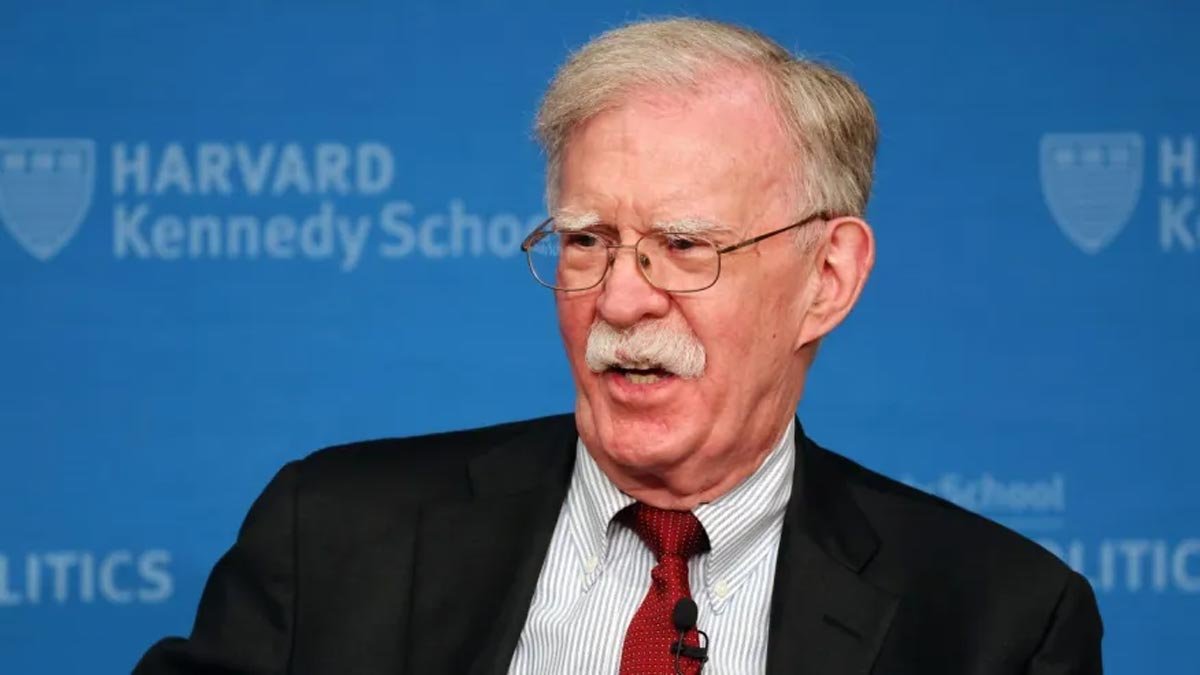

Former national security adviser John Bolton has criticised a proposed agreement between Washington and Tehran, describing it as a major setback for the United States and arguing that domestic political concerns are shaping the Trump administration’s approach.
Get today's headlines by email 
Speaking on NewsNation’s Elizabeth Vargas Reports on Thursday, Bolton said the administration was pursuing the arrangement because of worries about fuel prices and their potential impact on upcoming midterm elections rather than broader strategic considerations.
“It’s a big defeat for the United States,” Bolton said, adding that he believed concerns about gasoline prices were the primary factor driving the negotiations.
Proposed ceasefire extension
The tentative agreement, first reported by Axios, would take the form of a 60-day memorandum of understanding aimed at extending a fragile ceasefire and reopening the Strait of Hormuz.
The arrangement is designed to ease economic pressure on both the United States and Iran. Under the proposal, Iran would agree not to charge tolls to commercial vessels using the waterway and would remove mines from the strait.
The Strait of Hormuz is one of the world’s most important shipping routes, carrying more than one-fifth of global oil and gas supplies.
In return, the United States would lift its naval blockade and provide certain sanctions waivers that would allow Iran to sell oil more freely. Washington would also agree to begin discussions on wider sanctions relief.
Nuclear commitments under discussion
The memorandum would include a pledge by Iran not to pursue nuclear weapons. However, Tehran has made similar assertions in the past, and those claims have been questioned by non-proliferation specialists.
According to the Axios report, early negotiations would focus on the future of Iran’s stockpile of highly enriched uranium and on how any future uranium enrichment activities would be handled.
The proposed framework would leave several major issues to be negotiated during the 60-day period.
Concerns over Iran’s intentions
Bolton argued that Iran could use the agreement to strengthen its position while talks continue.
He said Tehran may seek to benefit from sanctions relief and renewed oil sales while delaying decisions on the most difficult issues. According to Bolton, such a process could allow Iran to rebuild financial resources and military capabilities while reducing the economic pressure facing the government.
Bolton also suggested that Iranian leaders may believe US willingness to use force in the region could weaken as the midterm elections approach.
“They think we’ve got a short attention span, we’re obsessed by the elections,” he said.
Election-year criticism
During the interview, host Elizabeth Vargas noted that President Donald Trump had recently said he was not focused on the midterm elections.
Bolton rejected that claim, arguing that electoral considerations were central to the administration’s calculations.
He said reopening the Strait of Hormuz could increase energy supplies, potentially lowering global oil prices, reducing fuel costs for American consumers and easing inflationary pressures.
According to Bolton, the administration views those economic effects as beneficial to its political prospects ahead of November’s elections.
Join the discussion? 
Already a member? 
 Adapted by ASEAN Now. Source 30 May 2026
-
 1
1
Recommended Comments
Create an account or sign in to comment