



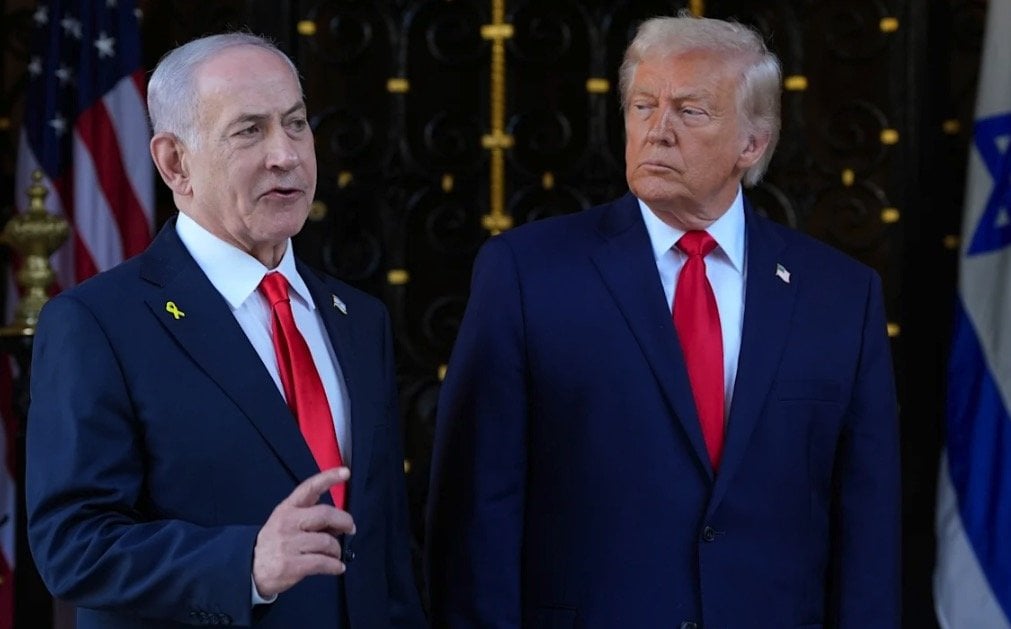

Israeli Prime Minister Benjamin Netanyahu is set to meet President Donald Trump on Tuesday morning, the first in-person meeting between the two leaders since the United States and Israel attacked Iran in February.
The meeting comes as some figures within the Republican Party’s “America First” wing worry Netanyahu will press Trump for a more aggressive approach, after months of heightened tension between the allies over Israel’s military actions in Lebanon and the direction of the US-Iran conflict.
White House Meeting after Months of Strain
Netanyahu is in Washington to attend the funeral of the late Senator Lindsey Graham. The White House had not publicly confirmed the meeting until Monday, with the details finalised only as officials prepared for the service.
The visit follows what critics describe as frequent contact: Netanyahu has made seven trips to Washington since Trump took office last year, and America First-aligned figures say the relationship has become a political liability for the president’s anti-interventionist supporters.
Former White House chief strategist Steve Bannon said Trump’s “non-Israel First” backers were alarmed, arguing that Netanyahu’s visits to the White House have repeatedly been harmful to their agenda. He cited the scale of Netanyahu’s access to the president as a reason for concern.
Ceasefire Talks, But Escalation Fears
The planned talks come during a fragile period in the wider conflict. US and Iran suspended nearly two weeks of tit-for-tat strikes over the weekend amid hopes for a new ceasefire deal. However, Trump has continued to threaten “massive attacks” if diplomacy does not succeed, after an earlier peace agreement collapsed earlier this month.
Some anti-interventionist Republicans had hoped the most recent ceasefire effort would become a lasting end to hostilities. Instead, they are now weighing the possibility that Netanyahu could persuade Trump to move towards a more enduring phase of war, potentially keeping the United States entangled in the Middle East for months.
New polling cited in the article suggests a growing share of Trump’s base is no longer convinced the war is worth its economic cost. Republicans also face the prospect that the conflict will remain a campaign issue as voters head to the polls in November.
Curt Mills, executive director of the American Conservative magazine, characterised the meeting as a risk of escalation, saying Netanyahu would argue for the “logic of escalation” unless Trump both gives a memorandum of understanding a chance and remains willing to step away from the conflict without a clear resolution.
Discussions Cover Iran and Regional Agreements
Ahead of the meeting, a White House official, speaking on condition of anonymity, said the leaders will discuss the Iran conflict as well as the trilateral agreement involving the United States, Israel and Lebanon. The official also said they will cover plans to expand the Abraham Accords, the set of deals supporting diplomatic normalisation between Israel and several Arab countries.
While critics fear Netanyahu could be pushing Trump toward further military action, some advisers and former officials said the president is unlikely to be directed by Netanyahu. Alex Gray, who previously served as chief of staff at the National Security Council during Trump’s first term, said Netanyahu would likely promote his preferred approach to addressing Iran’s nuclear capabilities, but added that Trump would still be guided by what he considers America’s interests.
In the background, US-Iran strikes remain paused. Trump said on Monday that the United States would resume action if the latest diplomatic effort fails.
Political Risks for Both Leaders
Netanyahu’s aides and supporters have argued the relationship is aimed at preventing Iran from obtaining a nuclear weapon. Matt Brooks, chief executive of the Republican Jewish Coalition, said there is “zero daylight” between the two leaders on that objective, while acknowledging the political costs of maintaining pressure.
Senator Mike Rounds said the meeting was beneficial because it was “better than having them not talking”.
The Israeli prime minister faces electoral pressure ahead of October’s vote, and US special representative for Iran Elliott Abrams said Netanyahu needs the meeting to understand Trump’s next steps, whether that means returning to the memorandum of understanding or moving towards escalation.
Abrams also warned that the stakes are higher for Netanyahu because Trump is the decision-maker and because Netanyahu’s political fate depends on whether the war’s direction is seen to be serving Israel. He added that multiple difficult topics are expected to be discussed, including Lebanon, Syria and Gaza.
Join the discussion? 

29 July 2026
-
 1
1
Recommended Comments
Create an account or sign in to comment