



Skip to content
View in the app

A better way to browse. Learn more.

Thailand News and Discussion Forum | ASEANNOW

A full-screen app on your home screen with push notifications, badges and more.

To install this app on iOS and iPadOS
  1. Tap the Share icon in Safari
  2. Scroll the menu and tap Add to Home Screen.
  3. Tap Add in the top-right corner.
To install this app on Android
  1. Tap the 3-dot menu (⋮) in the top-right corner of the browser.
  2. Tap Add to Home screen or Install app.
  3. Confirm by tapping Install.

Become a member

Become a member

Oil Surges After Gulf Production Warning

Prices spike as conflict threatens global energy supply

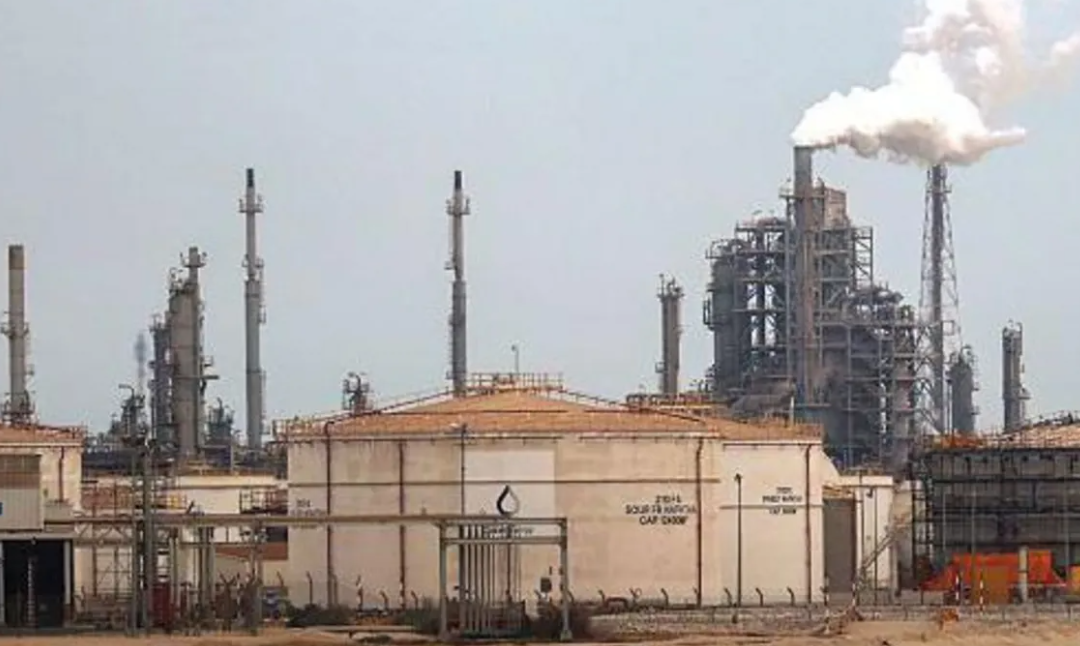
Oil prices have surged to their highest level in more than two years after a senior Qatari official warned that oil and gas production across the Gulf could soon grind to a halt if conflict in the region continues.

Brent crude rose more than 9% on Friday to above $93 a barrel, marking its highest level since autumn 2023. The sharp jump followed comments from Qatar’s energy minister, Saad al-Kaabi, who warned that the escalating crisis in the Middle East could have severe consequences for global energy supplies.

Get the latest headlines in your email subscribe-orange.png

The region plays a central role in the world’s oil and gas market, and any disruption quickly feeds through to global prices. Higher crude costs typically translate into more expensive fuel, heating and transport, which can in turn push up the price of goods and services.

Qatar warns of potential halt to Gulf production

Speaking to the Financial Times, Kaabi said the conflict could soon force oil and gas exporters across the Gulf to stop production entirely.

He warned the consequences could be severe for the global economy.

“The economies of the world could be brought down,” he said.

Qatar itself is a major exporter of oil and liquefied natural gas (LNG), supplying energy to countries around the globe. Earlier this week QatarEnergy announced it had already halted LNG production after what it described as military attacks on its facilities.

The company has declared “force majeure”, a clause that allows suppliers to suspend contractual obligations when circumstances beyond their control prevent deliveries.

Kaabi suggested other energy exporters in the region could soon be forced to follow suit if the conflict continues.

Even if hostilities stopped immediately, he added, restoring normal production levels could take weeks or even months.

Strait of Hormuz disruption fuels market fears

The conflict has also raised serious concerns about shipping through the Strait of Hormuz, one of the most critical energy transit routes in the world.

Around a fifth of the world’s oil supply normally passes through the narrow waterway each day. However, traffic through the strait has largely halted since the conflict between the United States, Israel and Iran intensified last weekend.

Any prolonged disruption could have a major impact on global energy markets, particularly for countries heavily dependent on imported oil.

Large economies such as China, India and Japan rely significantly on crude shipments that normally pass through the strait.

Some Gulf producers have limited alternatives. Saudi Arabia and the United Arab Emirates operate pipelines that allow some oil exports to bypass the strait, but analysts say these routes cannot fully replace normal shipping volumes.

Analysts warn of wider economic risks

Energy analysts say the situation now presents a significant risk to the global economy if the conflict continues.

Jorge Leon, an analyst at Rystad Energy, said the world may be on the brink of a wider energy shock.

“I think we’re on the edge of trying to understand whether this will be a short energy crisis with limited implications, or the beginning of a massive economic and energy crisis,” he said.

Leon warned that if the conflict continues for more than two weeks, the chances of serious disruption to global energy systems would increase sharply.

If Gulf exporters are unable to ship oil abroad, they will be forced to store production instead. Once storage facilities reach capacity, producers may have little choice but to shut down wells and halt output.

Depending on available storage, that point could arrive within days or a few weeks.

Oil prices rising above $100 a barrel is now considered a realistic possibility, Leon said, although the duration of any price spike would be crucial.

If prices remain high for an extended period, governments could respond by releasing emergency reserves, as many did following Russia’s full-scale invasion of Ukraine.

Impact likely to be felt through energy costs

Some analysts believe a complete shutdown of Gulf oil and gas production remains an extreme scenario.

Lindsay James, an investment strategist at Quilter, said market movements suggest investors still expect shipping through the Strait of Hormuz to resume relatively quickly.

However, she warned the risk of prolonged disruption grows the longer the conflict continues.

For households, the immediate effect is likely to be felt mainly through higher energy costs rather than a broad surge in inflation.

Fuel prices and heating costs could rise, putting pressure on household budgets and slowing economic growth if elevated energy prices persist.

Join the discussion? Create account. orange.png

Already a member? haveyr-say.png


image.png
  Adapted by ASEAN Now · Source · 06.03 2026

User Feedback

Recommended Comments

Roadsternut Gold Member

Roadsternut

Advanced Member
7 hours ago, FlorC said:

Seems Canada has a serious bargaining chip which they are not using.

Maybe redirect the oil to Asia and let the US feel the pinch.

US oil producers, unless they are in a Communist State, can sell to whoever they liked, at the best price possible. Why should Americans get a discount.

blaze master Diamond Member

blaze master

Advanced Member
16 hours ago, KhunLA said:

That didn't take long, from < $3 to $5, and in a country with control over some of the largest oil reserves ... go figure.

Unless of course, that's just a everyday snap of gas price in California, when the rest of country pays half that.

And a quick Google AI query ... and yep, as suspected, CA ...

image.png

Side note, still a lot cheaper than 91 in TH.

$2.70 / gal = ฿23 / liter

$3.59 / gal = ฿30.18 / liter

image.png

Those cali prices are about average what we pay here in canada.

blaze master Diamond Member

blaze master

Advanced Member
7 hours ago, FlorC said:

Seems Canada has a serious bargaining chip which they are not using.

Maybe redirect the oil to Asia and let the US feel the pinch.

Over 90 percent of our crude oil exports go to the usa. We could have redirected it to asia for years now. I wonder why we haven’t. Not being difficult its a genuine question.

Peterphuket Platinum Member

Peterphuket

Advanced Member
On 3/7/2026 at 2:07 PM, koolkarl said:

Another muslim induced problem.

Indeed, the world would be a much better place without Islam.

metisdead Legendary Member

A post of low value has been removed:

  1. Low-Value Posts - Posts that add no written contribution are not allowed.

    This includes emoji-only replies, very short comments, memes, GIFs, screenshots, or embedded social media posts without explanation or opinion.

Eric Loh Star Member

Eric Loh

Advanced Member

5 hours ago, blaze master said:

Over 90 percent of our crude oil exports go to the usa. We could have redirected it to asia for years now. I wonder why we haven’t. Not being difficult its a genuine question.

Lack of pipeline infrastructure. The Trans-Mountan Expansion Project that came online in May 2024 will increase Canada's oil export to new markets in Asia. This marked the first step in the much needed diversification beyond supply to US. Canada has also signed a free trade agreement with ASEAN for energy supply. Thailand has intensify their energy source from Canada. The major export market is still USA but has declined to 85%.

blaze master Diamond Member

blaze master

Advanced Member
5 hours ago, Eric Loh said:

Lack of pipeline infrastructure. The Trans-Mountan Expansion Project that came online in May 2024 will increase Canada's oil export to new markets in Asia.

So the pipeline has been active for 2 years already....yet the usa continues to get almost all of it.

candide Star Member

candide

Advanced Member

Oil prices surging after an attack on Iran. Who would have thought? 😂

spidermike007 Star Member

spidermike007

Advanced Member

Don the Destroyer is creating chaos as never before, this is his primary currency of trade, chaos, disruption, threats, fear, retaliation and ugliness. The single most dangerous in the man in the world continues his crusade to make the world a far more dangerous place. Thanks Don.

The U.S. war against Iran has triggered the largest oil supply disruption in history, more than double the previous record set during the Middle East crisis of the 1950s, according to an analysis by consulting firm Rapidan Energy.

About 20% of the world’s oil supply has been disrupted for nine days now as tanker traffic through the Strait of Hormuz remains at a standstill. Crude prices have surged above $100 per barrel in response.

The biggest disruption before the current war was during the Suez Crisis of 1956 when Britain, France and Israel invaded Egypt’s Sinai Peninsula, the energy consulting firm told clients in a Sunday note. In that crisis, about 10% of the world’s oil supply at the time was disrupted.

The disruption triggered by the closure of the Strait is nearly three times the size of the shock caused by the Arab oil embargo of 1973, Rapidan analysts told clients. The Arab embargo disrupted about 7% of global supplies.

The big difference between the supply shock of the Iran war and past crises is the world has no spare oil capacity to address the problem, the analysts said. Saudi Arabia and the United Arab Emirates hold the overwhelming majority of swing capacity but they have been cut off from the global oil market by the Hormuz closure, the analysts said.

“The conflict has not only taken offline a historically high share of global supply – it has simultaneously disrupted the primary holders of spare capacity,” the Rapidan analysts said. “The result is a market with no meaningful cushion. There is no swing producer positioned to step in.”

The U.S.-Iran war is the biggest oil supply disruption in history

https://www.cnbc.com/2026/03/09/the-us-iran-war-is-the-biggest-oil-supply-disruption-in-history.html?__source=androidappshare

file-20190516-69204-1u8iujl.jpg

Create an account or sign in to comment

Account

Navigation

Search

Search

Configure browser push notifications

Chrome (Android)
  1. Tap the lock icon next to the address bar.
  2. Tap Permissions → Notifications.
  3. Adjust your preference.
Chrome (Desktop)
  1. Click the padlock icon in the address bar.
  2. Select Site settings.
  3. Find Notifications and adjust your preference.

