



Skip to content
View in the app

A better way to browse. Learn more.

Thailand News and Discussion Forum | ASEANNOW

A full-screen app on your home screen with push notifications, badges and more.

To install this app on iOS and iPadOS
  1. Tap the Share icon in Safari
  2. Scroll the menu and tap Add to Home Screen.
  3. Tap Add in the top-right corner.
To install this app on Android
  1. Tap the 3-dot menu (⋮) in the top-right corner of the browser.
  2. Tap Add to Home screen or Install app.
  3. Confirm by tapping Install.

Become a member

Become a member

Portable Charger Flight Risks Prompt Safety Warning

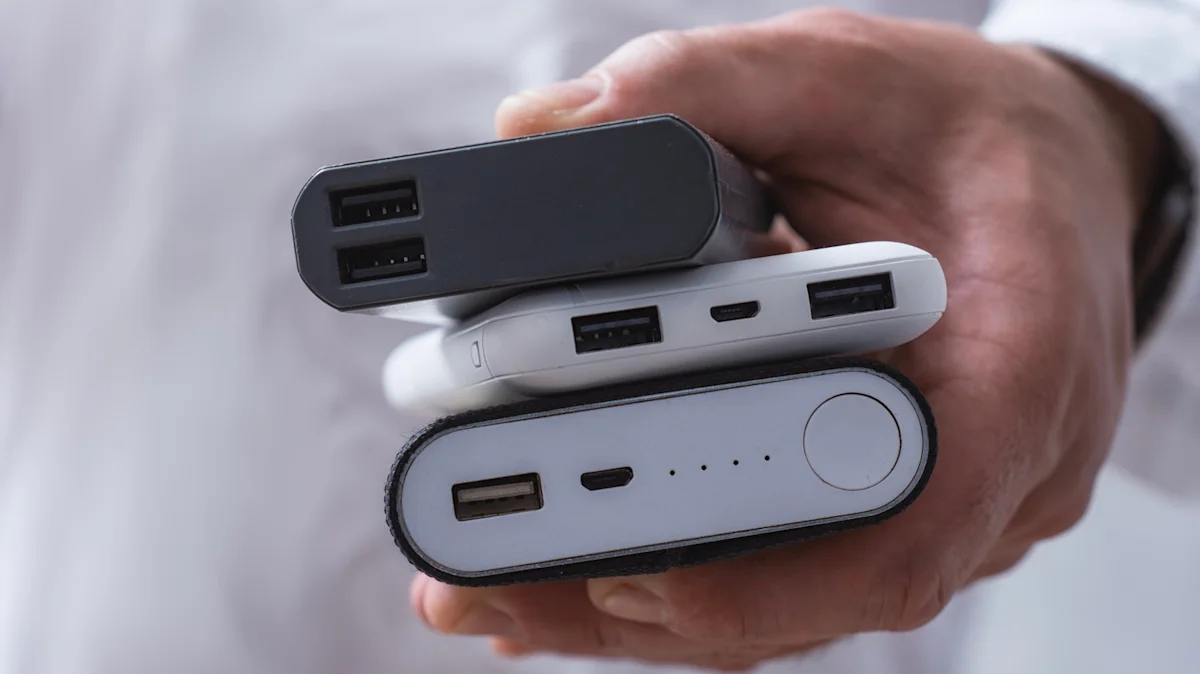
Portable chargers are causing a growing number of problems on flights, the UK aviation regulator has warned, as it urged passengers to follow airline safety rules on lithium-ion batteries.

Get today's headlines by email image.png

The UK Civil Aviation Authority (CAA) said more awareness was needed about the risks linked to power banks, which can overheat or catch fire if damaged, poorly made or used incorrectly.

Jonathan Nicholson, from the CAA, said restrictions on carrying portable chargers were essential safety measures rather than unnecessary bureaucracy.

“It’s not somebody being pedantic or doing it for the sake of it,” he told BBC News, urging travellers to “do the right thing”.

Rules for carrying power banks

The warning follows an incident last week involving an EasyJet flight from Hurghada in Egypt to London Luton that was diverted to Rome after a passenger reported a portable charger had been packed in checked luggage.

The aircraft landed at Rome Fiumicino Airport as a precaution and passengers were forced to stay overnight before continuing to London the next day.

Nicholson said international aviation rules require passengers to keep power banks in their carry-on luggage rather than in the aircraft hold.

He said passengers should also limit themselves to a maximum of two power banks and avoid using them during flights.

“Absolutely do not charge the power bank itself because that’s when they become really hot and most susceptible to having an issue,” he said.

The CAA plans to launch a joint awareness campaign with UK airlines this summer to explain the rules to holidaymakers and business travellers.

Incidents increasing worldwide

Nicholson said incidents involving power banks were “certainly on the rise” as portable chargers become more common, alongside devices such as vapes, which are also banned from checked luggage.

He pointed to research released last year by UL Standards & Engagement, a US-based safety organisation, which found airlines were experiencing an average of two “thermal runaway” incidents per week in 2024.

Thermal runaway refers to lithium-ion batteries overheating, potentially causing fires or explosions.

The data, collected from 37 passenger and cargo airlines, covered rechargeable devices including phones, laptops, tablets and power banks.

According to the organisation, incidents increased by 15% between 2019 and 2024.

Confusion among passengers

A CAA survey of 1,000 UK passengers conducted in November 2025 found that more than a third understood lithium battery rules existed but were unclear about the details.

Passengers aged over 55 were generally more familiar with the regulations.

Nicholson said power banks present greater risks than devices such as laptops or cameras because they contain larger, more powerful batteries that can generate significant heat.

“When they catch fire, they really go,” he said, adding that cabin crews receive specialist training to deal with battery fires.

He also urged people to handle portable chargers more carefully in everyday life, saying they are often thrown into bags and damaged more easily than mobile phones.

Nicholson advised consumers to buy higher-quality products where possible, warning that poorly made chargers and replacement batteries can carry greater safety risks.

Although airline guidance differs slightly between carriers, passengers are generally advised to store power banks under the seat in front of them rather than in overhead lockers.

Join the discussion? Create account. orange.png

Already a member? haveyr-say.png


image.png
Adapted by ASEAN Now. Source 26 May 2026

User Feedback

Recommended Comments

spidermike007 Star Member

spidermike007

Advanced Member

These days keeping the rules straight is not an easy task. I recently flew to the US and I had a charger in my luggage. I thought that they weren't allowed for carry on but they were allowed for check in, they made me get off the plane and remove the charger from the luggage on the tarmac it was all quite bizarre.

Then they announced on the plane that if you have a power pack to not leave it in the overhead, but rather to keep it on your person during the flight. Huh?

Brettoj Senior Member

Brettoj

Member

Should just ban them. Most planes have chargers in each seat. Buy one at the destination and dispose before you go if you really need one. They’re cheap enough!

mikeymike100 Platinum Member

mikeymike100

Advanced Member

When they are not being charged, generally they are safe?

But its when they get hot, overheat, they can cause problems!

So if you need to take one on a plane in cabin cabbage, it should be OK if you don't use it, in flight?

JonnyF Star Member

JonnyF

Advanced Member

I had one confiscated from my hand luggage at suvarnabhumi airport security because they didn't recognize the brand.

Quite a nice one too. I think the member of staff probably wanted it.

Dexxter Silver Member

Dexxter

Advanced Member

"Passengers aged over 55 were generally more familiar with the regulations."

I always thought that the young ones are more tech savvy. 😄

JamesPhuket10 Gold Member

JamesPhuket10

Advanced Member
8 hours ago, webfact said:

Portable chargers are causing a growing number of problems on flights, the UK aviation regulator has warned, as it urged passengers to follow airline safety rules on lithium-ion batteries.

Get today's headlines by email image.png

The UK Civil Aviation Authority (CAA) said more awareness was needed about the risks linked to power banks, which can overheat or catch fire if damaged, poorly made or used incorrectly.

Jonathan Nicholson, from the CAA, said restrictions on carrying portable chargers were essential safety measures rather than unnecessary bureaucracy.

“It’s not somebody being pedantic or doing it for the sake of it,” he told BBC News, urging travellers to “do the right thing”.

Rules for carrying power banks

The warning follows an incident last week involving an EasyJet flight from Hurghada in Egypt to London Luton that was diverted to Rome after a passenger reported a portable charger had been packed in checked luggage.

The aircraft landed at Rome Fiumicino Airport as a precaution and passengers were forced to stay overnight before continuing to London the next day.

Nicholson said international aviation rules require passengers to keep power banks in their carry-on luggage rather than in the aircraft hold.

He said passengers should also limit themselves to a maximum of two power banks and avoid using them during flights.

“Absolutely do not charge the power bank itself because that’s when they become really hot and most susceptible to having an issue,” he said.

The CAA plans to launch a joint awareness campaign with UK airlines this summer to explain the rules to holidaymakers and business travellers.

Incidents increasing worldwide

Nicholson said incidents involving power banks were “certainly on the rise” as portable chargers become more common, alongside devices such as vapes, which are also banned from checked luggage.

He pointed to research released last year by UL Standards & Engagement, a US-based safety organisation, which found airlines were experiencing an average of two “thermal runaway” incidents per week in 2024.

Thermal runaway refers to lithium-ion batteries overheating, potentially causing fires or explosions.

The data, collected from 37 passenger and cargo airlines, covered rechargeable devices including phones, laptops, tablets and power banks.

According to the organisation, incidents increased by 15% between 2019 and 2024.

Confusion among passengers

A CAA survey of 1,000 UK passengers conducted in November 2025 found that more than a third understood lithium battery rules existed but were unclear about the details.

Passengers aged over 55 were generally more familiar with the regulations.

Nicholson said power banks present greater risks than devices such as laptops or cameras because they contain larger, more powerful batteries that can generate significant heat.

“When they catch fire, they really go,” he said, adding that cabin crews receive specialist training to deal with battery fires.

He also urged people to handle portable chargers more carefully in everyday life, saying they are often thrown into bags and damaged more easily than mobile phones.

Nicholson advised consumers to buy higher-quality products where possible, warning that poorly made chargers and replacement batteries can carry greater safety risks.

Although airline guidance differs slightly between carriers, passengers are generally advised to store power banks under the seat in front of them rather than in overhead lockers.

Join the discussion? Create account. orange.png

Already a member? haveyr-say.png


image.png
Adapted by ASEAN Now. Source 26 May 2026


View full article

5 hours ago, spidermike007 said:

These days keeping the rules straight is not an easy task. I recently flew to the US and I had a charger in my luggage. I thought that they weren't allowed for carry on but they were allowed for check in, they made me get off the plane and remove the charger from the luggage on the tarmac it was all quite bizarre.

Then they announced on the plane that if you have a power pack to not leave it in the overhead, but rather to keep it on your person during the flight. Huh?

What I find bizarre is the check in clerk points to a big display sitting on the check-in counter and asks if you have any of those items in you suitcase, one of the items is a picture of a battery with and X through it, it is quite clear they are banned from suitcase luggage yet some people are too dim to read such a simple chart.

That is what I find bizarre.

Maybe we should all be made to take a simple IQ test before being allowed to fly on a commercial aeroplane.

Front Row Advanced Member

Front Row

Member

Perhaps I’m not spending enough time on social media. I am sure nobody will ever accuse me of being an influencer.

I haven’t used a power bank in years now. The newer phones and tablets seem to have plenty of battery life for my normal usage. When my phone battery starts to age out it will probably be time for me to buy a new phone with upgraded chips, batteries and OS features.

Now, what about all those silly little portable electric fans people are running around with?

spidermike007 Star Member

spidermike007

Advanced Member
9 hours ago, JamesPhuket10 said:

What I find bizarre is the check in clerk points to a big display sitting on the check-in counter and asks if you have any of those items in you suitcase, one of the items is a picture of a battery with and X through it, it is quite clear they are banned from suitcase luggage yet some people are too dim to read such a simple chart.

That is what I find bizarre.

Maybe we should all be made to take a simple IQ test before being allowed to fly on a commercial aeroplane.

Thanks. Always fun to be referred to as dim first thing in the morning.

simon43 Star Member

simon43

Advanced Member
14 hours ago, Brettoj said:

Should just ban them. Most planes have chargers in each seat. Buy one at the destination and dispose before you go if you really need one. They’re cheap enough!

My 'quality' chargers cost more than $100 each. Cheap??

simon43 Star Member

simon43

Advanced Member
9 hours ago, Front Row said:

...

I haven’t used a power bank in years now. The newer phones and tablets seem to have plenty of battery life for my normal usage. When my phone battery starts to age out it will probably be time for me to buy a new phone with upgraded chips, batteries and OS features.

...

I just flew from Myanmar to Bangkok this evening. At Mandalay, the security checked:

  • My 2 powerbanks (for my laptop and mobile phones, since it's rare to get mains electricity in parts of Myanmar!)

  • My ancient Chinese 12 volt car battery charger (reason for having this - see above)

  • My 12v DC to 220v AC inverter (reason for having this - see above)

  • My solar powered, rechargable, handcranked strong torch (reason for having this - no streetlights 'cos they use electricity lol!)

With all that lot to keep me 'powered' in Myanmar, there was only room left in my luggage for my gimp suit.....

Front Row Advanced Member

Front Row

Member
7 hours ago, simon43 said:

I just flew from Myanmar to Bangkok this evening. At Mandalay, the security checked:

  • My 2 powerbanks (for my laptop and mobile phones, since it's rare to get mains electricity in parts of Myanmar!)

  • My ancient Chinese 12 volt car battery charger (reason for having this - see above)

  • My 12v DC to 220v AC inverter (reason for having this - see above)

  • My solar powered, rechargable, handcranked strong torch (reason for having this - no streetlights 'cos they use electricity lol!)

With all that lot to keep me 'powered' in Myanmar, there was only room left in my luggage for my gimp suit.....

My days of pioneering are over. I’ve done enough travel into rustic, under developed locations. Now if I travel it’s to visit family, be a tourist in Europe, etc. Hats off to you for dealing with all of that.

TorquayFan Gold Member

TorquayFan

Advanced Member

Please can someone confirm?

Current concerns at check-in refers to POWER BANKS ?

POWER ADAPTORS are OK

(I find the title of this thread confusing, both the above are after all, 'chargers')

Just asking. ATB

JamesPhuket10 Gold Member

JamesPhuket10

Advanced Member
10 hours ago, spidermike007 said:

Thanks. Always fun to be referred to as dim first thing in the morning.

I can't think of any other word which would explain why someone would keep a power bank into their suitcase after reading and agreeing to a simple safety card while checking in.

What would call you such a person, a genius ?

JamesPhuket10 Gold Member

JamesPhuket10

Advanced Member
10 hours ago, simon43 said:

I just flew from Myanmar to Bangkok this evening. At Mandalay, the security checked:

  • My 2 powerbanks (for my laptop and mobile phones, since it's rare to get mains electricity in parts of Myanmar!)

  • My ancient Chinese 12 volt car battery charger (reason for having this - see above)

  • My 12v DC to 220v AC inverter (reason for having this - see above)

  • My solar powered, rechargable, handcranked strong torch (reason for having this - no streetlights 'cos they use electricity lol!)

With all that lot to keep me 'powered' in Myanmar, there was only room left in my luggage for my gimp suit.....

You should check out Phuket if you want basic, two months ago there was a power cut for ten minutes, the air-con in my home office stopped working, the emergency lights came on in the house and I had to carry on using my computer with the backup power supply.

It is really backwards here sometimes for half an hour a year. 😀

My thoughts are, if a hot country does not have air-con homes/restaurants/shops/hotels/cars, then stay well away.

simon43 Star Member

simon43

Advanced Member

They are referring to a unit which stores energy (ie a battery), rather than a unit that simply changes one voltage value to another (such as 110v to 220v AC or 220v AC to 12v DC).

The risk of a stored energy item (a powerbank), is that a fault or short-circuit may occur in the unit, which creates a fire, and that can be a big problem because many powerbanks use Lithium as part of the construction, and Lithium (and other group 1 elements) have a very vigourous reaction in the presence of water.... (never throw water on a powerbank fire!!)

Buying a powerbank? Avoid cheap Chinese units :) My power banks are quality brand, $100+ each.

Having said all these, I keep having problems with my trusty old, bare-bones 220v AC to 12v DC car battery charger. Customs can't figure out what it is and want to confiscate it.... :)

Create an account or sign in to comment

Account

Navigation

Search

Search

Configure browser push notifications

Chrome (Android)
  1. Tap the lock icon next to the address bar.
  2. Tap Permissions → Notifications.
  3. Adjust your preference.
Chrome (Desktop)
  1. Click the padlock icon in the address bar.
  2. Select Site settings.
  3. Find Notifications and adjust your preference.

