



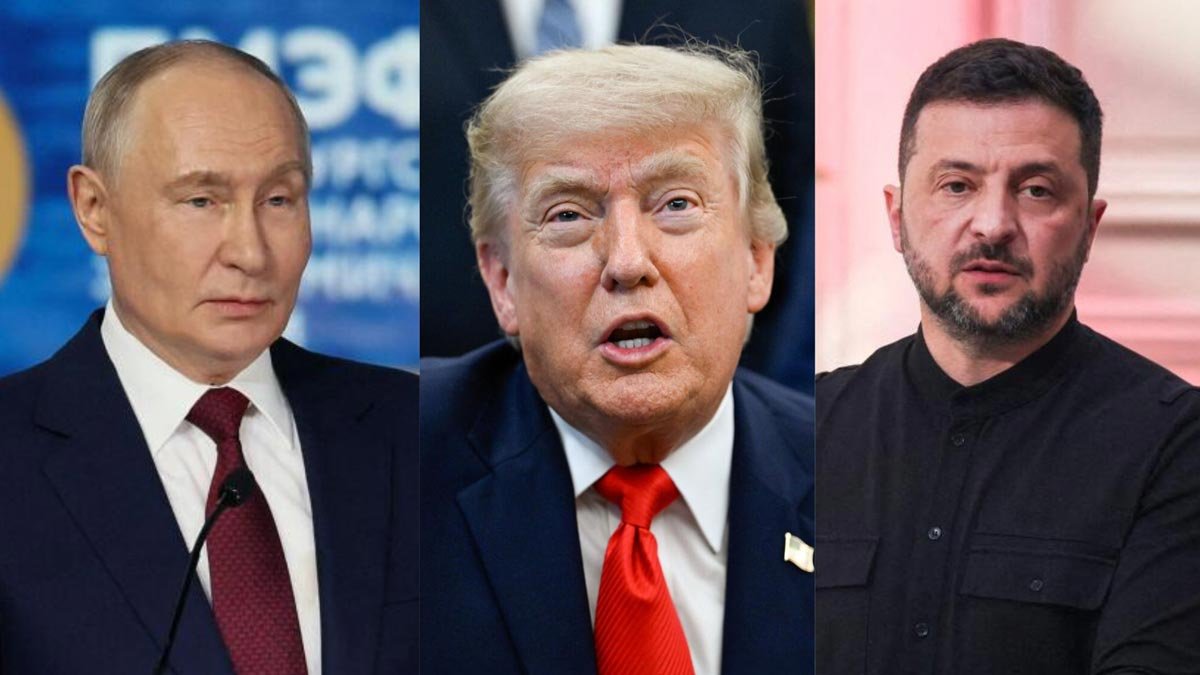

Russian President Vladimir Putin is unlikely to pursue peace talks with Ukraine in the near future and is instead expected to intensify the war, according to three sources close to the Kremlin who spoke to Reuters.
Get today's headlines by email 
The sources said recent Ukrainian drone strikes on Russian oil refineries, ports and fuel infrastructure have reinforced Putin's determination to continue the conflict rather than negotiate. Two of the sources, who requested anonymity, said an escalation in military operations is likely in the coming months. One person who regularly meets with the Russian leader described the chances of escalation as "high."
Kremlin Sources See Little Prospect of Peace
The assessment contrasts with comments made this week by U.S. President Donald Trump, who said Putin wanted the war to end and suggested a resolution was "closer than people realize." Trump held separate phone calls with Putin and Ukrainian President Volodymyr Zelenskyy last week before meeting Zelenskyy during the NATO summit, where the two leaders discussed possible steps toward peace. The White House did not respond to Reuters' request for comment.
Putin Focused on Donbas Objectives
According to one source familiar with Putin's thinking, the Russian president remains committed to capturing the remainder of Ukraine's eastern Donbas region. The source said Putin recently rejected advice from some advisers who proposed accepting a ceasefire along the current front lines, insisting instead on achieving his military objectives.
Another source said Putin believes Russian forces will eventually secure the remaining Ukrainian-held areas of Donbas.
The Kremlin maintained its public position that Russia remains open to a peaceful settlement while continuing military operations. Kremlin spokesman Dmitry Peskov said Moscow had sufficient capability to continue what it calls its "special military operation."
A senior Ukrainian official, responding on behalf of Zelenskyy's office, said Ukrainian intelligence indicates Russia is preparing for additional military action rather than negotiations, including possible new operations inside Ukraine or even against another European country.
Growing Concerns Over Wider Escalation
Some Western military analysts believe Russia would need a politically unpopular mobilisation of additional fighting-age men to fully capture Donbas, a step Putin has so far avoided.
Russian military commentators have increasingly discussed the possibility of expanding the conflict, including strikes against European targets such as NATO bases in the Baltic states. Such attacks could risk direct confrontation with the U.S.-led alliance.
Jack Watling of the Royal United Services Institute (RUSI) said Russia might instead seek limited attacks designed to create divisions within NATO over how to respond. He added that rising tensions with the alliance could also provide domestic justification for wider military conscription.
War Continues to Take Heavy Toll
Repeated Ukrainian strikes on Russian energy infrastructure have caused fuel shortages, increasing the war's impact on the Russian public. Although Putin's approval rating remains high, polling has shown it recently reached its lowest level since the full-scale invasion began in 2022.
The source who regularly meets Putin said Ukraine's recent battlefield successes have made the Russian leader more determined to respond forcefully. Russia has launched major drone and missile attacks on Ukraine in recent days, including strikes on Kyiv that killed dozens of civilians. Moscow says it targeted military facilities.
Speaking to senior military officers last week, Putin said Ukrainian attacks on Russian infrastructure justified creating a broader "security zone" by capturing additional territory along the border beyond Donbas.
Former Russian defence ministry official Andrei Ilnitsky recently wrote that a future escalation could include attacks on major industrial sites in Ukraine and, later, strikes against NATO bases and European facilities supporting Ukraine's defence industry. Asked about those remarks, Kremlin spokesman Peskov said Russia must strengthen its security in response to what he described as Europe's militarisation.
Grinding Offensive in Eastern Ukraine
Russia's advance across the roughly 1,200-kilometre front line has slowed as Ukrainian drone warfare has reduced Moscow's numerical advantage. Fighting has intensified around Kostiantynivka, a key defensive city in Ukraine's Donetsk region.
On July 3, Putin claimed Russian forces had captured Kostiantynivka, a statement Ukraine denied. During a subsequent phone call with Trump, Putin reportedly expressed confidence that Russia would eventually seize the remaining Ukrainian-held part of the Donetsk region.
According to the source who regularly meets Putin, the Russian president views control of Donbas as a matter of principle and believes he needs a significant military victory.
Join the discussion? 

10 July 2026
Recommended Comments
Create an account or sign in to comment