



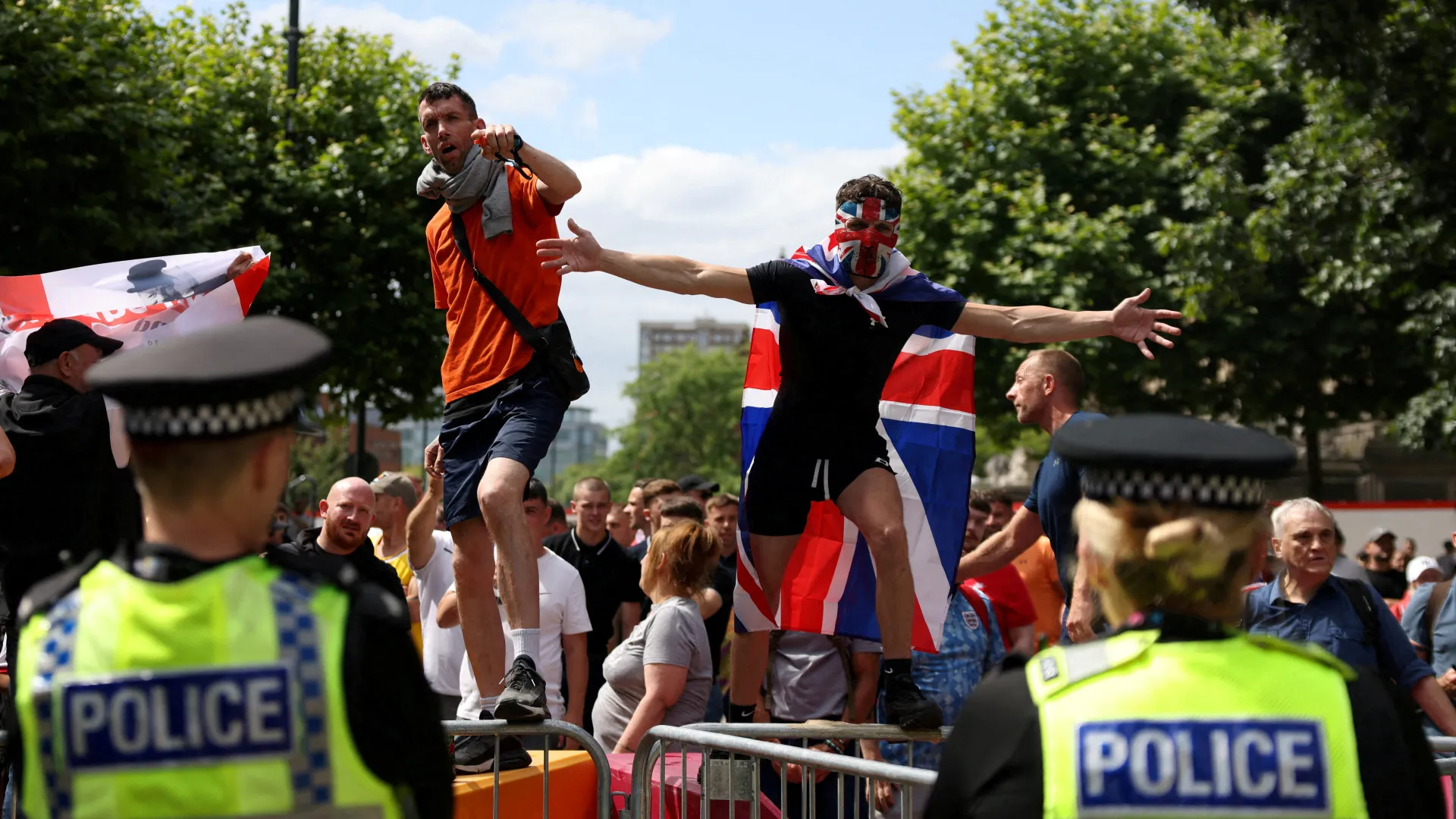

A growing number of climate and pro-Palestinian activists in England and Wales are being jailed for acts of protest and civil disobedience, according to new research that argues Britain has created a “new breed” of political prisoner.
Get today's headlines by email 
The report, produced by researchers at Queen Mary University of London and campaign group Defend Our Juries, says custodial sentences for direct action protests were once uncommon but are now becoming longer and more frequent.
Researchers examined 286 cases involving climate activists and Palestine solidarity protesters who received prison sentences, amounting to a combined total of 136 years in jail. The findings are due to be published on Tuesday.
Rising use of prison sentences
The report links the increase in imprisonments to tougher anti-protest legislation, expanded police powers and the growing use of civil injunctions by companies and public authorities. It also highlights concerns about judges limiting legal defences available to protesters and imposing what it describes as unusually severe punishments.
Of the 256 cases where sentencing data was available, the average period spent in detention was 28 weeks. One-third of protesters received sentences of at least six months, while one in five was jailed for more than a year.
David Whyte, professor of climate justice at QMUL and co-author of the report, said the sentences reflected a political response to protest movements.
He said the use of long prison terms and extended periods on remand showed authorities were treating political protesters differently from other defendants involved in civil disobedience cases.
Concerns over pre-trial detention
The report describes pre-trial detention as “the first line of attack” against protesters, arguing that lengthy remand periods discourage future demonstrations.
Researchers found that in 60% of the cases studied, protesters ultimately received sentences shorter than the time they had already spent in custody awaiting trial.
Among the cases highlighted are the “Filton 24”, a group charged over a protest linked to Palestine Action at a factory near Bristol operated by Israeli arms manufacturer Elbit Systems.
Some defendants spent up to 18 months in custody before trial, despite the standard pre-trial detention limit being six months. Most were later granted bail after the first six defendants were cleared of aggravated burglary charges. Two of those six were also acquitted of criminal damage offences. Eighteen other defendants are still awaiting trial on separate charges connected to the protest.
Civil injunctions and contempt cases
The report found that contempt of court offences accounted for 40% of imprisonment cases examined. These included breaches of courtroom orders as well as violations of civil injunctions obtained by companies or public authorities to prevent protests.
Whyte said the growing use of injunctions was concerning because actions that begin as civil matters can ultimately result in criminal penalties and prison sentences.
Researchers pointed to the case of 69 people jailed following a high court injunction secured by Warwickshire borough council during a Just Stop Oil campaign at the Kingsbury oil terminal in 2022. Some of those imprisoned had been holding placards, according to the report.
A spokesperson for the judiciary defended the independence of the courts, saying judges make decisions based on evidence, legal arguments and sentencing guidelines established under the law.
The spokesperson added that judges and magistrates sentence offenders according to legislation set by parliament and guidance issued by the independent Sentencing Council, while taking account of aggravating and mitigating factors in each case.
Join the discussion? 
Already a member? 
 Adapted by ASEAN Now. Source 24 May 2026
Recommended Comments
Create an account or sign in to comment