



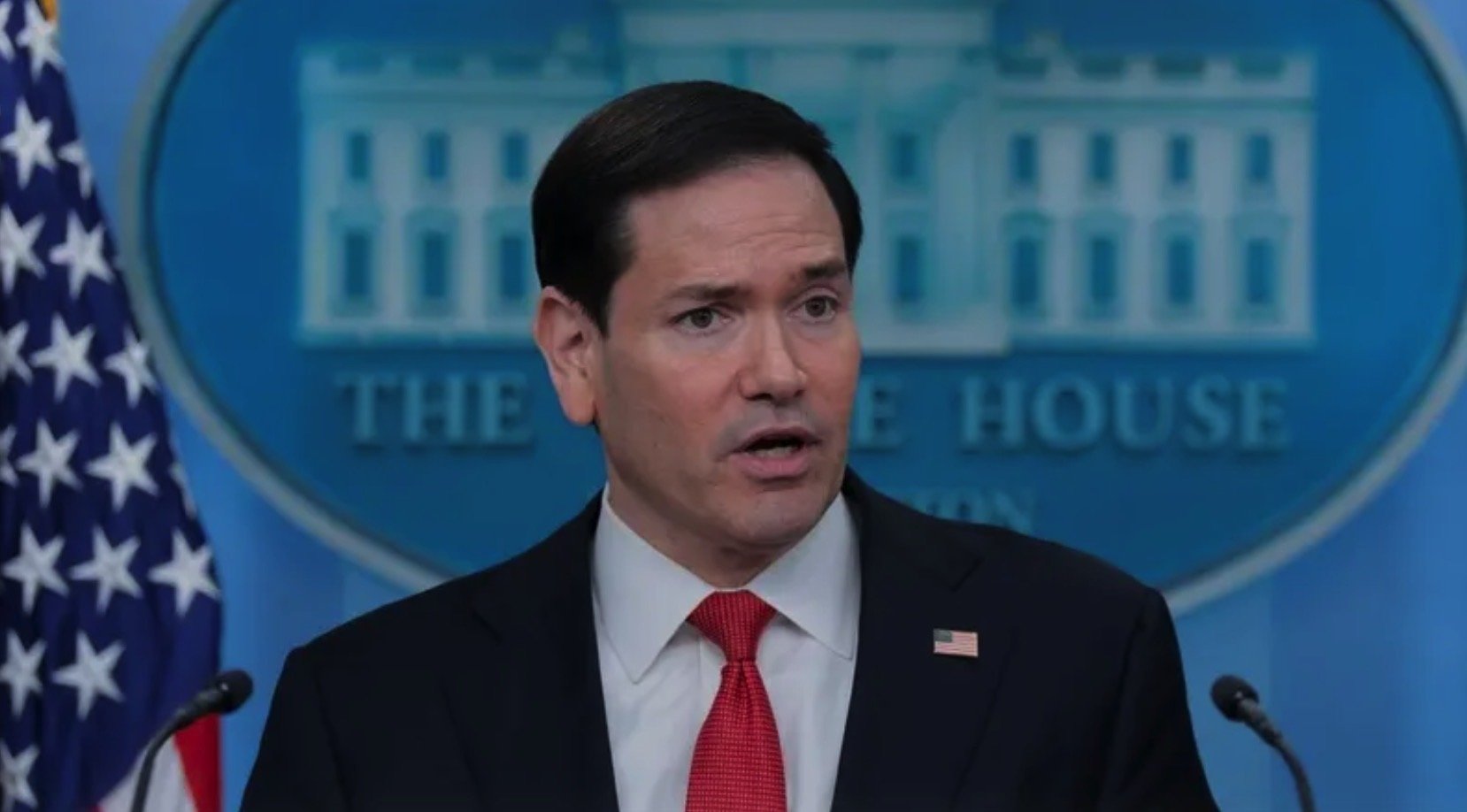

US Secretary of State Marco Rubio said the offensive phase of the United States’ military campaign against Iran had ended, stressing that American forces would now only respond if attacked.
Get today's headlines by email 
Speaking at a press conference on Tuesday, Rubio said the initial military action had concluded and that US operations were currently focused on protecting ships and maintaining security in the strategic Strait of Hormuz.
“We are only responding if attacked first. This is a defensive operation,” he said.
“If no shots are fired at these ships and no shots are fired at us, we’re not firing shots. But if we’re fired on, we will respond.”
The conflict between Washington and Tehran has effectively halted commercial traffic through the narrow waterway, one of the world’s most important routes for oil and gas shipments. Disruptions in the strait have pushed energy prices higher and raised concerns about wider economic consequences.
Ship reportedly struck during tensions
Rubio’s remarks came as the United Kingdom Maritime Trade Operations reported that a cargo vessel had been struck in the Strait of Hormuz. The incident appeared to challenge US claims that the shipping route had been secured following recent military operations.
The US military earlier said it had destroyed six small Iranian boats and intercepted cruise missiles and drones during a naval mission ordered by President Donald Trump.
The operation, known as Project Freedom, was launched to reopen shipping lanes through the strait after Iranian forces targeted vessels and threatened regional maritime traffic.
Rubio said American officials had contacted several commercial ships to encourage them to leave the area for safety, echoing earlier statements from US Defense Secretary Pete Hegseth.
Diplomatic talks continue
Despite ongoing tensions, the United States said it remained open to negotiations with Tehran. Rubio said American envoys Steve Witkoff and Jared Kushner were continuing efforts to pursue a diplomatic solution.
Any agreement, he said, would need to address Iran’s remaining nuclear material, which Washington believes could still be stored in underground facilities.
“The president’s been clear that part of the negotiation process has to be not just the enrichment, but what happens to this material that’s buried deep somewhere that they still have access to if they ever wanted to dig it out,” Rubio said.
He declined to provide details on progress in the talks but stressed that negotiations would likely take time due to the complexity of the issues involved.
“This is highly complex and highly technical,” Rubio said, adding that both sides would need to clarify what topics they were prepared to negotiate and what concessions they were willing to make.
Iran issues warnings
Iranian officials responded with warnings that the conflict could escalate further.
The speaker of Iran’s parliament, Mohammad Baqer Qalibaf, said Tehran believed the situation was becoming increasingly difficult for Washington.
“We know well that the continuation of the current situation is unbearable for the United States, while we have not even begun yet,” he said.
Iran’s foreign minister, Abbas Araghchi, also warned that both the United States and the United Arab Emirates risked being drawn deeper into the conflict.
Tehran has meanwhile published a map claiming expanded control over a wider maritime zone beyond the Strait of Hormuz, including sections of the UAE coastline.
The move underscores the growing tension in the region, where the stand-off between Iran and the United States continues to threaten one of the world’s most vital shipping corridors.
Join the discussion? 
Already a member? 
 Adapted by ASEAN Now. Source 6 May 2026
Recommended Comments
Create an account or sign in to comment