



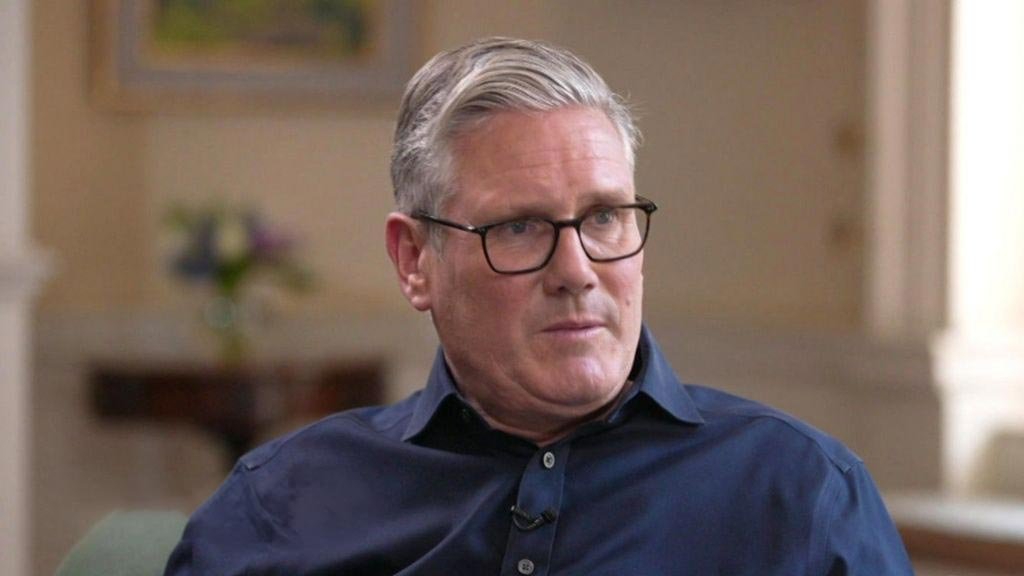

Sir Keir Starmer has said his decision to step down as prime minister was an "intensely personal" one made with his family, while warning that his likely successor, Andy Burnham, will face the same international pressures that dominated his own time in office.
Get today's headlines by email 
In his first interview since announcing his resignation, Starmer rejected suggestions that a future prime minister could devote significantly more attention to domestic issues. He argued that global instability and challenges at home are closely connected and cannot be separated.
Family Discussions Behind Resignation
Starmer resigned within days of Burnham's victory in the Makerfield by-election, despite previously insisting he intended to remain in office and contest any leadership challenge.
He told the BBC that the final decision came after spending a weekend at Chequers with his wife, Victoria, and their teenage children.
Describing the choice as "really, really tough", Starmer said he consulted colleagues, advisers, trade unions and parliamentary allies before concluding that the decision ultimately rested with his family.
He said accepting that his political career was over was an intensely personal moment and one he wanted to share privately with his wife.
Warning for Andy Burnham
Although Starmer referred several times to "whoever my successor is", he acknowledged Burnham is widely expected to replace him.
Responding to criticism that he spent too much time on international affairs during his premiership, Starmer said no prime minister could realistically reduce their diplomatic commitments.
He said the world remains more dangerous and volatile than at any point during most of his lifetime, adding that the next prime minister would face the same international conflicts alongside continuing domestic challenges.
Supporters of Burnham have expressed hope that he would place greater emphasis on issues such as the cost of living and public services.
Reflecting on His Legacy
Starmer said he had never held any personal animosity towards Burnham and pledged to do everything possible to support the next Labour government. He also confirmed he intends to remain an MP until at least the next general election but said he would avoid publicly advising his successor.
Looking back on his leadership, Starmer said rebuilding Labour after becoming leader was central to his legacy. He described the party as politically, financially and morally bankrupt when he took over, saying restoring it had been "hard and bloody work".
He argued that Labour's electoral success under his leadership should be considered alongside Clement Attlee's 1945 victory and Tony Blair's 1997 landslide, adding that he had helped save the party.
However, Starmer acknowledged he ultimately lost the support of Labour MPs, who no longer believed he was the right person to lead the party into the next general election.
Join the discussion? 
 Adapted by ASEAN Now. Source 4 July 2026
Recommended Comments
Create an account or sign in to comment