



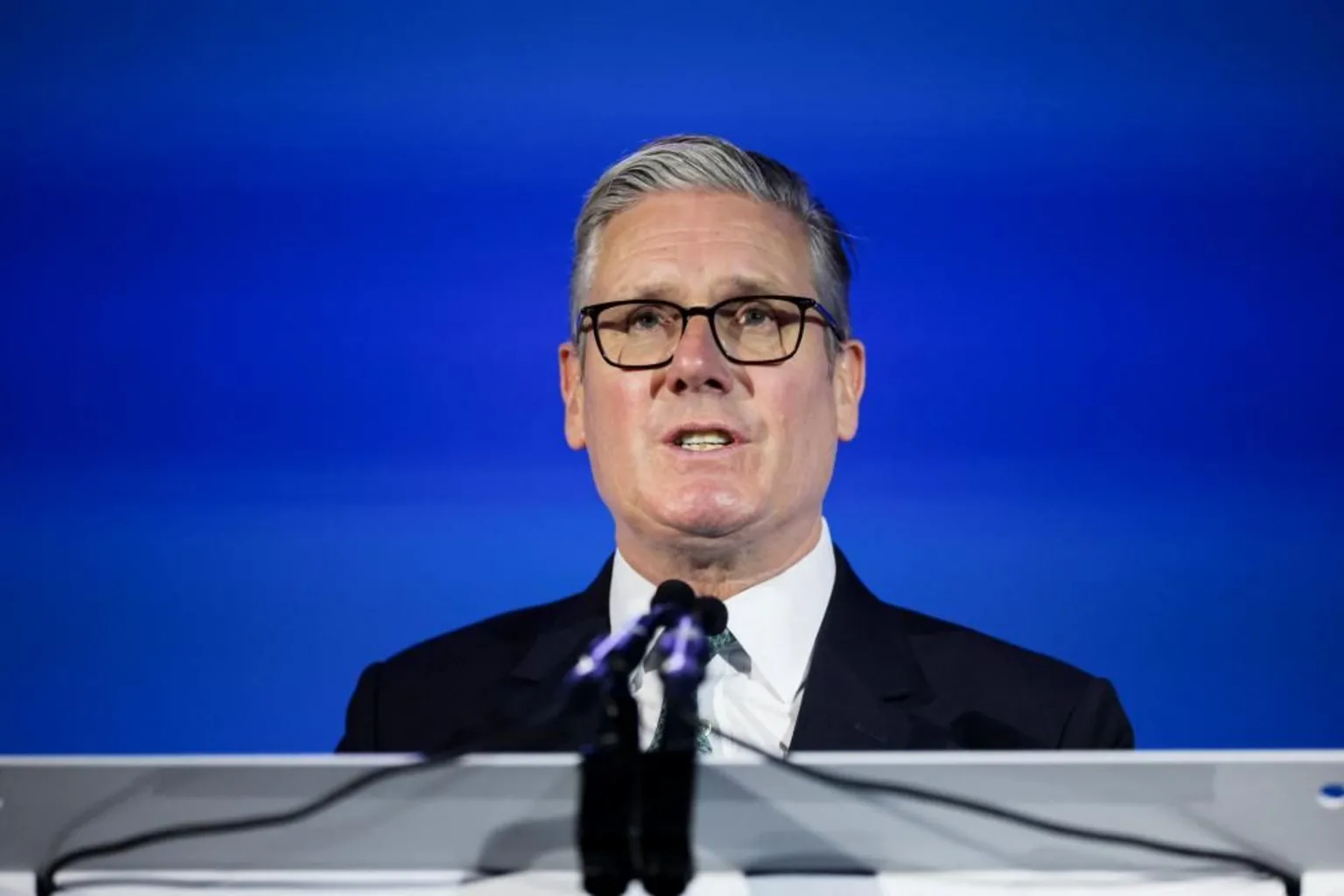

Prime Minister Keir Starmer has said he has a duty to remain in office despite growing political pressure, defending his government's defence spending plans after the resignation of two senior ministers.
Get today's headlines by email 
Speaking to the BBC a day after Defence Secretary John Healey and Armed Forces Minister Al Carns stepped down, Starmer said difficult choices were necessary to fund defence commitments.
He argued that all government departments had been required to make savings in order to prioritise military spending and insisted that defence remained at the centre of his government's agenda.
"Whoever is prime minister is going to face the same prevailing winds as I am facing," Starmer said, suggesting that any successor would encounter the same financial and political constraints.
Asked whether he intended to lead Labour into the next general election, the prime minister said he wanted to do so but acknowledged that he needed to improve his political standing.
He said he had no desire to trigger a leadership contest, describing such a move as potentially destabilising, but added that he would contest any challenge that emerged.
Defence Funding Dispute
The resignations followed an escalating disagreement over funding for the government's Defence Investment Plan (DIP), a long-delayed strategy outlining spending on military equipment and infrastructure over the coming decade.
In his resignation letter, Healey accused Starmer of failing to commit the resources needed to guarantee national security. The former defence secretary argued that planned spending increases were insufficient and called for faster growth in military expenditure.
Starmer rejected that criticism, saying defence was his government's "number one priority" and would continue to receive preferential treatment during future spending reviews.
He pointed to reductions in overseas aid spending as evidence that ministers had already taken difficult decisions to free up resources for defence.
The government has pledged to raise defence spending to 3.5% of gross domestic product by 2035. Healey argued that the UK should reach 3% by 2030, claiming the current investment plan would increase spending only to 2.68% of national income by that date.
Starmer said significant new funding had already been committed and that the investment plan contained further spending beyond existing allocations.
Leadership Pressure Grows
The dispute has intensified scrutiny of Starmer's leadership following Labour's poor performance in local elections earlier this year.
Although no formal leadership contest has been launched, speculation has increased about possible challengers. Greater Manchester Mayor Andy Burnham is expected to consider a leadership bid if he secures victory in the upcoming Makerfield by-election.
Without naming any potential rivals, Starmer said governing required difficult trade-offs and warned against simplistic solutions to spending challenges.
"For every answer that is being suggested, the question has to be what you would not do instead," he said.
Critics Demand Clearer Priorities
Former Health Secretary Wes Streeting, who has previously indicated he would enter a leadership contest, said disagreements over defence spending reflected broader indecision within the government.
Writing on X, he questioned whether defence or economic growth was the government's main priority and criticised spending commitments elsewhere while defence budgets remained under pressure.
Meanwhile, Conservative leader Kemi Badenoch said the government should cut welfare spending to fund defence properly.
The Liberal Democrats' defence spokesperson, James MacCleary, said both major parties had failed to provide the armed forces with adequate support. He reiterated his party's proposal to introduce war bonds, which it says could raise £20 billion for defence.
Starmer said the Defence Investment Plan would still be published before a NATO summit scheduled for early July, despite the recent ministerial departures.
Join the discussion? 
Already a member? 
 Adapted by ASEAN Now. Source 13 June 2026
Recommended Comments
Create an account or sign in to comment