



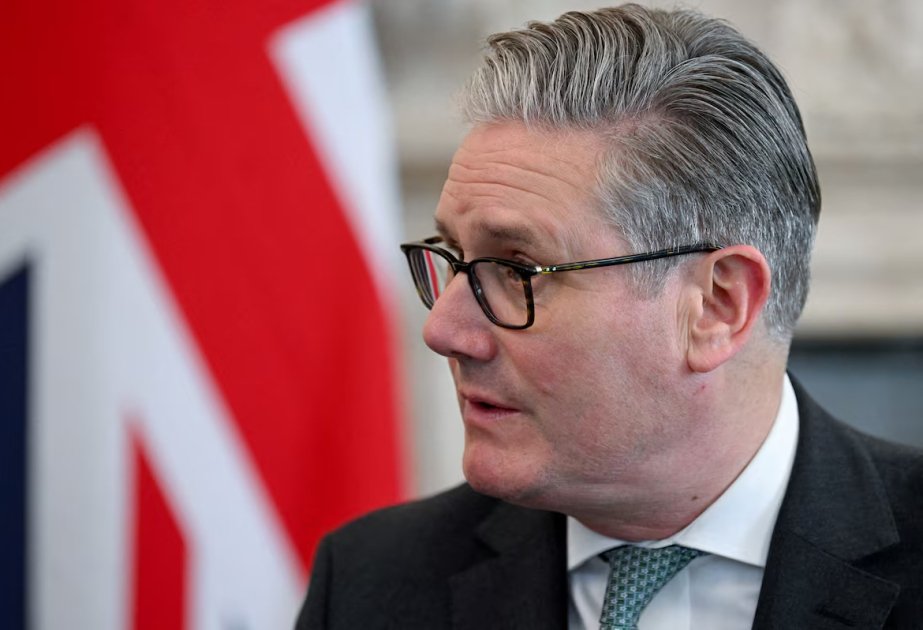

The United Kingdom will not participate in enforcing a United States blockade of Iranian ports, Prime Minister Keir Starmer has said, distancing Britain from Washington’s military response following failed negotiations with Tehran.
Get today's headlines by email 
Speaking to the BBC, Starmer confirmed that British forces would continue existing security operations in the region but would not take part in blocking Iranian shipping. The prime minister said the UK’s priority was restoring access to the Strait of Hormuz, a vital route for global energy supplies.
“Our focus is on reopening the strait as quickly as possible,” Starmer said, adding that the government was working with international partners to stabilise shipping in the area.
US blockade announced after failed talks
The US decision came after negotiations between American and Iranian representatives in Islamabad ended without agreement. Following the talks, President Donald Trump said the United States would begin blockading vessels attempting to enter or leave the Strait of Hormuz.
US Central Command later confirmed that American forces would enforce the blockade on ships entering or leaving Iranian ports, including those in the Arabian Gulf and the Gulf of Oman.
The command said enforcement would be carried out “impartially” but clarified that vessels travelling to or from non-Iranian ports would not be obstructed. Commercial shipping companies would receive formal notice before the blockade takes effect.
UK focuses on keeping shipping routes open
Starmer said Britain had been working with partners in the region to maintain freedom of navigation through the strait rather than restrict it.
“We’re not supporting the blockade,” he said. “Our diplomatic, political and operational work is aimed at keeping the strait open.”
The prime minister confirmed that the UK possesses mine-sweeping capabilities in the region but declined to discuss operational details.
He also reiterated that Britain would not become directly involved in the wider conflict in the Middle East.
“My decision has been clear that we will not be dragged into the war,” Starmer said. “I will not act without a clear lawful basis and a well-thought-through plan.”
Energy markets and diplomatic efforts
The Strait of Hormuz is one of the world’s most important maritime chokepoints, carrying roughly one-fifth of global oil and liquefied natural gas shipments.
Iran has effectively blocked the route since US and Israeli strikes began on 28 February, triggering concern across energy markets. Global benchmark Brent crude rose above $100 per barrel after the US announced the blockade, compared with about $71 before the conflict.
Starmer said the UK was working with allies including France to develop a multinational plan to protect shipping once the conflict subsides. A summit co-hosted by Britain and France later this week is expected to focus on coordinating those efforts.
During a call with French President Emmanuel Macron, Starmer emphasised the need for a broad international coalition to guarantee safe passage through the strait.
A UK government spokesperson also criticised reports that Iran had begun charging transit fees of about $2 million for tankers passing through the waterway, saying vessels must not be subject to such charges.
Economic implications
The disruption to shipping has raised concerns about fuel prices in Britain. The government is currently planning to increase fuel duty in September, though opposition parties have urged ministers to cancel the rise in light of the crisis.
Starmer said the policy remained under review and would depend on developments in the coming weeks.
Meanwhile, Chancellor Rachel Reeves is expected to travel to Washington for meetings at the International Monetary Fund, where she will push for efforts to reopen the Strait of Hormuz to commercial shipping.
Join the discussion? 
Already a member? 
 Adapted by ASEAN Now. Source 14 April 2026
Recommended Comments
Create an account or sign in to comment