



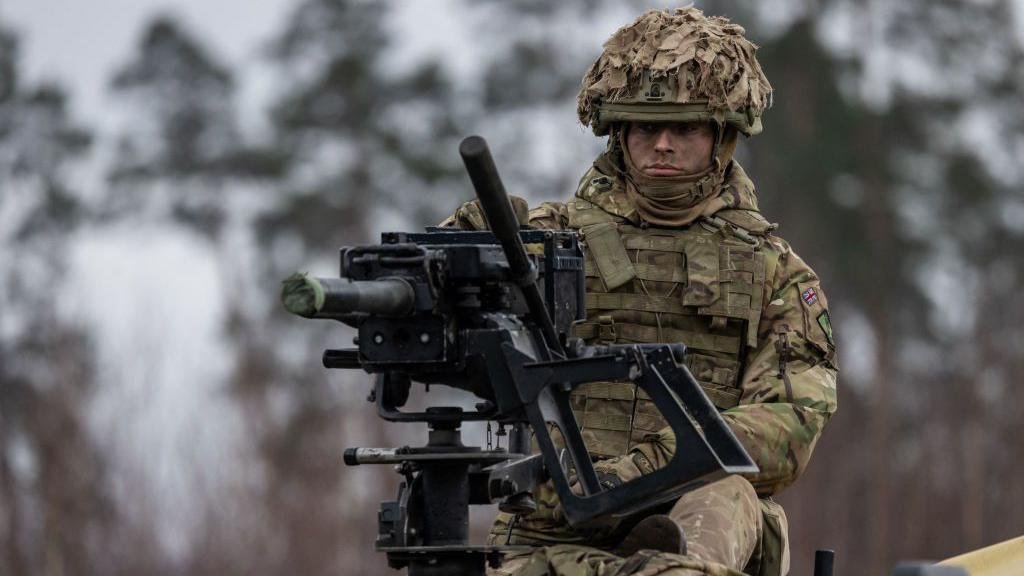

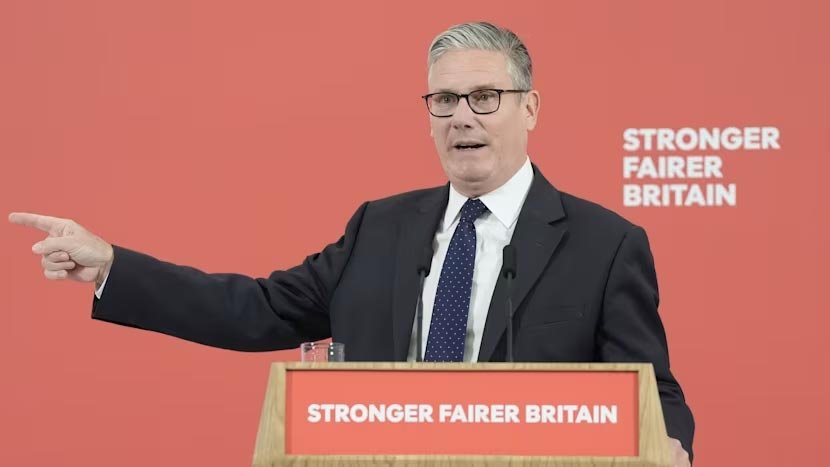
Sir Keir Starmer has unveiled a major defence investment plan, promising to build an army that is "10 times more lethal" through increased military spending and greater use of advanced technology.
Get today's headlines by email 
Launching the long-delayed Defence Investment Plan (Dip) on Tuesday, the prime minister announced an additional £15 billion for defence, £1.5 billion more than had previously been pledged to former defence secretary John Healey.
The strategy had originally been due for publication last year but was delayed amid disagreements within government over funding levels, a dispute that ultimately contributed to Healey's resignation last month.
Bigger military budget aims to modernise UK forces
Starmer said defence spending would rise from 2.3% of gross domestic product (GDP) in 2024 to 2.7%, putting the UK "on a trajectory" to reach 3% during the next parliament.
Annual defence spending is expected to increase from £54 billion to £80 billion by 2029. Starmer argued that strengthening the armed forces was essential to preventing future conflict, saying that "the best way to avoid war is to prepare for it".
Investment focused on technology and deterrence
The four-year investment programme includes funding across several major defence projects.
The largest allocation, £63 billion, will support the UK's nuclear deterrent through the Dreadnought and SSN-AUKUS submarine programmes, as well as the purchase of 12 F-35A fighter aircraft.
A further £8 billion will be invested in the Global Combat Air Programme (GCAP), which is developing a next-generation stealth fighter for the Royal Air Force.
Picture courtesy of PA
Project Royal Oak, described as the biggest upgrade of Britain's naval bases in more than 45 years, will receive £26 billion.
More than £5 billion has been earmarked for transforming the armed forces through drones and autonomous systems, including £650 million for unmanned aerial and ground vehicles. Another £2 billion will fund a Digital Targeting Web using software and artificial intelligence to speed military decision-making and target engagement.
The government also plans to spend £11 billion on munitions and weapons stockpiles, including the construction of at least six new energetics factories by 2030.
Lessons from Ukraine shape strategy
Starmer said the investment would ensure Britain was prepared to confront Russia by 2030 if required, describing the programme as a "generational transformation" built on lessons learned from the war in Ukraine.
He highlighted the growing role of autonomous technology in modern warfare, saying future warships and aircraft would increasingly operate alongside autonomous systems as part of an integrated force.
The UK has closely monitored the widespread use of drones during the conflict in Ukraine, where around 200,000 are reportedly used each month, as well as their deployment in conflicts involving Iran.
The prime minister acknowledged that some infrastructure projects, including spending on roads and energy, might not proceed as originally planned to accommodate the higher defence budget.
However, he insisted the increased military investment would not come at the expense of frontline public services such as health and education. He also ruled out reducing day-to-day defence spending, arguing that cutting public services to fund defence would leave Britain "fundamentally weaker as a nation".
Political criticism and NATO pressure
The Defence Investment Plan has been viewed as a key part of Starmer's legacy, though Labour leadership contender Andy Burnham has indicated it could be reviewed if he succeeds him.
Burnham has suggested future defence contracts should place greater emphasis on supporting British-based defence companies.
Opposition parties criticised the plan, with Shadow Defence Secretary James Cartlidge describing it as "too little, too late". He argued the additional funding was only marginally higher than the amount disputed before John Healey's resignation and said the strategy had been delayed for almost a year.
Liberal Democrat leader Sir Ed Davey also called the plan "late and underfunded".
The announcement comes as NATO allies face increasing pressure to raise defence spending. At next week's NATO summit in Ankara, members are expected to outline a credible path towards spending 5% of GDP on defence by 2035. The White House said on Monday that US President Donald Trump expects the UK and other alliance members to meet their defence spending commitments.
Join the discussion? 
Already a member? 
 Adapted by ASEAN Now. Source 30 June 2026
-
 1
1
Recommended Comments
Create an account or sign in to comment