
Skip to content
View in the app

A better way to browse. Learn more.

Thailand News and Discussion Forum | ASEANNOW

A full-screen app on your home screen with push notifications, badges and more.

To install this app on iOS and iPadOS
  1. Tap the Share icon in Safari
  2. Scroll the menu and tap Add to Home Screen.
  3. Tap Add in the top-right corner.
To install this app on Android
  1. Tap the 3-dot menu (⋮) in the top-right corner of the browser.
  2. Tap Add to Home screen or Install app.
  3. Confirm by tapping Install.

Become a member

Become a member

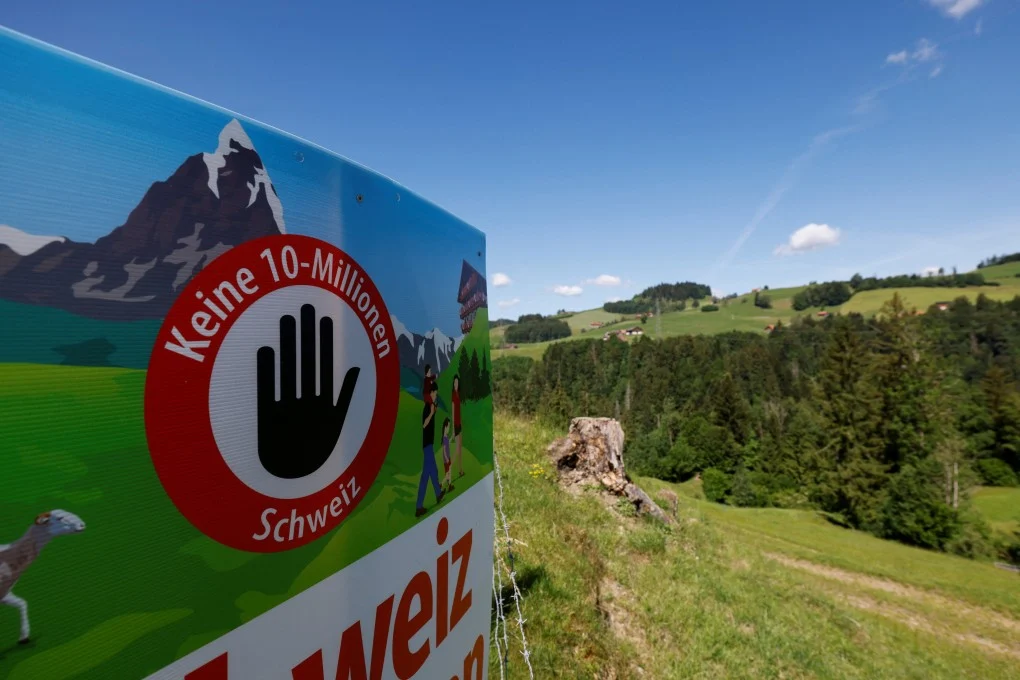
Swiss Voters Reject Proposal to Cap Population at 10 Million

Swiss voters have rejected a proposal to limit the country's population to 10 million people, delivering a setback to the right-wing Swiss People's Party (SVP), which had argued that immigration was placing excessive strain on public services and infrastructure.

Get today's headlines by email image.png

Referendum Defeats Immigration-Linked Plan

Official results showed that almost 55% voted against the measure, while about 45% supported it. Turnout reached 60%.

The referendum carried significant implications for Switzerland's relationship with the European Union. The proposal was opposed by the Swiss government, business groups and all other major political parties, which warned that approval could threaten the country's agreement on the free movement of people with the EU.

Swiss Justice Minister Beat Jans welcomed the outcome, describing it as a vote for “stability, openness and reliability”.

Concerns Over Economy and EU Ties

Switzerland's population has increased from 7.3 million in 2002 to around 9.1 million today. About 27% of residents are not Swiss citizens.

Supporters of the proposal argued that limiting population growth would help ease pressure on housing, transport networks and the environment. However, these arguments failed to attract enough support nationwide.

Business leaders and many voters expressed concern that stricter limits could reduce access to workers needed in sectors including tourism, healthcare and elderly care. Others feared economic consequences if Switzerland's ties with the EU were weakened.

More than half of Swiss exports are sold within the European Union. Continued access to the bloc's markets is linked to Switzerland's commitment to the free movement agreement. Had the proposal passed, Switzerland would have been required to end that arrangement.

Following the vote, European Commission President Ursula von der Leyen welcomed the result, saying Switzerland and the EU share strong links and a close partnership.

Debate Over Immigration and Public Services

The referendum highlighted a long-running political debate over immigration and its impact on Swiss society.

Marcel Dettling, president of the Swiss People's Party, said the result did not remove underlying concerns, arguing that voters still wanted solutions to problems such as housing shortages and rising costs.

The party has frequently linked immigration to challenges including crowded schools, pressure on healthcare services and increased demand for housing.

Critics rejected that argument. Helin Genis, a Social Democrat serving on Bern city council, said migrants were being unfairly blamed for issues that stem from political and economic decisions rather than immigration itself.

Before the vote, SVP politician Nils Fiechter argued that immigration was contributing directly to shortages in housing and public services. Opponents countered that focusing on migration risked deepening divisions without addressing the root causes of those problems.

Urban-Rural Divide Emerges

Voting patterns revealed a clear contrast between urban and rural areas. Swiss citizens are the only people eligible to vote in national referendums.

Cities with larger immigrant populations overwhelmingly rejected the proposal. In Bern, nearly 84% of voters opposed the population cap.

Tourism-dependent regions also voted against the measure. Cantons including Graubünden, home to St. Moritz, and Valais, which includes Zermatt and the Matterhorn area, rejected the plan amid concerns over labour shortages.

Employers warned that sectors such as hospitality, healthcare and care homes rely heavily on foreign workers. Opponents also noted that around one-fifth of Switzerland's population is now over the age of 65, increasing demand for younger workers and taxpayers.

The outcome suggests that while concerns over housing costs, public services and infrastructure remain significant, a majority of Swiss voters were unconvinced that restricting immigration was the best way to address them.

Join the discussion? Create account. orange.png

Already a member? haveyr-say.png


image.png
Adapted by ASEAN Now. Source 15 June 2026

User Feedback

Recommended Comments

JonnyF Star Member

JonnyF

Advanced Member

Turkeys voting for Christmas.

EastBayRay Advanced Member

EastBayRay

Member

I thought the Swiss were supposed to be high IQ?

Did they allow postal voting or something?

Purdey Diamond Member

Purdey

Advanced Member

If the population were to be capped at 10m the Swiss would have to have more children to boost the labor market. What's the point of having a fully educated market if no one wants to sweep the streets or pick the fruit?

Srikcir Ruby Member

Srikcir

Advanced Member
7 minutes ago, Purdey said:

If the population were to be capped at 10m the Swiss would have to have more children to boost the labor market. What's the point of having a fully educated market if no one wants to sweep the streets or pick the fruit?

"Whether immigration seekers (vs. asylum seekers) can work in Switzerland depends entirely on their nationality and the immigration status they hold:

  • EU/EFTA Citizens: Yes, they can enter the country to look for work for up to three months without a visa, with a possible extension to six months. Once they secure employment, they can register with local authorities to receive a residence permit.

  • Third-Country Nationals: No, immigration seekers cannot simply move to Switzerland to look for work. They must first secure a concrete job offer from a Swiss employer. The employer must prove that no qualified candidate could be found locally or within the EU/EFTA, and strict quotas apply." (AI)

Switzerland's current approach seems reasonable (albeit be expanded), immigrants getting work must fit into the economy. Thailand might learn from this approach.

EastBayRay Advanced Member

EastBayRay

Member
8 minutes ago, Srikcir said:

"Whether immigration seekers (vs. asylum seekers) can work in Switzerland depends entirely on their nationality and the immigration status they hold:

  • EU/EFTA Citizens: Yes, they can enter the country to look for work for up to three months without a visa, with a possible extension to six months. Once they secure employment, they can register with local authorities to receive a residence permit.

  • Third-Country Nationals: No, immigration seekers cannot simply move to Switzerland to look for work. They must first secure a concrete job offer from a Swiss employer. The employer must prove that no qualified candidate could be found locally or within the EU/EFTA, and strict quotas apply." (AI)

Switzerland's current approach seems reasonable (albeit be expanded), immigrants getting work must fit into the economy. Thailand might learn from this approach.

Thailands policy is just fine hence the lack of sub saharans beheading locals on the street

Let’s keep it that way

youreavinalaff Ruby Member

youreavinalaff

Advanced Member
18 minutes ago, EastBayRay said:

Thailands policy is just fine hence the lack of sub saharans beheading locals on the street

Let’s keep it that way

Where and when was that?

mfd101 Platinum Member

mfd101

Advanced Member

When you take in to account all the factors that add up to 'current population' and 'expected population next 1 January or in 5 or 20 years' time', the notion of reaching a particular magic number and then sticking there or just near it is wondrously naive.

Reproduction rates, aging population, death rates, immigration rates, economic conditions, expected economic conditions in 20 years and on and on ...

Only racists and fascists would be naive enough to put forward such a proposition. And 45% of those who voted were for it.

Front Row Advanced Member

Front Row

Member
56 minutes ago, Srikcir said:

"Whether immigration seekers (vs. asylum seekers) can work in Switzerland depends entirely on their nationality and the immigration status they hold:

  • EU/EFTA Citizens: Yes, they can enter the country to look for work for up to three months without a visa, with a possible extension to six months. Once they secure employment, they can register with local authorities to receive a residence permit.

  • Third-Country Nationals: No, immigration seekers cannot simply move to Switzerland to look for work. They must first secure a concrete job offer from a Swiss employer. The employer must prove that no qualified candidate could be found locally or within the EU/EFTA, and strict quotas apply." (AI)

Switzerland's current approach seems reasonable (albeit be expanded), immigrants getting work must fit into the economy. Thailand might learn from this approach.

My experience is that Switzerland has found a fairly good balance. I had to go through a process to get my visa and working papers but I had specialized skills so there were no issues. Likewise I knew many people who worked as cooks, retail salespeople, tour guides etc. that for one reason or another qualified. It does not suffer from having too many immigrants.

Switzerland is a great country, albeit expensive. But everything works, streets are clean, snow removal is fast, trains and busses run on time, the landscape is beautiful, the skiing, hiking and outdoor activities are fantastic.

Oh, and the people are xenophobic as hell.

candide Star Member

candide

Advanced Member
1 hour ago, Srikcir said:

"Whether immigration seekers (vs. asylum seekers) can work in Switzerland depends entirely on their nationality and the immigration status they hold:

  • EU/EFTA Citizens: Yes, they can enter the country to look for work for up to three months without a visa, with a possible extension to six months. Once they secure employment, they can register with local authorities to receive a residence permit.

  • Third-Country Nationals: No, immigration seekers cannot simply move to Switzerland to look for work. They must first secure a concrete job offer from a Swiss employer. The employer must prove that no qualified candidate could be found locally or within the EU/EFTA, and strict quotas apply." (AI)

Switzerland's current approach seems reasonable (albeit be expanded), immigrants getting work must fit into the economy. Thailand might learn from this approach.

Right, most of these immigrants are EU citizen, mainly from France, Germany, Italy and Portugal. Swiss people are not so different from them, in particular when they come from bordering regions.

baansgr Platinum Member

baansgr

Advanced Member

Same arguments..strain on housing, health, travel and education...seems pretty much the norm.. 3rd world immigrants, turn any host country into the 3rd world

Beat666 Advanced Member

Beat666

Member
5 hours ago, EastBayRay said:

I thought the Swiss were supposed to be high IQ?

Did they allow postal voting or something?

The true Swiss, known as Eidgenossen, voted in favor of the referendum. However, one challenge we face is that many individuals born abroad who hold Swiss citizenship voted against it. In fact, one in four people in Switzerland is a foreigner, and a significant number of them have voting rights.

Switzerland's parliament has a total of 10 political parties. Out of these, nine opposed the referendum initiated by the SVP party. This overwhelming opposition from the political establishment contributed to the outcome of the vote being a "No."

Nonetheless, with 45% of voters supporting the referendum, it’s evident that there is growing resistance among the population. Politicians are now more aware of the significant support reflected in those numbers.

Switzerland is increasingly losing its unique character, and at this rate, I fear it may one day turn into an artificial entity, akin to something out of Disney World.

Beat666 Advanced Member

Beat666

Member
3 hours ago, Front Row said:

My experience is that Switzerland has found a fairly good balance. I had to go through a process to get my visa and working papers but I had specialized skills so there were no issues. Likewise I knew many people who worked as cooks, retail salespeople, tour guides etc. that for one reason or another qualified. It does not suffer from having too many immigrants.

Switzerland is a great country, albeit expensive. But everything works, streets are clean, snow removal is fast, trains and busses run on time, the landscape is beautiful, the skiing, hiking and outdoor activities are fantastic.

Oh, and the people are xenophobic as hell.

Which European country does not face such challenges? The central issue lies in the notable presence of immigrants across EU countries and Switzerland. A portion of these individuals neither participate actively in the labor market, nor contribute positively; instead, they engage in criminal activities, rely heavily on public health systems, and receive financial support—all funded by taxpayers. This situation has led to widespread public discontent with political leaders, as many citizens feel overwhelmed by the increasing numbers of migrants entering their countries. More specifically, the concern is that many of these newcomers neither meet societal needs nor align with public expectations or preferences.

Cenovis Apprentice Member

Cenovis

Member
11 minutes ago, Beat666 said:

The true Swiss, known as Eidgenossen, voted in favor of the referendum. However, one challenge we face is that many individuals born abroad who hold Swiss citizenship voted against it. In fact, one in four people in Switzerland is a foreigner, and a significant number of them have voting rights.

Much more. Actually there are 27.5% foreigner living in Switzerland that don't have Swiss Citicenship and no voting rights. Since 2002 (Schengen Agreement) till today, Switzerland grew from 7.3 Million to now over 9.1 Million people. Many foreigner got Citicenship. So the real numbers of foreigners (including first Generation Swiss Citicen, or as we like to call them, paper Swiss) in Switzerland is much higher.

impulse Star Member

impulse

Advanced Member

The true Swiss, known as Eidgenossen, voted in favor of the referendum. However, one challenge we face is that many individuals born abroad who hold Swiss citizenship voted against it. In fact, one in four people in Switzerland is a foreigner, and a significant number of them have voting rights.

That, in a paragraph, is their cunning plan.

Beat666 Advanced Member

Beat666

Member
7 minutes ago, Cenovis said:

Much more. Actually there are 27.5% foreigner living in Switzerland that don't have Swiss Citicenship and no voting rights. Since 2002 (Schengen Agreement) till today, Switzerland grew from 7.3 Million to now over 9.1 Million people. Many foreigner got Citicenship. So the real numbers of foreigners (including first Generation Swiss Citicen, or as we like to call them, paper Swiss) in Switzerland is much higher.

You are 100% spot on. Thanks for the correction🙏👍

youreavinalaff Ruby Member

youreavinalaff

Advanced Member
2 hours ago, baansgr said:

Same arguments..strain on housing, health, travel and education...seems pretty much the norm.. 3rd world immigrants, turn any host country into the 3rd world

You didn't read the whole article, did you?

baansgr Platinum Member

baansgr

Advanced Member
1 hour ago, youreavinalaff said:

You didn't read the whole article, did you?

Yes I did..did you

Keeenok Powell Silver Member

Keeenok Powell

Advanced Member

Can’t they see what has happened to the rest of Europe?

<deleted> idiots.

youreavinalaff Ruby Member

youreavinalaff

Advanced Member
29 minutes ago, baansgr said:

Yes I did..did you

In that case, why are you suggesting European nations are "Third World"?

baansgr Platinum Member

baansgr

Advanced Member
18 minutes ago, youreavinalaff said:

In that case, why are you suggesting European nations are "Third World"?

Just have a look at the major cities of them where 3rd worlders have colonized

Sigmund Gold Member

Sigmund

Advanced Member

The Swiss system can often be confusing. When people vote YES it can mean No..and the other way round. Nevertheless the problem is that most policy makers are dual nationals who have more connections/interests with Europe or other countries, instead of Switzerland left to itself. Poor Switzerland.

youreavinalaff Ruby Member

youreavinalaff

Advanced Member
13 minutes ago, baansgr said:

Just have a look at the major cities of them where 3rd worlders have colonized

83% of foreigners in Switzerland are European. As i asked before, why do you refer yo European countries as Third World. Which countries are you referring to?

baansgr Platinum Member

baansgr

Advanced Member
8 minutes ago, youreavinalaff said:

83% of foreigners in Switzerland are European. As i asked before, why do you refer yo European countries as Third World. Which countries are you referring to?

It's actually 27% foreigners which 40% of are non EU..try again sir 👍

Maybole Gold Member

Maybole

Advanced Member

How would the Swiss enforce it. When a baby which would take the numbers above 10 million is born, would they pick on a non-citizen to deport? How would they choose him or her? Would they,heaven forfend, euthanase the baby? They scheme would be unworkable.

youreavinalaff Ruby Member

youreavinalaff

Advanced Member
4 hours ago, baansgr said:

It's actually 27% foreigners which 40% of are non EU..try again sir 👍

Incorrect. You've also not understood my comment.

I didn't even talk about the %%% of the population that are foreigners.

Try again.

Take a look at what Switzerland immigration say.

https://www.migration.swiss/en/stories/zuwanderung

Now, to which European countries were you suggesting are "Third World"?

Purdey Diamond Member

Purdey

Advanced Member

If immigration is such a problem, why haven't any European country banned them outright? I can only guess that with aging populations, European countries have understood that they need immigrants. Is there another reason?

Sigmund Gold Member

Sigmund

Advanced Member

Switzerland like all of western Europe is obviously going to the dogs with excessive immigration, asylum seekers and illegals all pushing their way in to benefit from the highly generous Swiss Social System and public aids.

Create an account or sign in to comment

Account

Navigation

Search

Search

Configure browser push notifications

Chrome (Android)
  1. Tap the lock icon next to the address bar.
  2. Tap Permissions → Notifications.
  3. Adjust your preference.
Chrome (Desktop)
  1. Click the padlock icon in the address bar.
  2. Select Site settings.
  3. Find Notifications and adjust your preference.